
British Rail Class 508 electric multiple unit
A suburban third-rail electric multiple unit introduced by British Rail in 1979–80. Part of a wider 1972 EMU family, Class 508s have served Merseyrail for decades and have been modernised for continued commuter use.
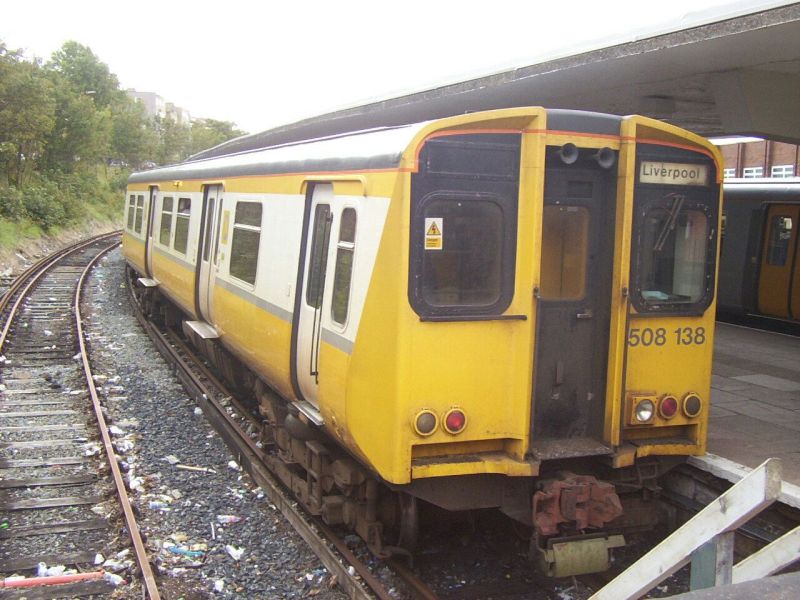
The British Rail Class 508 is a type of electric multiple unit (EMU) introduced at the end of the 1970s for suburban passenger services. Built for British Rail by BREL at the York works in 1979–80, the 508s are one member of a wider family of EMUs derived from a standard 1972 suburban design. These units were intended for frequent-stop commuter routes and became a familiar sight on regional networks in the decades that followed.
Image gallery
10 Images





Design and technical characteristics
Class 508 sets share a basic structural and electrical layout with several related classes, but were adapted for third-rail suburban operation. They have steel car bodies, multiple sliding passenger doors for rapid boarding, and interior arrangements suited to short journeys. Sets were built with a formation that allowed flexibility in length: originally delivered as four-car sets, many have been reformed during their careers and are commonly seen as three-car units in current service.
- Traction and power: configured for third-rail DC suburban systems (the UK standard for many urban networks).
- Doors and access: multiple wide doors per side to speed dwell times at busy stations.
- Interior: a mix of longitudinal and transverse seating common to suburban EMUs, later refurbished to improve passenger comfort and accessibility.
History and service
The Class 508s were the fourth variant of the 1972 design family; that family ultimately included 755 vehicles across five related classes. After introduction they were moved into intensive commuter service and, from the early 1980s, many of the surviving examples became heavily associated with the Merseyrail network. Over time they were transferred and cascaded between regions as fleets were reshuffled, reflecting changing local needs and network electrification patterns.
Refurbishment and later developments
To extend their operational life, Class 508s have undergone several rounds of refurbishment, including mechanical overhauls, interior renewal and accessibility improvements. Work carried out at specialist workshops modernised driving cabs, replaced seating and lighting, and fitted updated passenger information systems. These upgrades have kept the units in daily commuter use long after their original introduction.
Relation to other classes and significance
As members of the 1972 EMU family, Class 508s are closely related to several other suburban types such as the Class 313, Class 314, Class 315 and Class 507. This common ancestry simplified maintenance and parts supply across different fleets and allowed operators to match rolling stock to route requirements. The Class 508's long service life illustrates the durability of the 1972 design and its adaptability to evolving commuter rail needs.
Notable features of the Class 508 story include their production at a major national works, their adaptation to dense urban routes, and the role of mid-life refurbishments in prolonging service. While newer units are gradually replacing older suburban stock on some routes, the 508s remain an important part of the UK’s late-20th-century EMU legacy.
Related articles
Author
AlegsaOnline.com British Rail Class 508 electric multiple unit Leandro Alegsa
URL: https://en.alegsaonline.com/art/14483