
British Rail Class 59 diesel-electric freight locomotives
A diesel-electric Co-Co locomotive built by GM‑EMD from 1985–1995 for heavy freight in Britain; privately commissioned, influential for later designs and noted for high reliability.
The British Rail Class 59 is a family of diesel-electric freight locomotives built by General Motors’ Electro‑Motive Division (EMD) between 1985 and 1995. Conceived and paid for by private UK freight customers rather than British Rail, the design (often referred to by its export code JT26CW‑SS) brought American components and engineering practices to British heavy haulage, offering greater reliability and tractive performance than many contemporary domestic locomotives.
Originally ordered by a quarrying and aggregates company to provide dependable haulage of heavy stone trains, the Class 59 proved successful on the main line and led to further orders by other private operators. Units were delivered in several batches over the 1980s and early 1990s, and they operated in a range of freight services where sustained high tractive effort and availability were required. Their introduction also influenced subsequent UK freight locomotive procurement.
Image gallery
10 Images
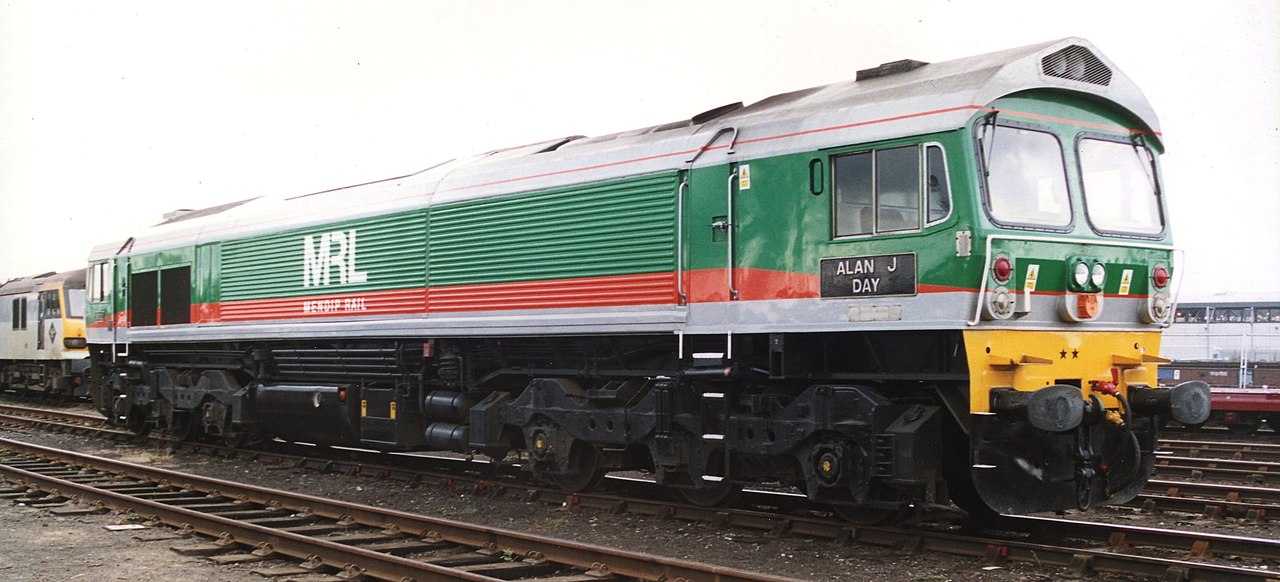


Design and technical characteristics
- Configuration: Co‑Co wheel arrangement — two three‑axle bogies with all axles powered — suited to heavy axle loads and good adhesion.
- Powertrain: Diesel‑electric layout with an EMD prime mover driving main alternator and traction motors, combining robust American mechanicals with UK-compatible braking and train systems.
- Performance focus: High continuous tractive effort for long, heavy freight trains rather than high top speed; reliability and ease of maintenance were priorities.
- Operations equipment: Fitted for mainline running with multiple working capability, standard train brakes and systems compatible with UK freight networks.
In service the Class 59 distinguished itself by achieving high availability and long maintenance intervals compared with many earlier British diesels. That reputation for dependability reduced disruption to freight flows and made the type popular with private haulage companies. Because they were built to a tried‑and‑tested American mechanical layout but adapted to UK dimensions and regulations, the locomotives combined ruggedness with practical compatibility for British routes.
Beyond their immediate operational role hauling aggregates, metals and other bulk freight, the Class 59 had broader significance in the UK rail industry. They demonstrated the advantages of modern, standardized international diesel technology on British rails and helped pave the way for later private‑sector locomotives and the widespread adoption of similar designs. Today they are remembered as an important step in the modernization of UK freight traction, valued for reliability and their role in shaping subsequent locomotive procurement and fleet strategies.
Related articles
Author
AlegsaOnline.com British Rail Class 59 diesel-electric freight locomotives Leandro Alegsa
URL: https://en.alegsaonline.com/art/14490