
British Rail Class 507 electric multiple units
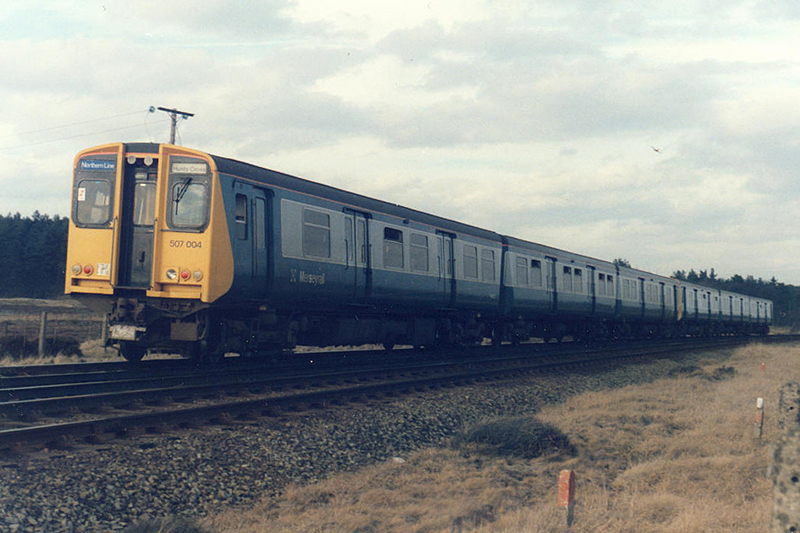
A suburban third-rail EMU built by BREL in 1978–79 for Merseyrail. Part of BR's 1972 suburban design family, the Class 507 has been a long-serving, refurbished fleet on Liverpool-area services.
Overview
The British Rail Class 507 is a family of electric multiple unit (EMU) trains introduced in 1978–79 and delivered to work on the Liverpool suburban network. Constructed by BREL at the York works, the 507s derive from British Rail's standardized 1972 suburban EMU concept, a design lineage that also produced related types such as the Class 313, Class 314, Class 315 and Class 508. From new they were allocated to the Merseyrail network, where they performed local passenger services.
Image gallery
10 Images


Design and characteristics
The Class 507s were configured for suburban stop-start operation. Unlike some siblings in the 1972 family, they were built as third-rail DC units only, operating from a 750 V DC conductor rail rather than a dual-voltage arrangement. Their layout emphasizes fast passenger flow and frequent door operation suited to short journeys between urban stations. Interiors have been adapted over time to meet changing accessibility and passenger-comfort expectations.
Production and development
As a specific variant of the 1972 design brief, the Class 507 followed established electrical and mechanical principles of the era while adopting the single-voltage third-rail arrangement required by Merseyrail infrastructure. The units entered service in the late 1970s and formed the backbone of local electrified services in and around Liverpool for decades.
Service life and refurbishment
Throughout their working life the 507s have been maintained and periodically refurbished to extend serviceability and improve passenger facilities. A comprehensive refurbishment programme carried out by Alstom at its Eastleigh works modernised interiors, updated systems and refreshed exteriors, allowing the fleet to continue reliable suburban operations.
Importance and distinctions
- Purpose-built for third-rail networks: the Class 507s were the first of their 1972-family variants constructed solely for 750 V DC third-rail operation.
- Regional role: they have been closely associated with Merseyrail services since new, forming a recognizable element of Liverpool's public transport.
- Design lineage: they illustrate how a common design concept was adapted across several subclasses (the 1972 EMU family) to meet different electrical and route requirements.
Although newer rolling stock has been introduced in many regions, the Class 507 remains notable for its longevity and for demonstrating how standardized designs can be tailored to local electrification systems. For more technical history and service details consult dedicated sources and fleet records.
Related articles
Author
AlegsaOnline.com British Rail Class 507 electric multiple units Leandro Alegsa
URL: https://en.alegsaonline.com/art/14482