
British Rail Class 60
A heavy freight Co-Co diesel locomotive type used on UK railways, known for high power and mixed-service longevity despite early reliability problems and intensive maintenance needs.
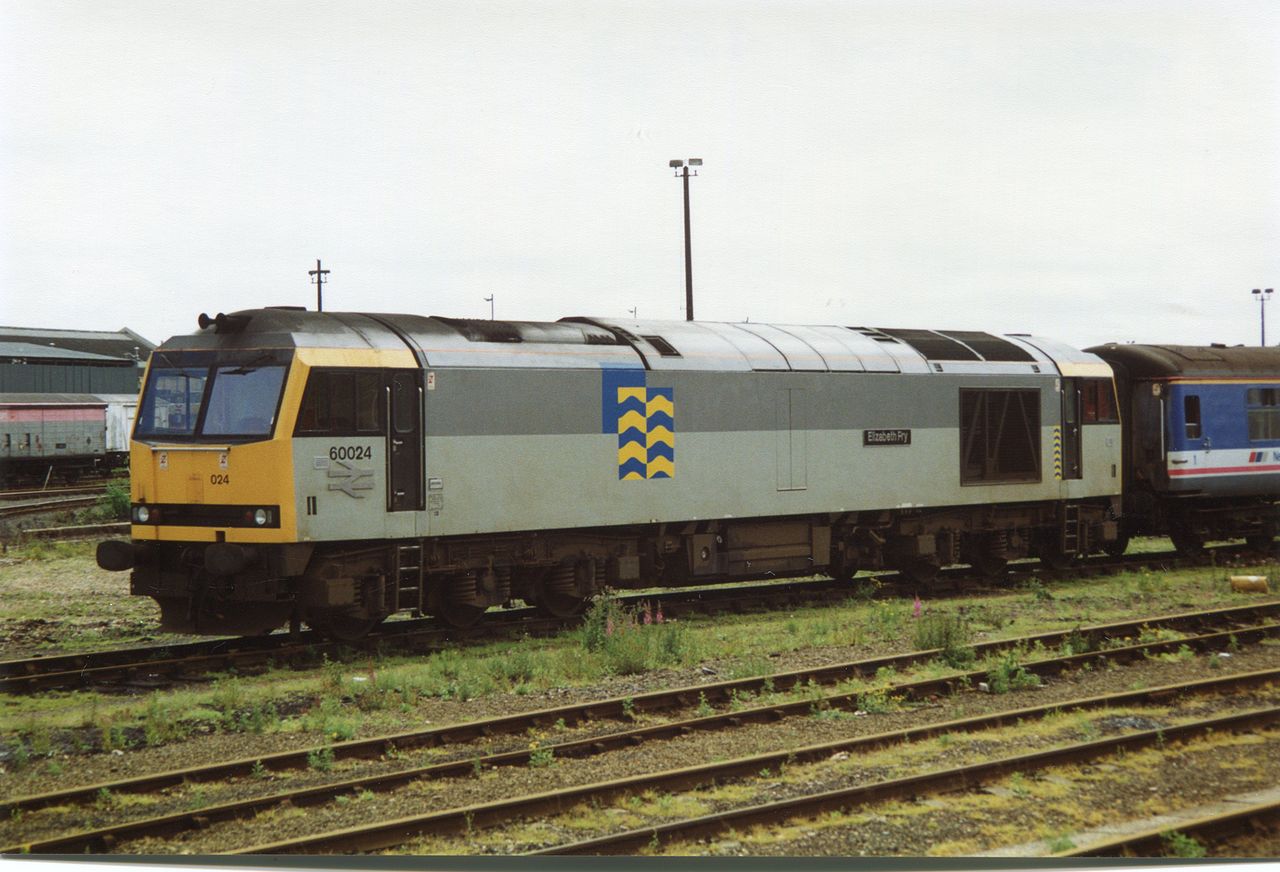
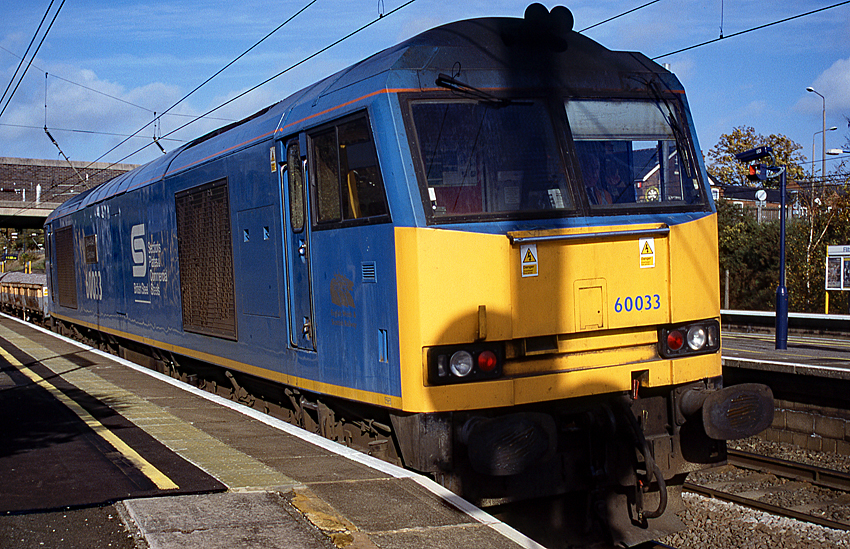
The British Rail Class 60 is a heavy freight diesel locomotive type introduced to address the need for high-traction power on the UK mainline network. Designed around a Co-Co wheel arrangement, the class was intended for sustained hauling of lengthy and heavy trains, such as bulk aggregates, coal and engineering materials. They are regarded as among the most powerful diesel locomotives used in Britain and have remained a distinctive element of freight operations.
Image gallery
8 Images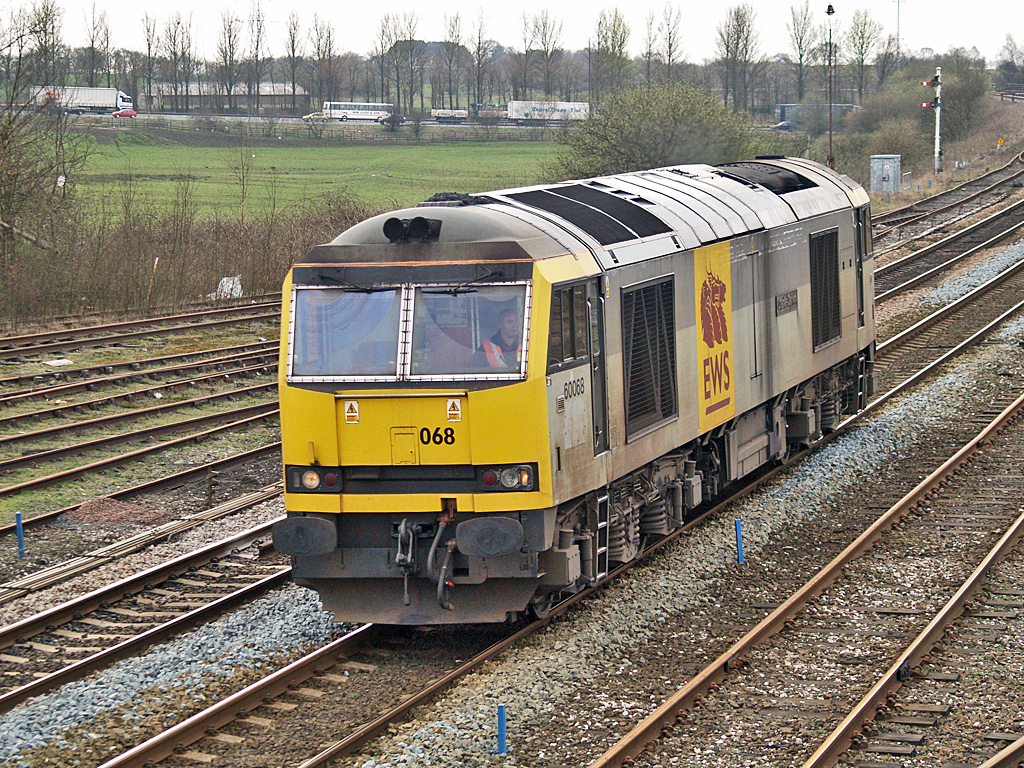


Characteristics
The design emphasizes tractive effort, robustness and long-range freight capability rather than passenger comfort or high-speed running. Typical features include a six-axle (Co-Co) arrangement to spread axle load, a long hood body with a central cab for good forward and rearward visibility, and heavy frames to cope with the stresses of constant freight duty. The locomotives carry equipment intended for heavy haul work and are maintained to cope with extended shift patterns.
Development and service history
Introduced in the late twentieth century to modernize and consolidate freight traction, the class replaced older, lower-power designs on demanding freight routes. Early in their service life they experienced a range of technical and reliability problems that required substantial modification and intensive maintenance programs. Over time, ongoing refurbishment and overhaul programmes improved availability, and several examples have remained in front-line freight use longer than originally planned.
Roles, operators and examples
Class 60 locomotives have been used predominantly on heavy bulk freight workings: minerals, construction aggregates, waste and engineering trains. They have been allocated to a variety of freight operators and have also appeared on infrastructure and departmental duties when required. Their combination of adhesive weight and power makes them suitable for low-speed, high-traction tasks where sustained pulling force is needed.
Notable facts and legacy
While the class gained a reputation for being less reliable than hoped at introduction, many engines have been modernized and some preserved examples now attract interest from enthusiasts for their place in British freight history. For technical details, fleet status and historical notes consult specialist sources and fleet lists such as dedicated Class 60 resources.
Related articles
Author
AlegsaOnline.com British Rail Class 60 Leandro Alegsa
URL: https://en.alegsaonline.com/art/14491