
2020 Republican National Convention
The Republican Party's 2020 nominating convention, held Aug 24–27, 2020, in an unusual, scaled-down and partially virtual form amid the COVID‑19 pandemic, which renominated Donald Trump and Mike Pence.
Overview
The 2020 Republican National Convention was the event in which delegates of the Republican Party formally selected their nominees for president and vice president for the 2020 United States presidential election. The convention ran from August 24 to August 27, 2020, and resulted in the renomination of Donald Trump for president and Mike Pence for vice president. Unlike many earlier conventions, much of the program was distributed electronically, pre-recorded or held in small, in-person gatherings rather than as a single, large arena event.
Image gallery
10 Images


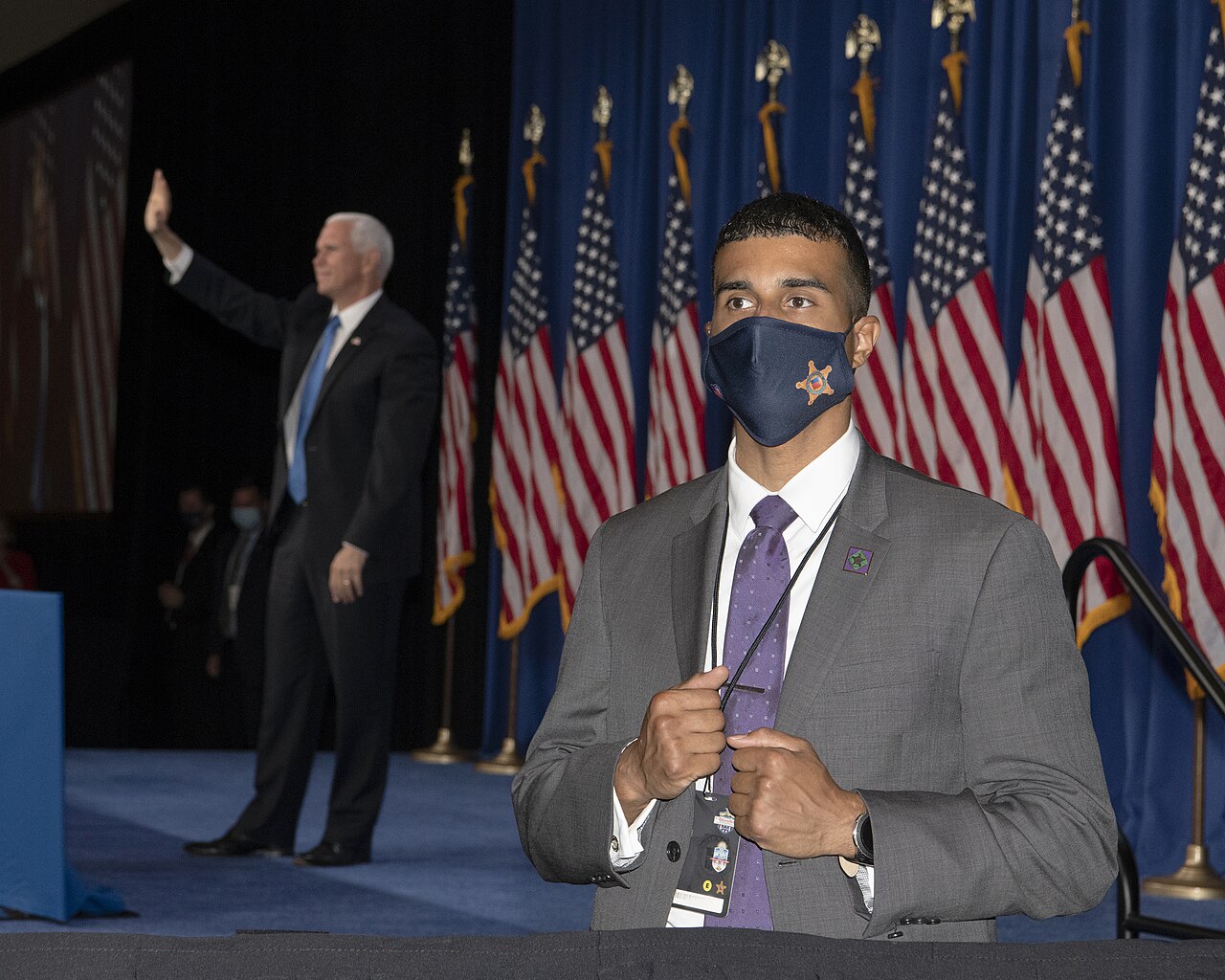


Location, scheduling and pandemic impact
The convention had originally been scheduled for the Spectrum Center in Charlotte, North Carolina, and the organization and logistics involved the Republican National Committee working with state and local authorities. When public-health guidelines related to the COVID-19 pandemic in the United States became central to planning, disagreements over attendance limits and mitigation measures emerged. North Carolina officials declined to permit the convention to proceed with the full-capacity event the organizers sought, and in early June the campaign and party moved plans toward Jacksonville, Florida. Plans for Jacksonville were later canceled; a much smaller set of events took place in Charlotte, and other parts of the program were staged at separate venues or broadcast from elsewhere.
In mid‑August the nominee announced an intention to deliver the formal acceptance address from the White House. A live audience gathered outdoors to watch the speech, and observers and public-health officials noted that seating and distancing at that event did not follow widely recommended social-distancing precautions, raising controversy about public-safety and protocol. Accounts from the event recorded that more than 1,500 people were present.
Format and functions of the convention
National political conventions serve several procedural and symbolic roles: they confirm a party ticket, showcase party leaders, outline campaign themes and generate media attention in a concentrated period. The 2020 Republican convention fulfilled those roles but did so through a hybrid mix of remote addresses, pre-recorded segments and limited in-person sessions. Delegates formally cast ballots or record votes consistent with prior primaries and party rules, and party officials used the platform to coordinate messaging and finalize the campaign narrative for the fall election.
Key facts and distinctive features
- Dates: August 24–27, 2020.
- Nominees: Donald Trump (president) and Mike Pence (vice president).
- Primary sites: originally scheduled for the Spectrum Center in Charlotte, briefly relocated toward Jacksonville, Florida, with significant parts of the program later staged elsewhere.
- Health and logistics: planning and public debate involved state authorities in North Carolina and national party leaders, including the RNC, amid continuing concerns about COVID‑19 transmission and social-distancing practices such as social distancing.
Controversies and public reaction
The unconventional structure of the 2020 convention generated discussion in the press and among public officials about the appropriate balance between political expression and public-health safeguards. Moving or canceling large sections of the program and staging high-profile speeches at the White House prompted debate about norms, venue use and messaging. Critics and supporters disagreed over whether the scaled-down format reduced customary safeguards or whether it was a necessary adaptation to exceptional circumstances.
Historical context and significance
Political conventions in the United States have evolved from multi-day, delegate-driven gatherings to highly choreographed media events. The 2020 Republican National Convention is widely viewed as part of a broader pattern of major-party conventions that were reshaped by the pandemic: parts of the 2020 convention season embraced virtual programming, local satellite events and unusual venues. For scholars and observers, the 2020 conventions will be examined as examples of how parties adapt ritual and procedure in response to public-health crises, logistical constraints and changing media environments.
For further primary-source materials and official summaries, readers may consult party releases, contemporaneous news reporting and official convention documents archived by relevant organizations.
Republican Party | President | Vice President | 2020 Election | COVID‑19 | Donald Trump | Mike Pence | Spectrum Center | RNC | North Carolina | Jacksonville | White House | social distancing
Author
AlegsaOnline.com 2020 Republican National Convention Leandro Alegsa
URL: https://en.alegsaonline.com/art/133796