
1936 North American heat wave: causes, impacts, and legacy
A devastating summer heat wave across the United States and parts of Canada in 1936, linked to Dust Bowl droughts and causing widespread crop failure, record temperatures and thousands of deaths.
Overview
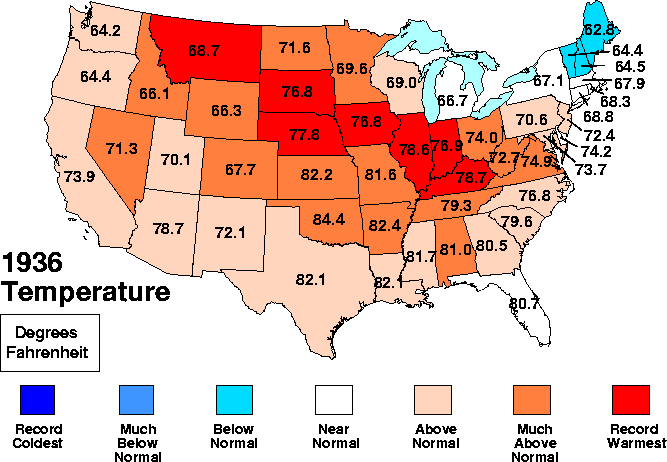
The 1936 North American heat wave was one of the most severe and widely felt summer heat events in modern U.S. and Canadian history. It developed in late June and continued through July 1936, occurring against the backdrop of the Great Depression and the agricultural Dust Bowl. The episode brought prolonged extreme temperatures, widespread moisture loss and intense human hardship across much of the continent, especially in the central Great Plains and the Midwestern United States. For contemporary observers it was commonly described simply as the 1936 heat wave.
Image gallery
3 Images

Causes and conditions
The heat wave resulted from a combination of atmospheric and surface conditions. A persistent high-pressure ridge parked over the region reduced cloud cover and suppressed thunderstorm development, allowing solar heating to build. At the same time, prolonged dry soil and reduced vegetation—symptoms of the ongoing drought associated with the Dust Bowl—lowered evaporative cooling and amplified local warming. These interacting factors produced hotter and drier conditions than would otherwise have occurred.
Records and affected areas
Temperatures during 1936 set long-lived records in many states and provinces. Several Midwestern states such as Iowa, Minnesota and Illinois recorded extremes that stood for decades, and some state records were not exceeded until the heat wave of 2012. In Ohio the heat reached roughly 110 °F (about 43 °C) on some days, nearly matching earlier 1934 extremes. The event was not confined to the United States; adjacent areas of Canada also experienced unusually high temperatures and drought stress.
Impacts on people and agriculture
The human toll from the 1936 heat wave was severe. Contemporary estimates attribute more than 5,000 deaths in the United States to heat-related causes, with additional suffering caused by crop failures, livestock losses and worsened living conditions for already impoverished families. The lack of moisture combined with prolonged heat damaged corn, wheat and other staples across the Plains and Midwest, aggravating economic distress during an already difficult decade.
Response and legacy
Public health responses in 1936 were limited compared with modern heat-preparedness programs: cooling centers, widespread air conditioning and organized heat warnings were largely absent. The crisis highlighted the vulnerability of rural agricultural communities to extreme weather and influenced later developments in land management, agricultural practices and federal relief efforts during the Depression era. In climatology and historical studies the 1936 event is frequently cited as a benchmark for pre‑industrial-era heat extremes and for examining interactions between land-surface conditions and atmospheric circulation.
Notable facts
- Occurred amid the economic strain of the Great Depression and the environmental collapse of the Dust Bowl, worsening social and economic impacts.
- Persistent dry soils and reduced vegetation increased surface heating and limited natural cooling from evaporation and transpiration.
- Many state-level temperature records set in 1936 remained unbroken for decades and were compared with the 2012 heat wave in later assessments.
- The event affected both the Great Plains and the broader United States, with spillover impacts into Canada.
- Primary historical sources and modern analyses continue to examine the 1936 heat wave to better understand extreme heat, drought linkages and societal vulnerability—see contemporary summaries at historical overviews and regional climate records (Iowa, Minnesota, Illinois, Ohio).
Author
AlegsaOnline.com 1936 North American heat wave: causes, impacts, and legacy Leandro Alegsa
URL: https://en.alegsaonline.com/art/133514