
Borscht: the beet-based soup of Eastern Europe and beyond
Borscht is a family of sour, beet-centered soups originating in Eastern Europe. It has many regional forms, ingredients, and serving traditions across Ukraine, Poland, Romania, Russia and Central Asia.
Overview
Borscht is a broad name for soups whose dominant ingredient is red beetroot and whose taste is characteristically sweet-and-sour. While strongly associated with Ukrainian cuisine, versions of the dish are common across Eastern Europe and adjacent regions: Polish, Lithuanian and Romanian traditions all feature beet soups, and it is widely eaten in Russia, Romania, Poland, Belarus, Moldova and Lithuania. Variants are also prepared in parts of Central Asia, for example Kazakhstan and Turkmenistan.
Image gallery
10 Images



Typical ingredients and preparation
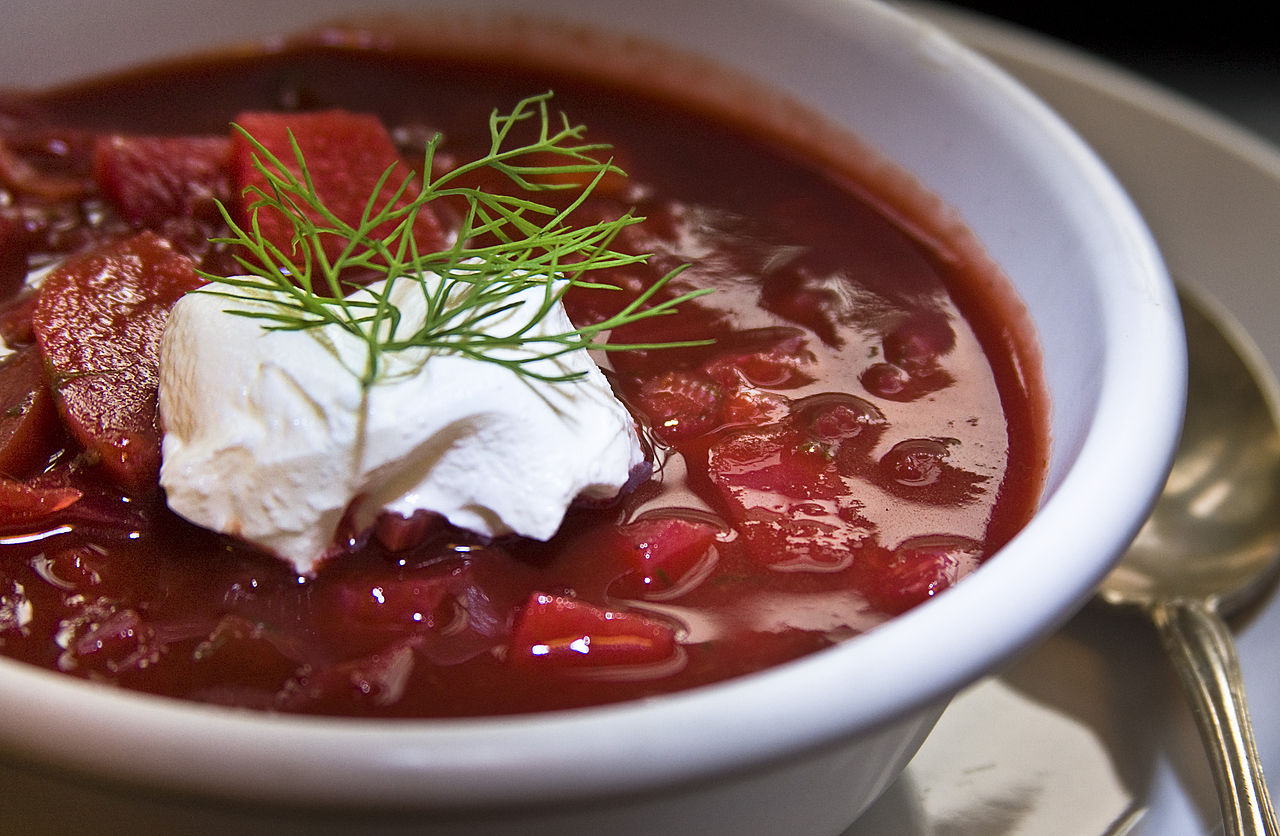
Core components include red beets, a broth (meat or vegetable), cabbage, potatoes, carrots and onion. Other common elements are tomato or tomato paste, garlic, herbs such as dill, and an acidifier—vinegar, lemon or fermented liquids—to give the soup its tang. Meat borscht uses beef, pork or smoked meats; vegetarian versions omit meat and rely on mushroom or bean stock.
- Basic steps: cook or roast beets, sauté aromatics, simmer with broth and vegetables, adjust sweet/sour balance.
- Finish with a dollop of sour cream (or plant-based alternative) and fresh herbs; serve with dark rye or black bread.
Regional forms and distinctions
There is no single recipe. Common named types include the deep red hot borscht of eastern Ukraine and neighbouring states; green borscht, made with sorrel or spinach; and cold borscht (kholodnik) in which beets are grated or boiled and served chilled with yogurt, kefir or kvass. In Poland, barszcz can also mean a clear beet consommé often served with small dumplings. In Romania the word borș may refer to a fermented souring liquid used in soups as well as to the sour soup itself.
Cultural role and occasions
Borscht functions as an everyday soup and as part of celebratory meals. Variants appear at family tables, winter feasts and religious holiday menus; meatless mushroom borscht is traditional in some places for Christmas Eve. Beyond taste, the dish has symbolic value as a marker of regional identity and hospitality across multiple peoples.
Notes, etymology and modern context
The name derives from older Slavic terms connected with wild plants and sour soups. In recent years borscht has attracted international attention as a culinary emblem of shared Eastern European heritage; communities and cultural institutions have documented regional recipes and oral traditions. Despite periodic debates about national ownership, scholars and cooks emphasize the long history of local adaptation, producing a spectrum of related soups rather than a single canonical dish.
For further reading on regional recipes and techniques, consult sources on traditional Ukrainian, Polish and Romanian cuisines or regional cookbooks that collect family variants and preparation tips.
Related articles
Author
AlegsaOnline.com Borscht: the beet-based soup of Eastern Europe and beyond Leandro Alegsa
URL: https://en.alegsaonline.com/art/13164