
Samuel Wesley (1766–1837) — English organist and composer
Samuel Wesley (1766–1837) was an English organist, violinist and composer, son of Charles Wesley and an important figure in raising standards of English church and keyboard music.
Overview
Samuel Wesley was an English musician born in Bristol on 24 February 1766 and died in London on 11 October 1837. He is best known as an organist and composer whose work and activity helped strengthen the tradition of sacred and keyboard music in Britain at the turn of the 19th century. A skilled performer and teacher, he combined practical musicianship with advocacy for high musical standards.
Image gallery
3 Images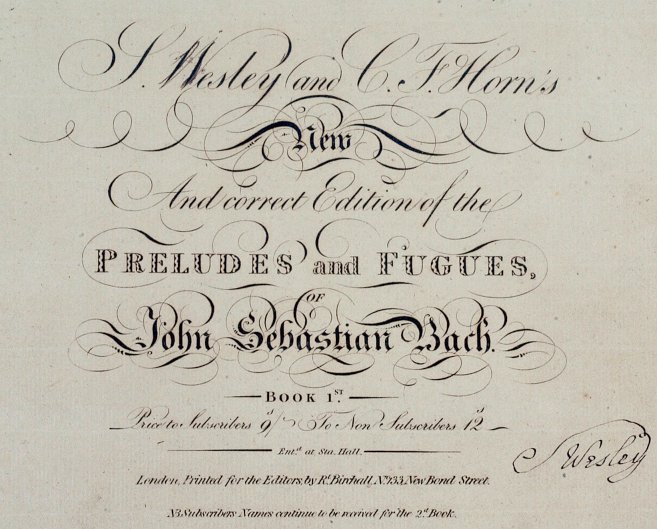


Family and early life
Wesley came from a prominent Methodist family. He was the son of the hymn-writer Charles Wesley, the grandson of the poet Samuel Wesley, and the nephew of John Wesley, the founder of the Methodist movement. His musical lineage continued in the next generation: his illegitimate son, Samuel Sebastian Wesley, became a leading figure in English church music in the 19th century.
Instruments, roles and activities
Samuel Wesley was versatile: he played the violin as well as the organ, and he worked as a teacher, lecturer and conductor. Throughout his career he took positions as an organist, gave public recitals, assisted in performances of new and older repertoire, and lectured on musical subjects. His practical work was matched by efforts to raise the general level of musical training among English performers and church musicians.
Musical style and output
Wesley composed in genres that included liturgical music, keyboard pieces and works for small ensembles. His music reflects an affinity for earlier contrapuntal practice together with the expressive tendencies of his own time. He wrote anthems, voluntaries, sonatas and chamber pieces intended for both church and concert settings. Unlike much of the lightweight popular music of the period, Wesley's compositions aimed at technical competence and expressive depth.
Influence and legacy
While not always widely celebrated in his own lifetime, Wesley's influence was felt through his teaching, his advocacy for greater seriousness in composition and performance, and his role as a bridge between earlier traditions and the developing 19th-century English church repertoire. His encouragement of disciplined counterpoint and his promotion of substantial organ and choral music helped prepare fertile ground for later figures in British church music.
Repertoire and notable facts
- Wesley's surviving works span church anthems, organ voluntaries and keyboard sonatas.
- He combined performing, composing and lecturing to influence musical life beyond the places where he held posts.
- His family connections linked him to the Methodist tradition and to later generations of church composers.
For readers seeking further detail about specific compositions, positions or historical context, consult specialist studies or collections of early 19th‑century English music. General introductions and catalogues of his works can be found through dedicated musical reference resources and archives. Bristol, London and other cities where he worked preserve documents and scores that illuminate his practical contributions to English musical life.
Author
AlegsaOnline.com Samuel Wesley (1766–1837) — English organist and composer Leandro Alegsa
URL: https://en.alegsaonline.com/art/130412