
Book of Baruch
Ancient biblical book attributed to Baruch, Jeremiah’s scribe. Found in the Septuagint and Vulgate, valued in Catholic and Orthodox canons; offers prayer, penitence, wisdom exhortation and consolation.
The Book of Baruch is an ancient Jewish work associated with Baruch son of Neriah, traditionally described as the scribe and companion of the prophet Jeremiah. While the book itself is not part of the Hebrew Bible, it appears in the Greek Septuagint and in Latin tradition and has been preserved in Christian Bible collections. Its contents blend penitential prayer, calls to wisdom, and consolation for the exiled community.
Image gallery
2 Images
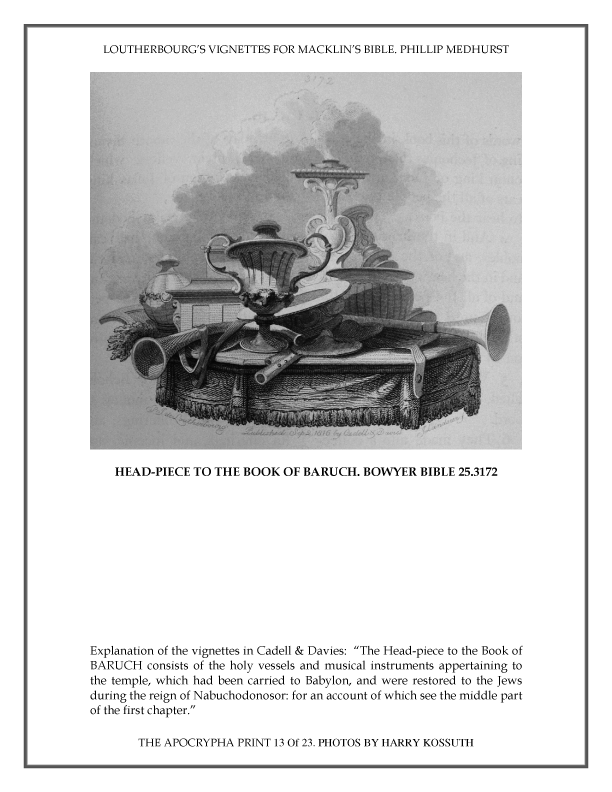
Contents and structure
Although different Christian traditions number and append texts in various ways, the Book of Baruch is commonly presented in several distinct sections that combine prose and poetic material. These include:
- A brief introduction identifying Baruch and the circumstances of composition.
- A communal confession of sin and a penitential prayer pleading for mercy and restoration.
- An extended exhortation to seek divine wisdom and to value the law and instruction.
- A poetic reflection on the gift of the Law and the consequences of idolatry.
- A message of consolation and hope for Jerusalem and the exiled people.
Authorship and dating
The work is attributed to Baruch, the biblical scribe, but modern scholarship generally regards the book as a product of the late Second Temple period rather than a sixth-century BCE composition. Many scholars date it to the centuries before the Common Era, reflecting concerns and language of Jewish communities living under Hellenistic influence. Fragments identified with the book were also among the documents discovered at Qumran, indicating it circulated in some Jewish circles.
Canonical status and manuscripts
Different religious traditions treat the Book of Baruch in varying ways. It is regarded as part of the biblical canon in the Roman Catholic and many Eastern Orthodox churches (often labeled deuterocanonical), while many Protestant communities classify it as apocryphal and do not include it in their canon. It is absent from the Hebrew Bible but present in ancient Greek collections such as the Septuagint and in Latin as part of the Vulgate. Some editions include the Letter of Jeremiah as an appended section.
Themes and importance
Major themes in Baruch include confession and repentance, the value of wisdom and instruction, the dangers of idolatry, and consolation for a displaced community. The book frames suffering as a consequence of covenant unfaithfulness while urging hope through return to the law and trust in God’s mercy. These themes made it useful for liturgical reading and theological reflection in early Christian and Jewish contexts.
Related writings and distinctions
Baruch should not be confused with later pseudepigraphal works that also bear the name Baruch, such as the Syriac 2 Baruch (also called the Apocalypse of Baruch) or 3 Baruch. When consulting translations or commentaries, readers will encounter the book in collections derived from the Septuagint, the Vulgate and various patristic witnesses; modern critical editions rely on Greek, Latin and Hebrew/Aramaic fragments. For general reference see treatments of the deuterocanonical books and surveys of Second Temple literature: Bible studies and bibliographies, Hebrew Bible context, and manuscript resources such as those documenting the Septuagint and Vulgate.
Tags
Related articles
Author
AlegsaOnline.com Book of Baruch Leandro Alegsa
URL: https://en.alegsaonline.com/art/12957