
Book of Enoch
Ancient Jewish work attributed to Enoch. A composite apocalyptic text preserved mainly in Ge'ez, influential in Second Temple thought and early Christianity but noncanonical in most traditions.
The Book of Enoch is an ancient Jewish apocalyptic collection traditionally ascribed to the antediluvian figure Enoch, described in the Bible as the great‑grandfather of Noah and a son of Jared. Modern scholars regard the text as pseudepigraphal—that is, written under an assumed name—and composed in multiple stages rather than by a single historical Enoch. The work explores themes of divine revelation, moral judgment, supernatural beings, and the fate of the righteous and wicked.
Image gallery
5 Images
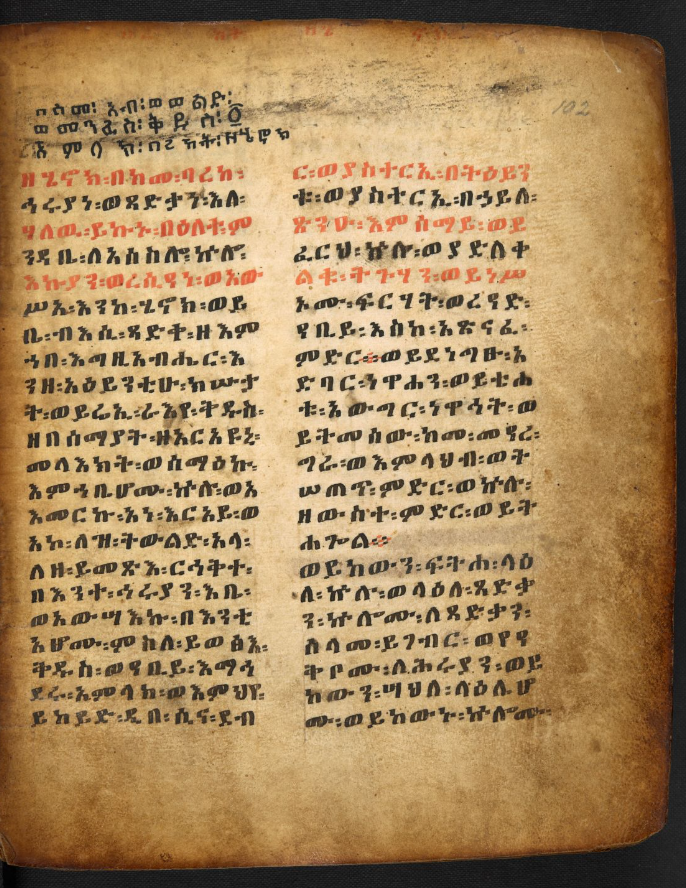


Composition and textual history
The Book of Enoch is a composite anthology assembled during the Second Temple period. It survives most fully in the Ge'ez (classical Ethiopian) language, and fragments in Aramaic and other languages were found among the Dead Sea Scrolls and in later Greek and Latin translations. Because it appears to be the product of different hands and times, scholars date its constituent parts broadly to the centuries before the Common Era and the early centuries CE, with subsequent redaction and transmission in various communities.
Structure and main themes
The collection is commonly divided by readers into several major sections, each with distinct emphases and literary style:
- The Book of the Watchers — describes heavenly watchers (angels), their descent, illicit unions with human women, and the birth of giants, followed by divine judgment.
- The Similitudes (Parables) — contains prophetic visions concerning a messianic figure, final judgment, and the vindication of the righteous.
- The Astronomical Book — offers a detailed heavenly calendar and explanations of celestial phenomena.
- The Dream Visions — narrative visions that rehearse Israel’s history and an apocalyptic future in allegorical form.
- The Epistle of Enoch — ethical instructions, exhortations, and further prophetic material.
Content highlights and significance
The Book of Enoch addresses the origins of demonic forces and giants (often linked to the Nephilim), the moral causes behind divine punishments such as the Flood, and an elaborate angelology and cosmology. It offers a vivid depiction of heaven and the court of divine judgment, and it anticipates certain messianic and eschatological ideas that appear in later Jewish and Christian literature. A notable point of contact with the New Testament is that an Enochic passage is cited in the Epistle of Jude (Jude), which has drawn attention to its influence.
Reception and legacy
Although the Book of Enoch enjoyed circulation and authority in some Jewish and Christian circles in antiquity, it did not enter the canon of Rabbinic Judaism and is absent from most Christian biblical canons. The Ethiopian Orthodox Church preserves it as canonical, which explains the survival of the full Ge'ez version. Elsewhere it was regarded as valuable for understanding apocalyptic thought but not as Scripture by mainstream traditions, reflecting debates about pseudepigraphy and theological compatibility with developing canons (biblical canon).
Scholarly study and modern interest
Contemporary scholarship treats the Book of Enoch as a key witness to Second Temple religion, offering insight into early Jewish ideas about angels, eschatology, and sacred time. Researchers work with linguistic evidence from Ge'ez, Aramaic and Greek fragments to reconstruct the text’s development and transmission. Its literary motifs have shaped later religious imagination, and today the work is studied both for historical research and for its continuing religious and cultural impact.
For further contextual introductions and manuscript information see general resources on the figure of Enoch, the genealogy to Noah, and issues surrounding Jared and patriarchal listings; consult overviews of pseudepigrapha and the wider discussion of the biblical canon to understand why this work occupies a distinctive place in religious history.
Tags
Related articles
Author
AlegsaOnline.com Book of Enoch Leandro Alegsa
URL: https://en.alegsaonline.com/art/12961