
Bel and the Dragon — Deuterocanonical Additions to Daniel
Bel and the Dragon is a three-part addition to the Book of Daniel, preserved in some ancient manuscripts. It contains two polemical tales ridiculing idol worship and a variant lion’s-den episode.
Overview
Bel and the Dragon is an ancient set of three short narratives traditionally attached to chapter 14 of the Book of Daniel; it appears in some Greek manuscripts and in Christian traditions that accept additional Old Testament material. The episode is commonly described as Daniel 14 in editions that include these additions. Because it is not found in the Hebrew Bible and is treated differently by various Christian communities, modern editions often label it deuterocanonical or apocryphal; many Protestant editions omit it entirely and discuss it as extra-biblical material (Protestant practice).
Image gallery
3 Images
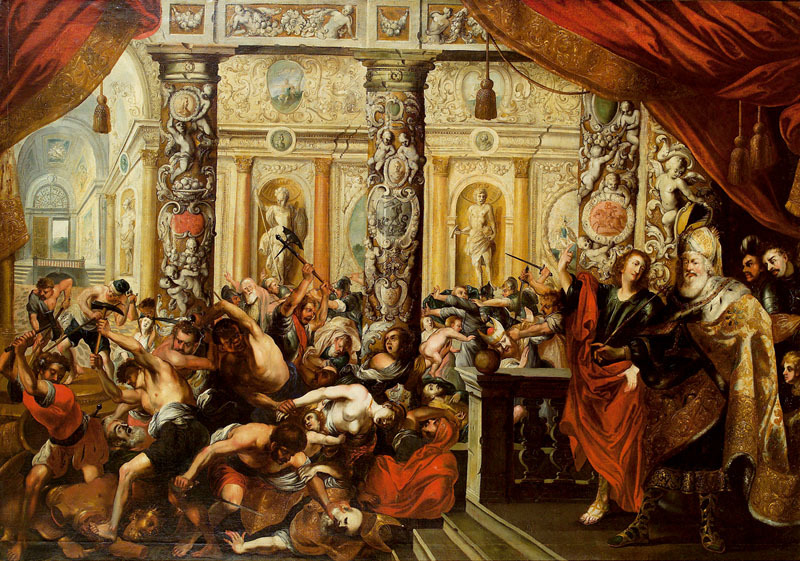

The three narratives
The composite chapter comprises three independent but thematically linked tales that place the figure Daniel at the Persian court of King Cyrus. They are short, episodic stories that combine satire of idolatry, miracle motif, and courtroom-style resolution. A concise outline follows:
- Bel: A feast is offered to the idol Bel, which the king and populace believe consumes its daily offerings. Daniel shows by a cunning test that the supposed consumption is the work of priests and their families who enter by a hidden way at night. The idol and its shrine are exposed and destroyed.
- The Dragon: In Babylon a living dragon-like creature venerated as a god is killed by Daniel. He feeds it cakes made of pitch, fat, and hair; after consuming them the creature bursts and dies. This too undermines popular claims of divinity.
- Daniel in the Lions’ Den (variant): A version of the more famous lions’ den story appears with an added detail: the prophet Habakkuk is miraculously transported to supply Daniel with food while he remains unharmed in the den. This episode appears with varying placement in different manuscript traditions.
Historical context and authorship
Scholars generally date these additions later than the core Hebrew Book of Daniel. Many place their composition in or after the Hellenistic age, with some proposals around the late second century BCE based on language, style, and the polemical character of the tales. For that reason Protestant editors commonly designate the text late and extra-canonical and refer to it as apocryphal in theological discussions. The narratives reflect themes common to Near Eastern folklore: exposure of fraudulent temple servants, trickery to test gods, and miraculous rescue stories centered on a pious protagonist.
Manuscript tradition and placement
Different manuscript traditions place these stories in varying contexts. The Greek Septuagint tradition preserves the tales together and sometimes appends a heading that connects the third episode to the prophet Habakkuk; this ordering is noted in some ancient copies (Septuagint witnesses). Other manuscript families and later translations insert the episodes at different points or omit them entirely. The figure of Cyrus appears in the framing material for Daniel in these additions and is sometimes mentioned explicitly as the Persian ruler who hosts Daniel (Cyrus reference).
Literary features and influence
These short narratives are notable for blending satire, detective-like stratagem, and miracle storytelling. The first story, in particular, has been linked by literary historians to later detective and «locked-room» puzzles because it depends on revealing how a seemingly impossible happening was staged. The Dragon episode uses grotesque imagery and a practical ruse to demonstrate that not everything a community reveres is divine, while the lions’ den variant amplifies the theme of divine protection by introducing a secondary prophet as caretaker.
Reception, religious significance, and distinctions
Reception of Bel and the Dragon varies among religious traditions. Eastern Orthodox and Roman Catholic canons include these additions in their biblical collections or in the Apocrypha section of some editions, reading them as edifying tales that attack idolatry and affirm divine power. Protestant traditions typically treat them as non-canonical and useful only for historical or literary study. Critics and readers often point out that the Daniel figure in these episodes can appear different in tone from the earlier Daniel material, prompting debate about whether the same protagonist or a later folk-heroic Daniel is intended.
Finally, the stories have had a modest afterlife in art, preaching, and comparative folklore studies. They offer insight into ancient attitudes toward cult practice, the rhetorical exposure of religious fraud, and the ways miracle tales were adapted to local religious debates. For further manuscript and textual notes consult modern editions and commentaries that collect the deuterocanonical additions and provide comparative translations (textual reference, canonical discussion, tradition overview, dating studies, apocryphal listings, historical context, Septuagint notes).
Questions and answers
Q: What is the narrative of Bel and the Dragon?
A: The narrative of Bel and the Dragon is from chapter 14 of the Book of Daniel. It is typically not included in Protestant Bibles, as it is believed by some scholars to have been written in the late 2nd century BC and accounted apocryphal by Protestants. It tells a folk tale ridiculing worship, where Daniel proves through a ruse that a sacred meal of Bel is actually consumed at night by priests and their families. He then destroys the idol of Bel and its temple, followed by slaying a dragon with cakes made out of pitch, fat, and hair.
Q: Is this version related to any other stories or genres?
A: Yes, this version has been cited as an ancestor of the "locked room mystery".
Q: What happens after Daniel slays the dragon?
A: After Daniel slays the dragon with cakes made out of pitch, fat, and hair, he becomes indignant among Babylonians who demand for him to be handed over to them.
Q: How does King Cyrus respond when he finds out about what happened?
A: When King Cyrus comes to mourn for Daniel in his den filled with seven lions, he shouts with a loud voice saying “You are great O Lord” before pulling him out from within it.
Q: Who throws those attempting to destroy Daniel into the den filled with lions?
A: King Cyrus throws those attempting to destroy Daniel into the den filled with lions after pulling him out from within it.
Q: What does Habakkuk have to do with this story?
A: The Septuagint precedes this story with notice “From prophecy Habakkuk son Jesus tribe Levi” indicating that Habakkuk was responsible for miraculously transporting food for Daniel while he was inside his den filled with seven lions.
Q: Is there any evidence suggesting that this version may feature another character than that featured in chapters 1-13?
A: Some have suggested that there may be evidence suggesting that this version features another character than that featured in chapters 1-13.
Tags
Related articles
Author
AlegsaOnline.com Bel and the Dragon — Deuterocanonical Additions to Daniel Leandro Alegsa
URL: https://en.alegsaonline.com/art/10183