
Boldo (Peumus boldus): Chilean evergreen used for cooking and traditional remedies
Boldo (Peumus boldus) is an evergreen tree native to central Chile, valued for aromatic leaves used in cooking and herbal teas; it has traditional medicinal uses and distinctive botanical features.
Overview
Boldo (Peumus boldus) is a small to medium evergreen tree native to the Mediterranean-type sclerophyll forests of central Chile. It is the sole species in the genus Peumus and is notable for its aromatic, leathery leaves and importance in local culture and cuisine. The tree is often discussed in botanical and herbal contexts as a characteristic member of Chilean dry forests; see taxonomy notes and regional accounts in central Chile.
Image gallery
1 Image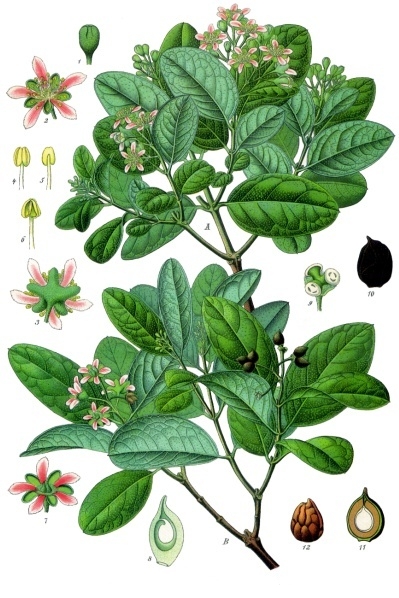
Description and distinguishing features
Boldo has a dense crown of glossy, ovate leaves with a distinct camphor-like scent and slightly bitter taste. The plant is dioecious (male and female flowers on separate plants), producing small, greenish-yellow flowers and later fleshy drupes that are eaten by birds. Key characteristics include leathery leaves, aromatic oils, and a form adapted to dry summers and wet winters.
Distribution, cultivation and introductions
Native to Chile, boldo has been cultivated and introduced to other regions with Mediterranean climates. It appears in botanical collections and occasional plantings in parts of Europe and North Africa; it is sometimes seen in horticultural displays but is uncommon in the wild outside its native range. Examples of introductions and garden records are documented in sources from Europe and North Africa, while some specimens remain confined to botanical gardens and collections (garden records).
Uses and cultural importance
The leaves are widely used in Latin American cooking and herbal practice. They are applied like bay leaves—imparting a woody, slightly bitter, camphor-like flavor—and are brewed as an infusion or tea. In traditional medicine, boldo preparations have been used for stomach complaints and as a mild digestive aid; commercially, boldo is sold in dried-leaf form or as extracts. Culinary and aromatic comparisons are often made to bay leaves in recipes and flavoring guidance (bay-leaf comparison).
Chemistry, safety and notable compounds
Boldo leaves contain volatile oils and alkaloids, the best-known being boldine, which has been studied for antioxidant properties. The plant’s aroma is driven by compounds with a camphor-like character; see aromatic analyses (aromatic profile). As with many herbal products, preparations should be used with caution: concentrated extracts can be more potent than culinary use, and some compounds may interact with medications or affect liver function if misused.
Practical notes and distinctions
- Boldo is the only species in its genus, making it distinctive within its botanical family.
- Leaves are used fresh or dried; whole leaves are commonly removed before serving, similar to bay leaves.
- The species thrives in Mediterranean climates and contributes to the sclerophyllous forest community of central Chile.
For horticultural or botanical reference, consult regional floras and cultivation guides (botanical data, habitat, introduced ranges, North Africa notes, garden records, chemical studies, culinary use).
Related articles
Author
AlegsaOnline.com Boldo (Peumus boldus): Chilean evergreen used for cooking and traditional remedies Leandro Alegsa
URL: https://en.alegsaonline.com/art/12758