
Boraginaceae (borage family): characteristics, uses, and notable genera
Boraginaceae, the borage family, is a diverse group of mainly herbaceous flowering plants with rough hairs, scorpioid inflorescences and four‑nutlet fruits; includes forget‑me‑nots, borage and comfrey.
Boraginaceae, commonly called the borage or forget‑me‑not family, comprises roughly 1,500–2,000 species distributed worldwide but most diverse in temperate regions, especially the Mediterranean and parts of Asia. Members are primarily herbs, though some are woody or subshrubby in form; a few species grow as climbers or shrubs. Many are cultivated for their attractive flowers and foliage or used in traditional medicine and dye production.
Image gallery
2 Images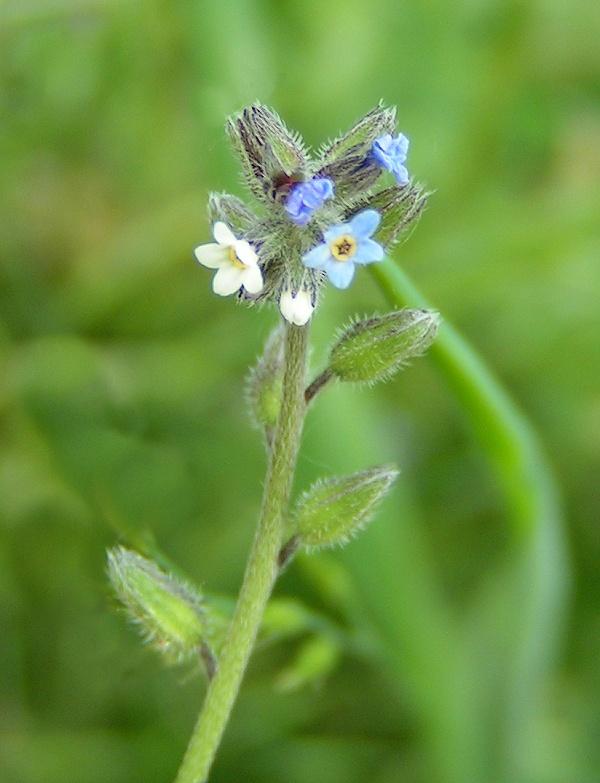

Key features
The family is recognisable by a set of characteristic traits that recur across its genera. Typical features include:
- Rough, often stiff hairs on stems and leaves giving a coarse texture.
- Leaves usually alternate and simple, sometimes forming rosettes.
- Inflorescences frequently arranged in a helicoid or scorpioid cyme — a coiled cluster that unfurls as flowers open.
- Radially symmetrical, five‑petalled flowers often blue, purple, white or yellow.
- Fruit commonly split into four one‑seeded nutlets.
Reproduction and ecology
Flowers of Boraginaceae are adapted to insect pollination; their conspicuous colors and nectar guides attract bees, butterflies and other pollinators. The nutlet fruits facilitate dispersal by attachment to fur or feathers or by falling near the parent plant. Many species thrive on well‑drained soils in sunny habitats, from dry rocky slopes to open woodland margins.
Uses and cultural importance
Several members of the family are grown as ornamentals for garden borders and cottage gardens because of their profuse and often long‑lasting blooms. Others have practical or historical uses: some provide dye compounds, some have been employed in herbal remedies, and a few species are grown for culinary herbs or edible flowers. Care is advised with medicinal or edible use because certain species contain pyrrolizidine alkaloids, compounds that can be toxic to the liver in high amounts.
Taxonomy and notable genera
The classification of Boraginaceae has been revised repeatedly as molecular studies clarified relationships; some groups once included in the family have been segregated into related families in modern treatments. Well‑known genera and common names include:
- Myosotis — forget‑me‑nots, famous for small blue flowers.
- Borago — borage, cultivated for edible flowers and oilseed in some regions.
- Heliotropium and Symphytum — heliotropes and comfreys, valued in gardens or traditional medicine.
- Cynoglossum — hound's‑tongue, often recognized by its hairy leaves and bristly fruits.
Although the family is best known for its garden favorites, it also contributes to wildflower diversity and supports pollinators across many ecosystems. For more detailed botanical descriptions and species lists consult specialized floras and taxonomic treatments linked in botanical databases and regional guides.
Related articles
Author
AlegsaOnline.com Boraginaceae (borage family): characteristics, uses, and notable genera Leandro Alegsa
URL: https://en.alegsaonline.com/art/13062