
Boer (South African farmers, settlers and historical community)
Boer: originally the Dutch word for 'farmer', applied to descendants of Dutch settlers in southern Africa. Covers origins, migrations (Great Trek), Boer republics, Anglo‑Boer wars, language, culture and legacy.
Overview
Boer is a Dutch-derived term meaning "farmer" that came to denote the rural descendants of European settlers in southern Africa. In colonial and later historical contexts the word refers particularly to the Dutch, German and French Huguenot settlers and their descendants who farmed around the Cape of Good Hope and later established independent communities inland. Over time the people associated with this heritage shaped a distinct identity and language that played a central role in the region's 19th- and early-20th-century history.
Image gallery
10 Images





Origins and migration
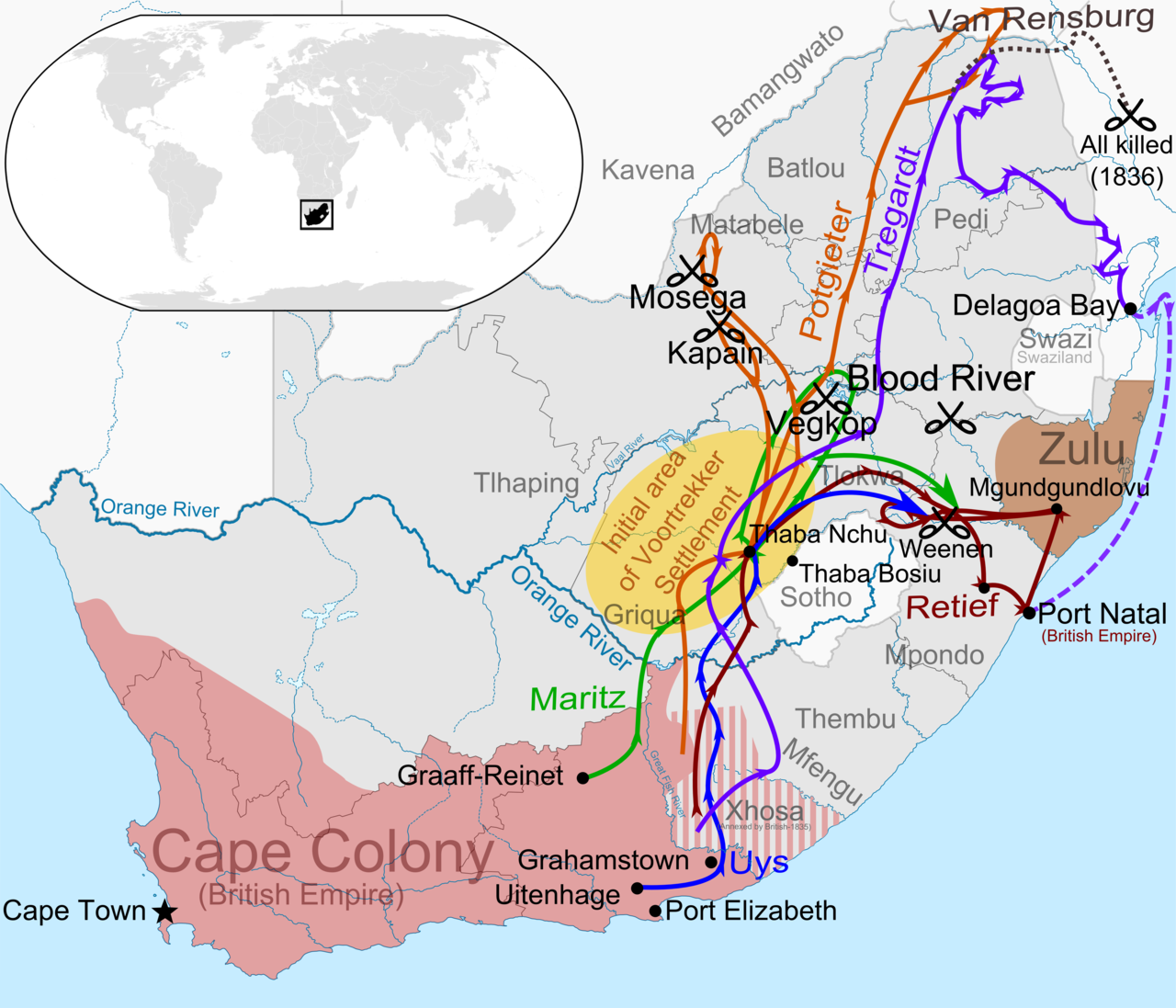
European settlement at the Cape began in the 17th century under the Dutch East India Company. Smallholder farmers, free burghers and mixed families created a frontier farming society. During the late 18th and early 19th centuries political changes, cultural mixing and pressures from expanding British colonial rule prompted some of these farmers to move away from the Cape. A major episode of migration known as the Great Trek took place in the 1830s and 1840s, when groups of Voortrekkers established settlements farther inland in search of autonomy and land for grazing and agriculture.
Boer republics and conflicts
By the mid-19th century several independent Boer polities emerged, most notably the Orange Free State and the South African Republic (often called the Transvaal). These republics maintained largely agrarian economies and political structures built around local leadership. Rivalry with the expanding British Empire escalated in the late 19th century, particularly after mineral discoveries on the highveld increased strategic and economic stakes. Two major military conflicts, often called the Anglo‑Boer wars (late 19th to early 20th century), ended with British victory and the incorporation of the Boer republics into broader imperial governance.
Language, religion and lifestyle
Among the most enduring legacies of the Boer communities is the Afrikaans language, which developed from 17th- and 18th-century Dutch alongside influences from other European languages, creole and local languages. Culturally, many Boers were associated with small-scale mixed farming, livestock herding and a lifestyle tied to rural homesteads. The Dutch Reformed Church played a central role in religious and communal life, shaping values and social institutions in Boer communities.
Legacy and distribution
After defeat in the Anglo‑Boer wars, many people of Boer background remained in what became South Africa, while others migrated to neighboring territories or overseas. Descendants of these settlers form part of the broader Afrikaner population but not all Afrikaners identify as Boers; the terms overlap but are not strictly synonymous. Today the historical presence of Boer communities is evident in place names, family histories, language and political developments in southern Africa.
Notable distinctions and facts
- "Boer" originally referred to a farmer; over time it acquired political and ethnic connotations.
- The Great Trek was a defining migration by groups seeking independence from colonial authorities.
- Boer republics such as the Orange Free State and the Transvaal briefly operated as independent states in the 19th century.
- Afrikaans, the language most closely associated with this community, evolved from Dutch with multiple influences.
Further reading and resources
- Pronunciation and linguistic notes
- Dutch language and origins
- History of farming communities
- Cape Colony context
- Orange Free State overview
- Transvaal (South African Republic)
- Natal and regional history
- British imperial history
- European settlement patterns
- Afrikaner identity
- Family naming and traditions
- Voortrekker narratives
- First Anglo‑Boer War (1880–1881)
- Conflict timelines
- Second Anglo‑Boer War (1899–1902)
- War aftermath and consequences
- Military and social history
- Modern presence in South Africa
- Communities in Eswatini and region
- Boer descendants in Zimbabwe and beyond
For concise study, consider sources that discuss colonial settlement, the Great Trek, the formation of republican institutions and the cultural evolution that produced Afrikaans and a distinct rural identity. These themes explain how a word meaning "farmer" became attached to a historic and social movement in southern Africa.
Tags
Related articles
Author
AlegsaOnline.com Boer (South African farmers, settlers and historical community) Leandro Alegsa
URL: https://en.alegsaonline.com/art/12666