
Marin Mersenne: French Theologian, Mathematician and Scientific Mediator
Marin Mersenne (1588–1648) was a French Minim friar, theologian and mathematician. He is known for Mersenne primes, laws of vibrating strings, and for connecting and promoting early modern scientists.
Marin Mersenne (8 September 1588 – 1 September 1648) was a French Minim friar whose activity as a theologian and natural philosopher placed him at the centre of early 17th‑century scientific exchange. Born in what is now Sarthe and dying in Paris, Mersenne combined clerical duties with sustained study and broad correspondence. He supported the use of experiment and mathematics to investigate nature and was a prominent communicator of new results across Europe.
Image gallery
4 Images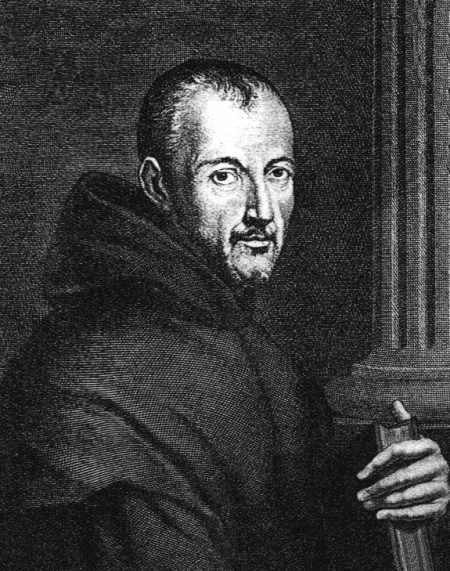


Life and outlook
Mersenne entered the Order of Minims and retained a strong religious vocation throughout his life, while also cultivating interests in mathematics, music, and natural philosophy. He defended a broadly mechanistic and empirical approach to natural phenomena and publicly rejected untested traditions, including certain forms of occultist and alchemical claims that lacked demonstrable evidence. Though he published relatively little under his own name compared with some contemporaries, his writings and his long-running correspondence made him an influential figure in the formation of a scientific culture that prized replication and communication.
Scientific work
Mersenne contributed to several areas of study, often by collecting, testing and disseminating ideas rather than by publishing a single, comprehensive theory.
- Mathematics: He is best remembered for drawing attention to prime numbers of the form 2^p − 1, which are now known as Mersenne primes. By exchanging problems and results with other mathematicians he helped stimulate progress in number theory and the practice of testing primes.
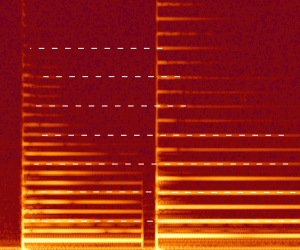
- Acoustics and music theory: In treatises and letters he examined vibrating strings and described relationships between string length, tension and pitch. These empirical rules, long associated with his name and with the early development of experimental acoustics, linked quantitative reasoning to musical practice and supported the emerging view that music could be studied scientifically.
- Mechanics and natural philosophy: Mersenne promoted experiments on motion and gravity and helped circulate demonstrations and hypotheses about falling bodies. In dialogue with leading figures such as Galileo Galilei, he helped to publicize the idea that the motion of a mass under certain conditions can be described in mathematical terms, and he encouraged experimental checks on theoretical claims.
Correspondence and mediation
Mersenne is often described as a hub of early modern scientific correspondence. His extensive letters carried news, problems, and experimental reports among mathematicians, astronomers, instrument makers and philosophers. To inform Mersenne of a discovery was, in practice, often to broadcast it more widely. He maintained exchanges with many important thinkers of his time, including Blaise Pascal and Pierre de Fermat, and he served as an interlocutor between older and younger generations of scientists. He urged friends to respond to major publications—he asked contacts to answer René Descartes’s work—and he passed technical suggestions along, for example recommending to the young Huygens ideas about timekeeping mechanisms and the regularity of a pendulum as a potential regulator for clocks.
Publications, editing and legacy
Mersenne compiled and edited collections of letters and short works that circulated among scholars. These collections, together with surviving correspondence, form a valuable source for historians studying the development of early modern science, the spread of experimental methods, and the social networks that supported scientific work. He advocated clear experimental demonstration and critical exchange, and he often acted as an intermediary who tested claims, suggested experiments and encouraged replication.
While some of Mersenne’s own theoretical judgments were later revised, his most durable contribution is institutional and social: he helped create channels through which ideas, instruments and problems moved quickly across Europe. His name remains attached to mathematical objects and to empirical laws in acoustics, and his role as a mediator illustrates how scientific knowledge in the 17th century depended as much on communication and verification as on solitary discovery.
For further reading on his life and correspondence, consult modern studies and edited collections of his letters and works, which present his role as a connector of mathematicians, natural philosophers and instrument makers. His presence in the network of early modern science makes him a key figure in understanding how experimental practice and mathematical reasoning became central to later developments.
See entries and specialised articles that treat his mathematical contributions in greater technical detail and the historical literature on the development of timekeeping and acoustics for applied examples of Mersenne’s influence.
More on his birthplace · Further context on his death and work in Paris · Role as theologian and mathematician · Acoustics and vibrating strings · Mersenne primes · Relations with Galileo · Experiments on falling bodies · Opposition to occultist claims · Correspondence with Pascal · Correspondence with Fermat · Contact with Huygens · Pendulum and timekeeping
Author
AlegsaOnline.com Marin Mersenne: French Theologian, Mathematician and Scientific Mediator Leandro Alegsa
URL: https://en.alegsaonline.com/art/126041