
Pierre de Fermat: life, work, and legacy in mathematics
Pierre de Fermat (1601–1665), French lawyer and amateur mathematician, made foundational contributions to number theory, early calculus, analytic geometry, probability and optics. Known for Fermat's Last Theorem.
Pierre de Fermat (17 August 1601 – 12 January 1665) was a French magistrate and an influential mathematician whose work laid groundwork for several branches of modern mathematics. By profession he served as a lawyer and a counsellor at the Parlement of Toulouse, in southern France. Although he wrote little in formal books, Fermat communicated many of his discoveries in letters and marginal notes, and his reputation rests on a diverse set of original results and methods that shaped later development.
Image gallery
10 Images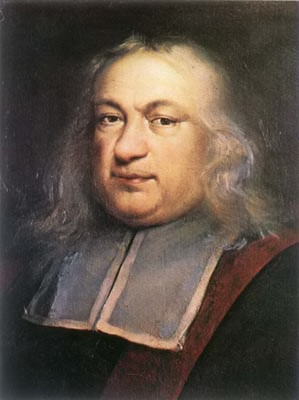




Major mathematical contributions
Fermat made lasting advances across several areas. He is often credited as an important forerunner of calculus because of his technique for determining maxima, minima and tangents to curved lines; these methods anticipated ideas of differential calculus later formalized by Newton and Leibniz. In analytic geometry he used algebraic reasoning to study curves and their properties, linking algebra and geometry in ways that influenced 17th‑century mathematics.
Perhaps his most famous work is in theory of numbers. Fermat stated several pioneering results: what is now known as Fermat's Little Theorem, his theorem on sums of two squares, and he used the method of infinite descent to provide proofs by contradiction for certain Diophantine problems. His succinct marginal claim about what came to be called Fermat's Last Theorem — that the equation x^n + y^n = z^n has no nontrivial integer solutions for n>2 — stimulated centuries of research. Fermat wrote that he had a proof too large to fit in the margin; no convincing evidence survives that he actually had a valid general proof. The full proof was finally completed in the 1990s by Andrew Wiles and collaborators, building on developments Fermat helped begin.
Probability, optics and methods
Fermat also contributed to early probability theory through correspondence with Blaise Pascal; their exchange helped clarify foundational questions about gambling problems and expected value. In optics he formulated the principle now known as Fermat's principle: that light follows the path which requires the least time, a variational idea that foreshadowed methods used in physics and the calculus of variations.
Style, publication and influence
Fermat was an autodidact who pursued mathematics while carrying out official duties. His publications were sparse; many of his discoveries circulated as letters or were extracted from notes after his death. This fragmentary record contributed to the mystique surrounding some claims, especially his assertion about the last theorem. Despite that, Fermat's ingenuity, emphasis on elegant arguments and the techniques he introduced made him a central figure for later mathematicians. His combination of rigorous arithmetic reasoning and practical problem solving earns him recognition as one of the founders of modern number theory and a pioneer in connecting algebraic and geometric thinking.
Notable facts
- Fermat balanced a legal career with independent mathematical research, a common pattern among early modern scientists.
- Fermat corresponded with many contemporaries; letters were an important medium for mathematical exchange in the 17th century.
- Some of his statements were terse and lacked published proofs; this encouraged deeper study by later generations.
- His work links subjects now treated separately: number theory, geometry, probability and physical optics.
For readers seeking primary documents and modern accounts, many editions of Fermat's collected correspondence and later expositions collect his problems and proofs. His legacy remains visible in fundamental theorems, methods still taught in elementary number theory and in the historical path that led to rigorous calculus and abstract algebra.
Further reading and digitized sources are available through archival and scholarly collections: see representative collections and commentary at biographical pages, archival compilations at regional repositories, and scholarly treatments linking his work to later developments at historical surveys and mathematical reviews. Additional detailed studies discuss his role in calculus, curve analysis, differential methods, the theory of numbers, contributions to analytic geometry and exchanges on probability.
Related articles
Author
AlegsaOnline.com Pierre de Fermat: life, work, and legacy in mathematics Leandro Alegsa
URL: https://en.alegsaonline.com/art/76807