
Galileo Galilei — Italian astronomer, physicist and pioneer of modern science
Italian astronomer, physicist and mathematician (1564–1642). Advanced observational astronomy, mechanics, and the scientific method; supported heliocentrism and was tried by the Inquisition.
Overview
Galileo Galilei (1564–1642) was an Italian polymath whose work laid foundations for modern physics and observational astronomy. Trained initially in medicine, he turned to mathematics and natural philosophy and became known for combining careful observation with quantitative analysis. Contemporary fame came from his telescopic discoveries and his public advocacy of the Copernican view that the Earth moves around the Sun.
Image gallery
10 Images



Major contributions
Galileo's achievements span instruments, observation and theory. He improved the practical telescope and used it to reveal unexpected features of the sky. He also developed experimental techniques and mathematical approaches to motion that prefigured classical mechanics.
- Astronomical observations: discovery of Jupiter's largest moons, the phases of Venus, lunar mountains and roughness, and sunspots — evidence challenging the Aristotelian cosmos.
- Kinematics and dynamics: experiments with inclined planes and falling objects led to quantitative descriptions of acceleration and an early form of the inertia concept.
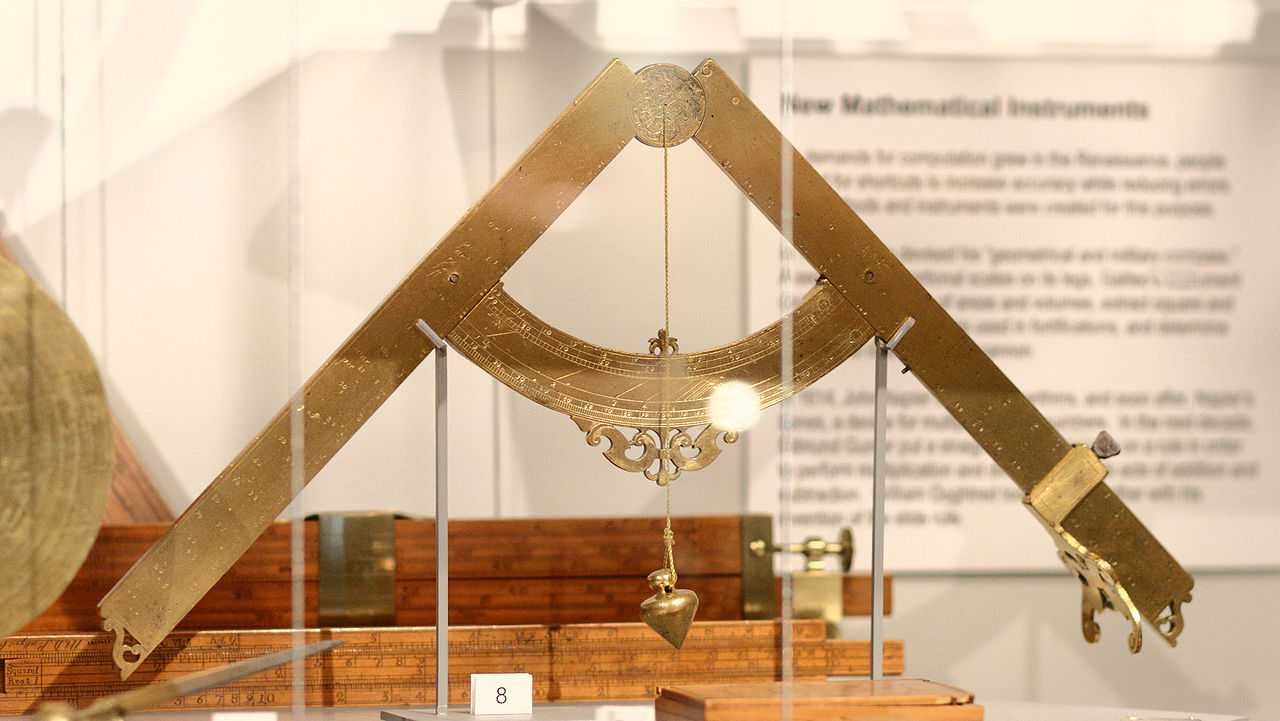
- Instruments and methods: improvements to the telescope and to measuring devices, plus an emphasis on experiment and mathematics as tools to study nature.
Career and conflict
Galileo held academic posts in Padua and Pisa, where he taught mathematics and mechanics. He enjoyed patronage from powerful families and published influential works, including a short astronomical report in 1610 and later dialogues explaining heliocentric ideas. His support for Copernicanism brought him into public dispute with ecclesiastical authorities. This confrontation with the Catholic Church culminated in a trial for heresy by the Roman Inquisition, where he was forced to recant and spent his remaining years under house arrest. Accounts of his alleged muttered reply "E pur si muove" ("And yet it moves") are likely apocryphal.
Importance and legacy
Galileo is widely regarded as a founding figure of the modern scientific method: he argued that hypotheses must be tested by experiment and expressed in mathematics. His work influenced later scientists such as Newton and reshaped relations between science and authority. Today he is remembered both for concrete discoveries and for promoting a systematic, empirical approach to understanding nature.
For further reading on his life and work see entries on his biography and selected writings, and consult archival and scholarly sources for detailed analyses of his experiments, publications and the historical trial. He remains a central figure in discussions about science, evidence and intellectual freedom, and his name is associated with advances in observational technique and the mathematization of natural philosophy. See also references to his role as a polymath and studies of the historical context of his trial.
Related topics include the Copernican Revolution, the development of early modern astronomy, and the evolving relationship between science and religion in the seventeenth century.
Questions and answers
Q: Who was Galileo Galilei?
A: Galileo Galilei was an Italian polymath who was born on February 15, 1564, and died on January 8, 1642.
Q: What was Galileo Galilei's original career plan?
A: Galileo Galilei had planned to become a doctor but became a tutor instead.
Q: What subjects did Galileo Galilei teach when he became a professor?
A: Galileo Galilei was a professor of mathematics and natural science in Padua and Pisa.
Q: What is Galileo Galilei most remembered for today?
A: Galileo Galilei is most remembered today for his conflict with the Catholic Church of his day.
Q: Why was Galileo Galilei put on trial?
A: Galileo Galilei was put on trial for heresy by the Inquisition.
Q: What is the Catholic Church's conflict with Galileo Galilei called?
A: The conflict between the Catholic Church and Galileo Galilei is referred to as the Galileo affair.
Q: When did Galileo Galilei die?
A: Galileo Galilei died on January 8, 1642.
Related articles
Author
AlegsaOnline.com Galileo Galilei — Italian astronomer, physicist and pioneer of modern science Leandro Alegsa
URL: https://en.alegsaonline.com/art/119374
Sources
- Galileo Galilei
- wikidata.orgQ307.html : wikidata.orgq307.html
- authority.bibsys.no : 90104651
- bncatalogo.cl : 000034475
- catalogo.bne.es : XX1003156
- catalogue.bnf.fr : cb11903931b
- data.bnf.fr : (data)
- cantic.bnc.cat : a10089263
- ci.nii.ac.jp : DA00584910
- d-nb.info : 118537229
- isni.org : 0000 0001 2117 8199
- id.loc.gov : n79003254
- kopkatalogs.lv : 000030304
- musicbrainz.org : 149e5645-34e6-45af-bc11-edd6c9b00434
- genealogy.math.ndsu.nodak.edu : 134975