
Louis XIII of France: reign, policies, and cultural patronage
King of France (1610–1643) who centralized royal power, worked with Cardinal Richelieu, engaged in the Thirty Years' War, and promoted the arts; father of Louis XIV.
Overview
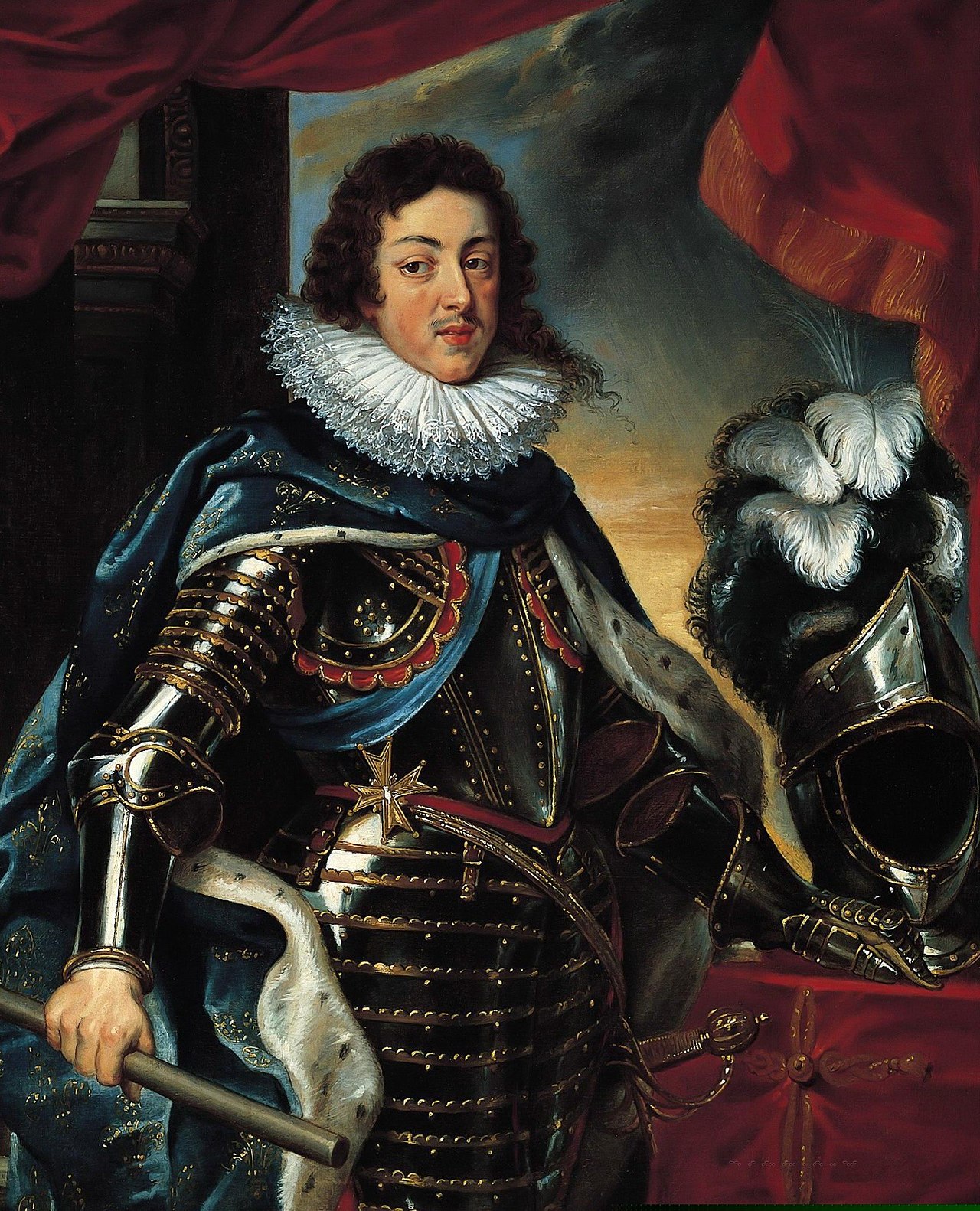
Louis XIII (27 September 1601 – 14 May 1643) was King of France from 1610 until his death in 1643. He inherited the throne as a child after the assassination of his father, Henry IV, and his early reign was shaped by a regency and later by influential ministers. Over three decades he worked—often through powerful advisers—to strengthen royal authority, confront internal unrest and extend France's influence in Europe. His long rule set important foundations for the absolutist monarchy of his son, Louis XIV.
Image gallery
10 Images




Early life and accession
Born to Henry IV and Marie de' Medici, Louis became king at age eight. The queen mother served as regent for several years, a period marked by factional politics at court and recurrent noble unrest. In 1615 Louis married the Spanish princess Anne of Austria, a dynastic union that remained childless for many years. The young monarch gradually asserted his independence from court factions and from his mother's influence, but real consolidation of power required the assistance of capable ministers.
Government, ministers and internal conflict
Louis XIII is best known for his collaboration with Cardinal Richelieu, who became chief minister in 1624 and directed policy until his death in 1642. Together they pursued centralization of state authority: curbing the political power of high nobles, suppressing armed Protestant strongholds, and strengthening royal administration. The reign saw a series of internal challenges, including aristocratic uprisings and conflicts involving the Huguenot communities; contemporaries and later historians refer to these disturbances as notable rebellions against royal authority.
Foreign policy and war
In foreign affairs Louis XIII's France intervened in the complex conflicts of early 17th‑century Europe. Although initially cautious, French policy became more assertive under Richelieu's guidance, culminating in open involvement in the Thirty Years' War from the 1630s to counter Habsburg power. These military and diplomatic efforts shifted the balance in Europe and laid groundwork for later French predominance on the continent.
Culture, patronage and the arts
As sovereign Louis took an active interest in culture and patronage. He encouraged painters, composers and architects to work in France rather than migrate to artistic centers such as Italy, and he supported projects at royal residences. He aimed to attract and retain talent by offering commissions and positions in royal institutions, including work at the Louvre; contemporaries recognize his efforts to cultivate a French cultural life rather than send artists abroad (artists, Italy, Louvre).
Succession and family
Louis and Anne's marriage produced no surviving heir for many years, causing anxiety about dynastic continuity. After two decades of marriage Anne gave birth to a son in 1638, the future Louis XIV, an event often remarked on for its political and personal significance; contemporary accounts and later histories note the relief felt at the birth of an heir.
Death and legacy
Louis XIII died in 1643 and was buried in the royal necropolis at the Basilica of Saint-Denis. Modern medical writers have suggested various explanations for his declining health; some propose that he may have suffered from a chronic intestinal illness such as Crohn's disease, though sources differ and absolute diagnosis remains uncertain (Crohn's disease). His remains were interred at the traditional royal burial site (Basilica of Saint-Denis).
- Notable facts: early accession under regency, the partnership with Cardinal Richelieu, suppression of domestic revolts, and intervention in the Thirty Years' War.
- Cultural role: patron of the arts and promoter of French artistic institutions.
- Dynastic impact: father of Louis XIV, whose long reign furthered the centralization begun under Louis XIII.
Louis XIII's reign is often judged as transitional: it combined personal limitations and dependence on ministers with significant state-building achievements that shaped the trajectory of the French monarchy in the 17th century.
Related articles
Author
AlegsaOnline.com Louis XIII of France: reign, policies, and cultural patronage Leandro Alegsa
URL: https://en.alegsaonline.com/art/125410