
Louis Nirenberg — Canadian–American mathematician and analyst of partial differential equations
Louis Nirenberg (1925–2020) was a Canadian–American mathematician noted for foundational results in linear and nonlinear partial differential equations, geometric analysis, and for receiving the 2015 Abel Prize.
Overview
Canadian–American mathematician Louis Nirenberg (28 February 1925 – 26 January 2020) is widely regarded as one of the foremost analysts of the twentieth century. His research focused on the theory of partial differential equations (PDEs) and on links between PDEs, complex analysis, and geometry. Over a long career he produced results that clarified existence, regularity, and qualitative behavior of solutions to many classes of equations.
Image gallery
1 Image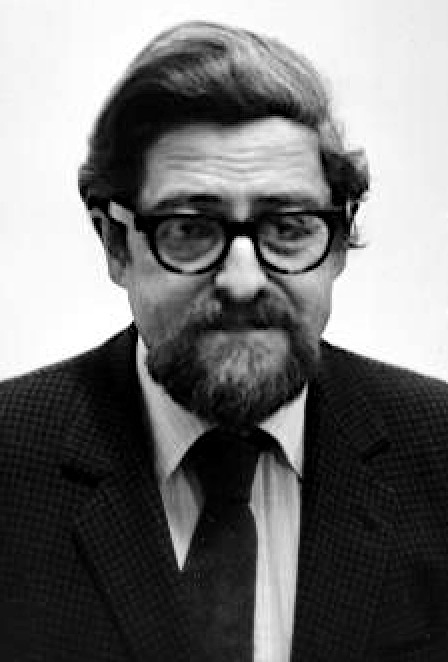
Main contributions
Nirenberg's work addressed both linear and nonlinear problems. He helped establish sharp a priori estimates and regularity theorems that are now standard tools in the field. Several named inequalities and estimates associated with his work play a central role in analysis, for example the family of interpolation inequalities commonly referenced with his name. His methods often combined functional analysis, differential geometry, and complex-variable techniques.
Characteristic achievements
- Development of regularity theory for elliptic and parabolic PDEs, clarifying when weak solutions are smooth.
- Establishing a priori estimates and uniqueness results that underlie modern existence proofs.
- Bridging analytic techniques with problems in geometry and several complex variables.
Career and recognition
Nirenberg spent much of his professional life in the United States and was closely associated with leading research centers. His influence extended through numerous collaborations and through mentoring younger researchers. For his lifetime achievements he received many honors, most prominently the Abel Prize in 2015, awarded for contributions that profoundly shaped the theory of PDEs and its applications.
Legacy and notable facts
Researchers continue to build on Nirenberg's techniques; his work appears across pure and applied mathematics, including mathematical physics and geometry. He is often described simply as an outstanding analyst, and his results remain standard material in graduate courses on PDEs. Louis Nirenberg died at a hospital in Manhattan on 26 January 2020 at age 94.
For an introduction to his papers and the context of his results, consult specialized surveys and the archives of mathematical institutes where he worked; these provide accessible entry points to his theorems and methods for readers with a background in analysis and differential equations.
Related articles
Author
AlegsaOnline.com Louis Nirenberg — Canadian–American mathematician and analyst of partial differential equations Leandro Alegsa
URL: https://en.alegsaonline.com/art/125393