
Louis Philippe, Crown Prince of Belgium (1833–1834)
Eldest child and heir-apparent of King Leopold I and Louise of Orléans, Louis Philippe died in infancy; his short life affected the Belgian succession and reflected 19th-century dynastic politics.
Overview
Louis Philippe, Crown Prince of Belgium (24 July 1833 – 17 May 1834) was the firstborn child of King Leopold I of the Belgians and his second wife, Louise of Orléans. As the eldest son he was, from birth, the heir-apparent to the newly established Belgian throne. He died in infancy less than a year after his birth; contemporary accounts and later histories treat his brief life mainly as a personal tragedy for the royal family and as a small but real factor in the line of succession.
Image gallery
1 Image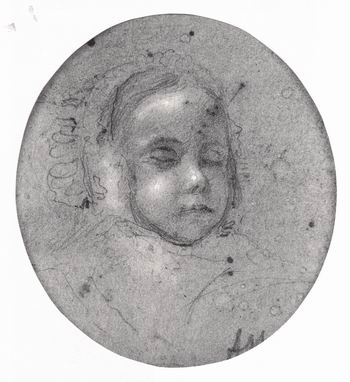
Family background and name
Louis Philippe was born into a dynasty whose domestic ties were closely connected to other European ruling houses. His mother, Louise, was a daughter of King Louis-Philippe I of the French, and his given names reflected that connection. The marriage of Leopold I and Louise symbolized a political and familial bond between the Belgian monarchy and the July Monarchy in France; naming the child after his maternal grandfather followed common dynastic practice of honouring influential relatives.
Context and significance
Although Louis Philippe himself did not play any public role, his death had practical consequences for the Belgian royal succession. With his passing the position of heir-apparent passed to his younger siblings; a younger son, born in 1835, later became King Leopold II. The loss of a direct eldest heir was not unusual in the 19th century, when infant and childhood mortality remained comparatively high even among ruling families.
Historical perspective
Belgium had only recently become an independent constitutional monarchy (1830–1831), and the stability of its royal household carried symbolic weight. The short life of Louis Philippe is therefore often mentioned in histories of the Belgian monarchy as an early family bereavement rather than as a political turning point. The incident illustrates how dynastic fortunes and the succession of relatively new European crowns could be altered by private tragedies.
Key facts
- Born: 24 July 1833.
- Died: 17 May 1834 (infant).
- Parents: King Leopold I and Louise of Orléans.
- Named in honour of his maternal grandfather, Louis-Philippe I.
Because his life was so brief, Louis Philippe is chiefly of interest in genealogical accounts of Belgium's royal family and in studies of 19th-century dynastic relationships. His story is a reminder of the personal dimensions behind public institutions and of how succession could be reshaped by events within a single household.
Related articles
Author
AlegsaOnline.com Louis Philippe, Crown Prince of Belgium (1833–1834) Leandro Alegsa
URL: https://en.alegsaonline.com/art/125396