
Gotham City — fictional home of Batman in DC Comics
Gotham City is the dark, crime-ridden metropolis that serves as Batman's primary setting in DC Comics. This article covers its name, appearance, creators, major locations, and portrayals in film and television.
Overview
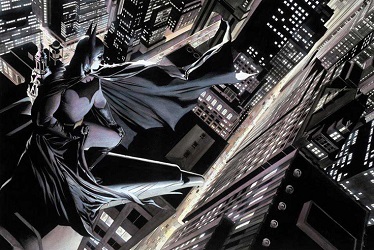
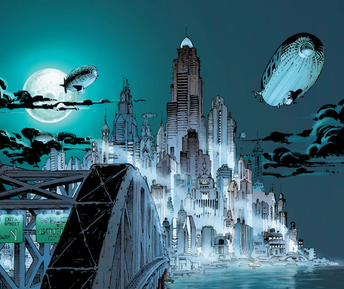
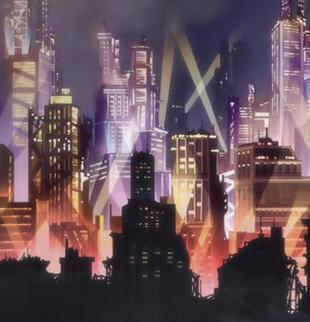
Gotham City is a fictional metropolis best known as the principal setting for Batman stories published by DC Comics. It is usually presented as a large, dense urban center marked by high crime, political corruption, and a gothic or noir visual style. Comic-book writers and artists have repeatedly portrayed Gotham as a city with looming architecture, shadowed alleyways, and a perpetual sense of danger, which helps define Batman's role as its protector.
Image gallery
10 Images



Origins of the name and early development
The name "Gotham" has older, non-comic origins. It was applied to a village in England and to the nearby county town of Nottingham in folk tradition, where local tales described the villagers as feigning foolishness to avoid royal obligations. American writer Washington Irving used the name in the early nineteenth century to refer to New York City. Comic creators later adopted the name for a fictional American city. Early Batman creators, notably Bob Kane and his collaborators, drew on several real-world cities as visual and atmospheric models while shaping Gotham.
Appearance, layout and notable places
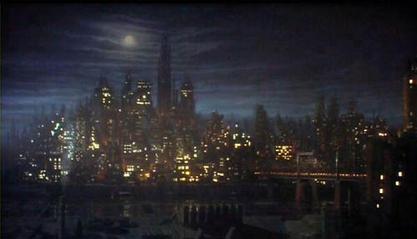
Gotham's geography and skyline are deliberately variable; writers often blend elements of real cities such as New York City and Chicago with older European motifs to achieve a timeless, unsettling urban feel. Commonly recurring locations include Wayne Manor and the Batcave, the Gotham City Police Department (GCPD), Arkham Asylum for the criminally insane, Crime Alley, and Blackgate Penitentiary. These places are frequently used as narrative anchors across comics, television, films and games.
- Wayne Manor and the Batcave — Bruce Wayne's estate and secret base.
- Arkham Asylum — psychiatric hospital for Gotham's violent or deranged villains.
- GCPD Headquarters — law-enforcement center, often led by Commissioner Gordon.
- Crime Alley and Narrows — neighborhoods associated with poverty and criminal activity.
Portrayals in film, television and other media
Gotham has been adapted across multiple media, with each version emphasizing different aspects of the city. Film director Christopher Nolan used sections of several American cities to create his cinematic Gotham: Batman Begins and The Dark Knight drew heavily on Chicago for location shooting, while The Dark Knight Rises incorporated sequences shot in other cities to broaden the visual palette. Television series and video games (notably the Arkham series) have also contributed distinctive, widely recognized versions of Gotham.
Role, themes, and cultural significance
Gotham functions not merely as a backdrop but as a character in its own right: its social decay, institutional failures, and vivid rogues' gallery shape the moral and ethical challenges Batman faces. Storytellers use Gotham to explore themes such as vigilantism, justice and the limits of institutions. The city's flexible identity allows creators to adjust tone and detail to fit crime noir, superhero epic, or psychological drama.
Notable facts and distinctions
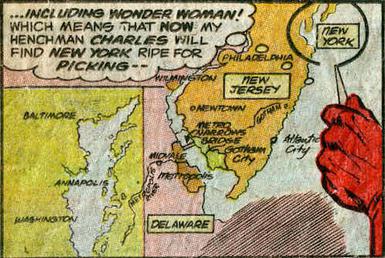
Gotham's exact geographic location is intentionally ambiguous; creators and adaptations have placed it near, or visually inspired by, several real cities. While early creators considered alternative names—at one point the city nearly received a different title—its enduring name and image have become central to Batman's mythos. Over decades, Gotham has become one of the most recognizable fictional cities in modern popular culture, serving as a model for other urban settings in comics and genre fiction.
For further reading on the city's inspirations and on how different creators have interpreted Gotham across media, consult detailed histories and annotated guides to Batman's publications and adaptations.
Related references: Gotham (English village), Nottingham, and cinematic studies of urban settings in Nolan's films and other directors' depictions of the city.
See also: Batman, DC Comics, and production notes for Batman Begins, The Dark Knight, and The Dark Knight Rises.
Related articles
Author
AlegsaOnline.com Gotham City — fictional home of Batman in DC Comics Leandro Alegsa
URL: https://en.alegsaonline.com/art/124816