
Larry Kwong — first person of Asian descent to play in the NHL
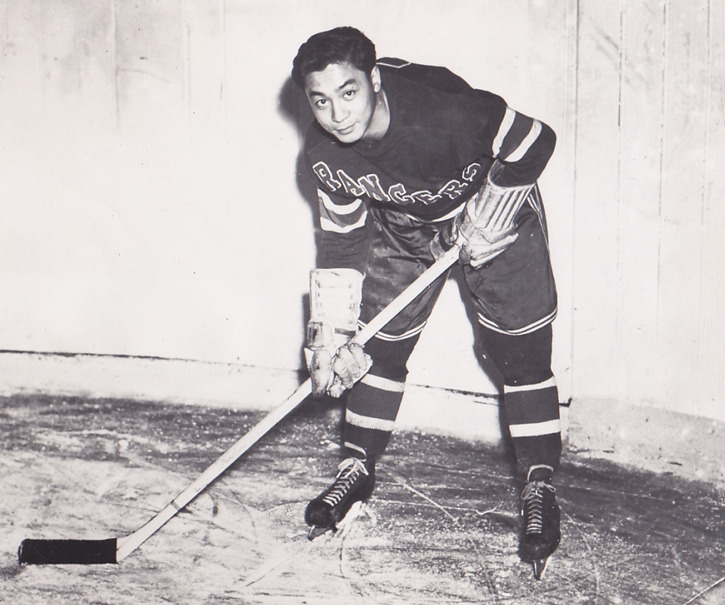
Larry Kwong (1923–2018), born Eng Kai Geong, was a Canadian ice hockey forward who became the first player of Asian ancestry to appear in the NHL and a pioneer in breaking hockey’s color barrier.
Lawrence “Larry” Kwong (born Eng Kai Geong; in simplified Chinese traditional Chinese; pinyin) was a Canadian professional ice hockey forward best known for becoming the first person of Asian ancestry to play in the National Hockey League. He is widely regarded as a barrier‑breaking figure in North American sport, notable both for his brief NHL appearance and for a longer career in senior and minor leagues that spanned the 1940s and 1950s.
Image gallery
5 Images



Early life
Kwong was born in Vernon in the Okanagan region of British Columbia, making him the first NHL player from Vernon and the Okanagan to reach the highest level of the game. He grew up in a Chinese Canadian family at a time when immigrants and their descendants often faced discrimination and social restrictions. Hockey was central to his upbringing and became the path by which he gained wider recognition.
Playing career and NHL milestone
Kwong played professionally and at the senior level from the early 1940s into the late 1950s. He spent most of his career in Canadian and American minor‑pro circuits, where he was respected as a skilled forward. In 1948 he was called up by the New York Rangers and made an official NHL appearance. That brief outing — often described as a single shift — made Kwong the first player of Asian descent to appear in an NHL game, a fact frequently cited when discussing diversity and inclusion in hockey.
Significance, nicknames and public perception
At the time Kwong entered the major‑league spotlight he attracted attention for breaking what many have called hockey’s color barrier. Media and fans assigned him nicknames such as the “China Clipper” and “King Kwong”; the moniker “China Clipper” was later applied to other athletes of Chinese descent as well. His achievement has been remembered as an early step toward greater representation of non‑white players in professional hockey.
Later life, business and legacy
After retiring from hockey, Kwong lived and worked in Alberta, where he pursued business interests and remained connected to hockey communities. He settled in Calgary, in the province of Alberta. In later decades, recognition for his pioneering role increased as historians, journalists and community groups highlighted his contribution to the sport and to the experience of Chinese Canadians in the 20th century.
Death and remembrance
Kwong died on March 15, 2018, in Calgary of complications from pneumonia at the age of 94. His life and career are referenced in books and articles on hockey history and on the participation of Asian Canadians in professional sport. His story is used as an example of how individual athletes can challenge social barriers and change perceptions, even when their time in the spotlight is brief.
- Born Eng Kai Geong; later known as Larry Kwong.
- First person of Asian ancestry to appear in an NHL game.
- Played most of his career in senior and minor professional leagues.
- Remembered as a pioneer for diversity in hockey.
For more context on Kwong’s cultural and sporting significance, see contemporary accounts, hockey histories and community remembrance projects that chronicle early Asian Canadian athletes and the gradual diversification of ice hockey in North America. Additional resources and archival materials can be found via relevant sports history organizations and local heritage groups.
simplified Chinese · traditional Chinese · pinyin · professional · ice hockey · NHL · Vernon · Okanagan · CFL · New York Rangers · Calgary · Alberta · pneumonia
Related articles
Author
AlegsaOnline.com Larry Kwong — first person of Asian descent to play in the NHL Leandro Alegsa
URL: https://en.alegsaonline.com/art/124013
Sources
- cbc.ca : "NHL trailblazer Larry Kwong dies at 94"
- nytimes.com : "NY TIMES: A Hockey Pioneer's Moment"
- legacy.com : legacy.com/us/obituaries/name/name-obituary?pid=188493442&fhid=6135