
The Blue Danube Waltz (An der schönen blauen Donau), Op. 314
A concise encyclopedic overview of Johann Strauss II’s 'The Blue Danube' waltz: origin, musical structure, performance history, cultural significance, and common arrangements.
The Blue Danube (German: An der schönen blauen Donau), Op. 314, is one of the most famous waltzes in the Western concert repertoire. Composed by Johann Strauss II in 1867, it began as a choral piece for the Vienna Men's Singing Society and quickly entered the instrumental repertory where it has remained a signature work of 19th-century Viennese dance music. The melody's sweeping, lyrical quality and its rhythmic buoyancy have secured its place in both concert halls and popular culture around the world.
Image gallery
2 Images
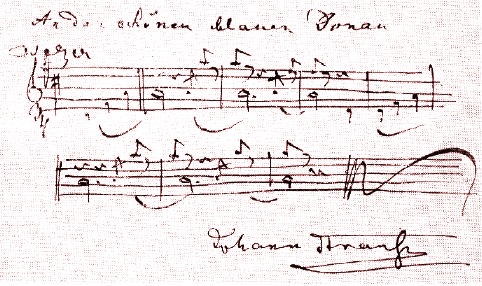
Origins and first performances
The waltz was originally created for four-part male chorus with orchestra or piano accompaniment, with lyrics by Josef Weyl. Its premiere, given by the Vienna Men's Singing Society under the baton of Rudolph Weinwurm, took place in February 1867. Shortly thereafter Strauss presented instrumental versions in public concerts, which helped the piece gain rapid popularity. Early international appearances followed within the same year: in the United States (reported in New York) and in Great Britain at the promenade concerts in London, including performances at Covent Garden. A celebrated presentation at the Paris Exposition cemented Strauss’s emerging international reputation.
Musical structure and characteristics
Structurally, the composition opens with a measured introduction in A major, which sets a graceful, anticipatory mood before the succession of waltz sections. The main body contains several distinct waltz themes, often grouped in pairs, that contrast broad, soaring melodies with more narrowly ranged, stepwise passages. A typical performance proceeds through a sequence of five principal waltz episodes, followed by a coda that recalls earlier material and builds toward a bright, spirited close. Because of its clear textures and strong melodic identities, the work adapts well to different instrumentations and arrangements.
- Typical orchestration: full Romantic orchestra for most concert renditions, though piano and reduced ensemble versions are common.
- Vocal version: originally scored for four-part male chorus; the text is rarely sung today in standard orchestral performances.
- Form: introduction — multiple waltz sections — coda, with contrasting themes and rhythmic emphasis on the second beat of each bar characteristic of the Viennese waltz.
The work's versatility explains why the instrumental version became the dominant form in public life. In Vienna the waltz has acquired ritual importance: it is traditionally broadcast on television and radio on New Year's Eve, and it is frequently programmed as an encore at the annual New Year's Day Concert. The city of Vienna associates the piece closely with its musical identity and festive traditions.
Over time the Blue Danube has been arranged and recorded in many formats — from small salon ensembles and solo piano transcriptions to full cinematic orchestrations — and it appears regularly in films, television, and advertising. Its immediate melodic appeal, formal clarity, and linkage to the image of the Danube River itself have made it a global emblem of Viennese music. For listeners and performers alike, the waltz remains a touchstone of 19th-century social dance culture and orchestral light music.
Notable historical notes and firsts include the work's publication in 1867 and early international adoption. The piece’s rise from a civic choral commission to an internationally recognized orchestral favorite illustrates the fluid boundaries between popular dance, civic musical life, and the concert stage in the 19th century. For further reading and source material, see contemporary concert reports and archives that document the premieres and tours that spread the waltz beyond Austria’s borders; scholars and program notes often cite the same early performances and milestones referenced above.
References and additional context are available from general musical histories and performance archives. For short topic links and primary-source reports, consult modern editions and annotated program notes that collect information about the premiere, first international plays, and the work’s enduring place in New Year’s celebrations.
Related articles
Author
AlegsaOnline.com The Blue Danube Waltz (An der schönen blauen Donau), Op. 314 Leandro Alegsa
URL: https://en.alegsaonline.com/art/12337