
Bloody Sunday (1905) — St. Petersburg massacre that sparked the 1905 Revolution
Bloody Sunday (1905) was a massacre in St. Petersburg when unarmed demonstrators seeking redress were fired on by troops as they approached the Winter Palace; it helped ignite the 1905 Revolution and produced lasting effects.
Overview
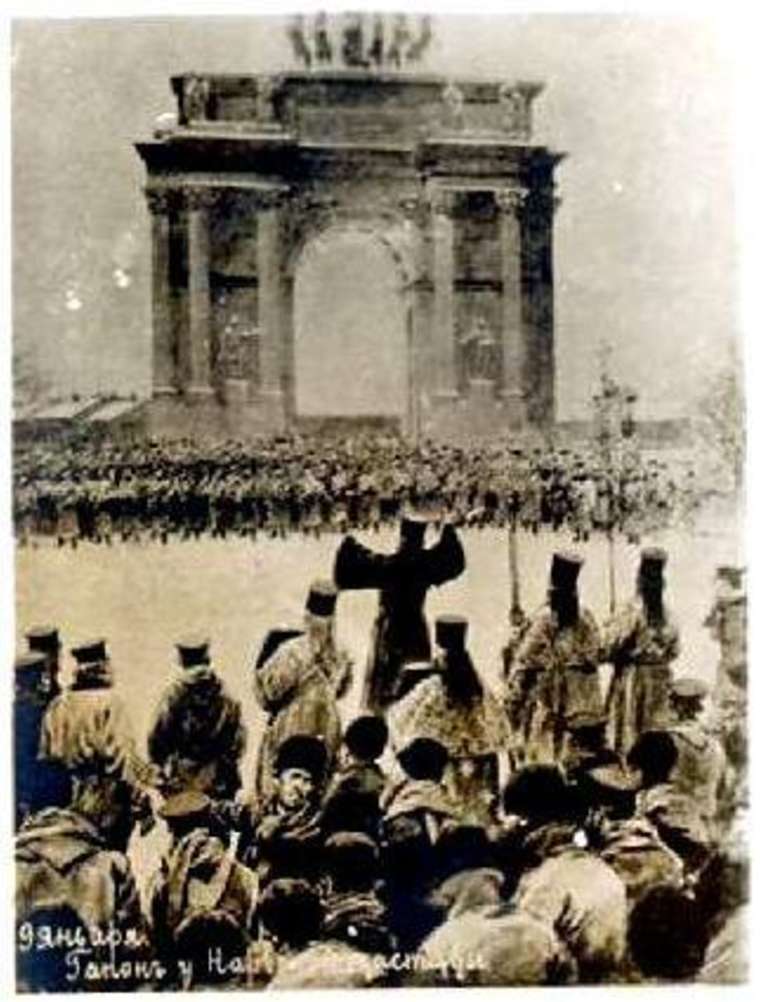
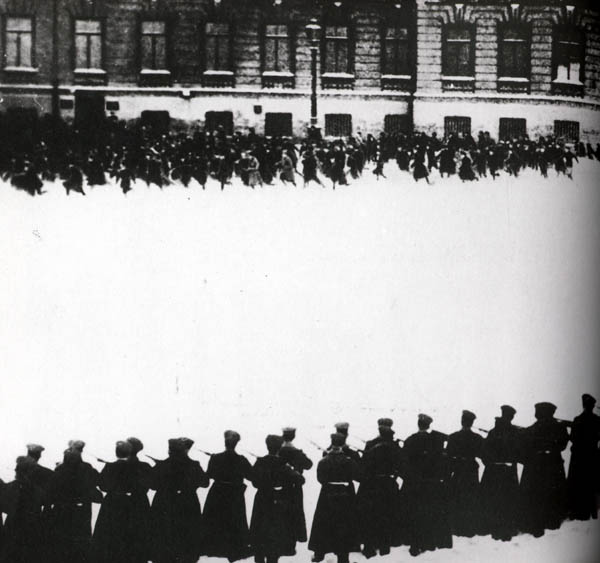
Bloody Sunday occurred on 22 January 1905 (9 January Old Style) in St. Petersburg, then the capital of imperial Russia. A large, mainly peaceful procession of workers, families and clergy marched to the Winter Palace to present a petition to Tsar Nicholas II. The march was organized as a moral appeal to the sovereign for relief from harsh working conditions and political grievances; the petition itself set out demands for economic improvements and legal and political reforms and is often described simply as a petition for redress. The tsar was not at the palace, and in the confusion that followed troops fired on the crowd. Contemporary official figures cited roughly 96 dead and some 300 wounded, while other sources have given different tallies; the shootings transformed public perceptions of the regime.
Image gallery
6 Images



Background and causes
Late-imperial Russia faced deep social and economic strains: rapid industrialization produced large factory workforces living in overcrowded conditions, political dissent was growing, and many Russians sought legal protections and representation. The government's defeat in the Russo-Japanese War earlier in 1905 aggravated public frustration by exposing military weakness and contributing to economic disruption. Religious and civic leaders, trade union activists and ordinary workers helped mobilize the demonstration; one prominent organizer was the priest Georgy Gapon, who led the march as a petition-bearing deputation to the tsar.
The procession and the shootings
On the day, thousands set out along the Nevsky Prospect toward the palace in a largely nonviolent manner, accompanied by icons and banners. Military detachments and police confronted the crowd near the palace square. Accounts describe confusion among commanders and troops, fears of revolutionary violence, and orders that remain disputed; soldiers, some cavalry and infantry units, used rifles and bayonets against the demonstrators. The image of unarmed citizens—workers, women and children—being shot while attempting to appeal to the tsar made a powerful impression at home and abroad and severely damaged the image of the monarch as a protective "father" figure.
Immediate and longer-term consequences
Bloody Sunday precipitated a wider political crisis that became known as the 1905 Revolution. It triggered mass strikes, peasant unrest, uprisings in some cities and instances of military disobedience. In response to the scale of unrest, the tsarist government made several concessions, most notably the issuing of the October Manifesto and the creation of the elected State Duma, a limited parliamentary body. These reforms were partial and inconsistently implemented, and many activists remained unsatisfied; nonetheless, the events of 1905 and Bloody Sunday are widely seen as important precursors to the later, larger Russian Revolution of 1917.
Memory, debate and cultural responses
How Bloody Sunday has been remembered and interpreted has changed over time. Contemporary liberal and radical critics portrayed it as a moral crime of the autocracy; defenders emphasized disorder and the need for order. In literature, music and public commemorations the day became a symbol of popular suffering and political rupture. Composers and artists have returned to the event as subject matter; for example, the composer Dmitri Shostakovich used the episode as the inspiration for his 11th Symphony, which seeks to evoke the atmosphere of protest and repression associated with 1905. Historians continue to debate details such as exact casualty figures, command responsibility and the motives of organizers, but the broad significance of the events for modern Russian history is widely acknowledged.
Key points
- Bloody Sunday (22 January 1905) was a mass demonstration to the Winter Palace that ended in troops firing on unarmed participants.
- The shootings shattered public confidence in the tsar and helped ignite the 1905 Revolution, a wave of strikes and unrest across the empire.
- Official and independent casualty counts differ; contemporary reports often cite about 96 dead and several hundred wounded, while later estimates vary.
- The crisis led to limited concessions such as the October Manifesto and the creation of the State Duma, but many demands for deeper reform remained unmet.
- The event has had a lasting place in Russian political memory and inspired artistic responses, including Shostakovich's musical reflection on 1905.
Related articles
Author
AlegsaOnline.com Bloody Sunday (1905) — St. Petersburg massacre that sparked the 1905 Revolution Leandro Alegsa
URL: https://en.alegsaonline.com/art/12278