
Bonfire — large controlled outdoor fire: history, construction, and uses
A bonfire is a large, intentionally built outdoor fire used for festivals, signals, land clearance, or communal gatherings. This article explains construction, history, uses, safety and distinctions.
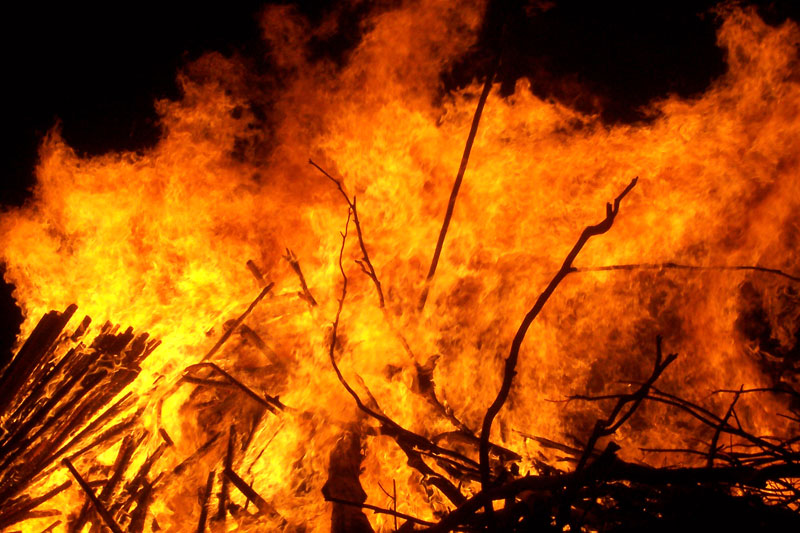
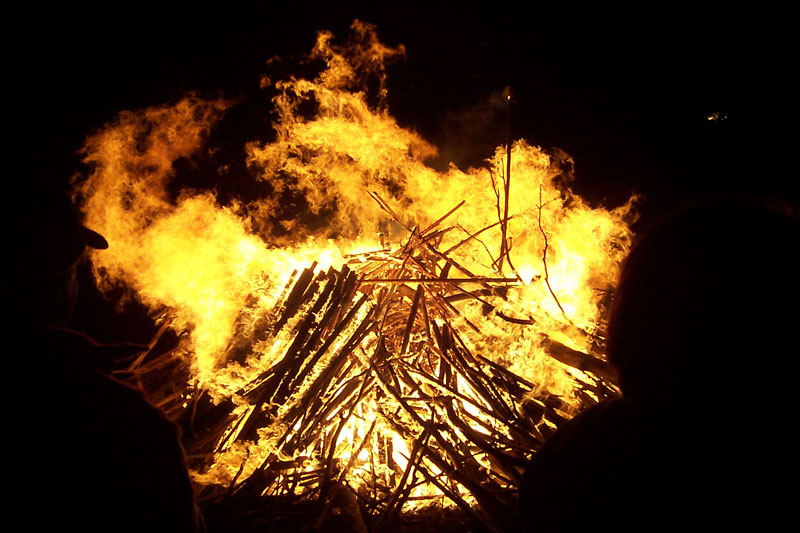
A bonfire is a deliberately built outdoor fire of a scale larger than an ordinary campfire. It is typically fueled with wood, brush or bales of straw and assembled to burn for a prolonged period. Bonfires serve practical purposes such as disposal of agricultural waste and sign‑posting, and cultural functions including festivals and communal celebrations. Local authorities or landowners often require permits or restrictions; check local rules before planning a large burn.
Image gallery
10 Images



Construction and characteristics
Bonfires are designed to sustain high heat and visibility. Common fuels include straw bales, stacked timber, fallen branches or bundled pallets. Structures are sometimes built in a teepee, log‑cabin or platform arrangement to encourage airflow and predictable collapse. Materials such as treated lumber, plastics or painted items should never be burned. Practical building and extinguishing techniques, and guidance on acceptable fuels, are available from fire safety organizations and land management agencies — see resources such as fuel guidance and construction tips.
History and etymology
The English word "bonfire" is often traced to "bone fire," reflecting an early custom of burning animal bones and carcasses. In many preindustrial societies, midsummer and seasonal rituals used large fires for purification, protection and community gathering. Celtic and other European traditions held bonfires at Beltane or St. John's Eve to mark seasonal change; archaeological and folkloric accounts discuss bone burning as part of those rites. For linguistic and cultural background see historical notes.
Across regions, the visual and social impact of a bonfire has made it a focal point for festivals such as midsummer celebrations and national commemorations where effigies or symbols may be burned. Bonfires can also function as signal fires in remote landscapes, and in agriculture are sometimes used to clear stubble or brush when managed responsibly. Contemporary community events adapt these traditions with safety measures and ceremonies; further examples and event planning resources are listed at cultural resources.
Safety and environmental considerations: because bonfires produce smoke and high heat they pose fire and air quality risks. Many regions impose seasonal burn bans during dry periods and may require supervision by trained personnel. Simple precautions include:
- Obtain necessary permits and check weather and local burn restrictions.
- Clear a safety zone free of flammable material and maintain water or extinguishing equipment nearby.
- Use only appropriate, dry, untreated fuels and avoid hazardous materials.
- Keep the fire controlled and supervised until fully extinguished.
Modern bonfires balance tradition, utility and safety: community organizers often use contained fire rings, tall safety distances and public information campaigns to preserve ritual value while reducing hazards. For more practical advice and official regulations consult local authorities and fire services via the links above.
Questions and answers
Q: What is a bonfire?
A: A bonfire is a large controlled outdoor fire made from bales of straw or wood.
Q: Where does the word "bonfire" come from?
A: The word "bonfire" is believed to come from "bone fire."
Q: What did the Celts burn during midsummer festivals?
A: During midsummer festivals, the Celts burnt animal bones to ward off evil spirits.
Q: What is a balefire?
A: A balefire is another term for a bonfire, which is a large controlled outdoor fire made from bales of straw or wood.
Q: Why do people make bonfires?
A: People make bonfires for a variety of reasons, including to celebrate special occasions or holidays, to dispose of organic waste, or for warmth and light during outdoor activities.
Q: Are bonfires dangerous?
A: Bonfires can be dangerous if not properly controlled, which is why it's important to follow safety guidelines and regulations when building and lighting them.
Q: Can you burn anything in a bonfire?
A: No, only organic materials such as wood and straw should be burned in a bonfire. Burning plastic, rubber, or other synthetic materials can release harmful chemicals into the air.
Related articles
Author
AlegsaOnline.com Bonfire — large controlled outdoor fire: history, construction, and uses Leandro Alegsa
URL: https://en.alegsaonline.com/art/12885