
Blood diamond (conflict diamond)
Diamonds mined in war zones and sold to finance armed groups; their extraction has fueled violence, human rights abuses, and led to international regulation like the Kimberley Process.
Overview
"Blood diamond" (also called a conflict diamond) refers to a diamond product extracted in a region where armed groups or criminal networks control the mining and use sales proceeds to finance war or rebellion. In these situations diamonds are often mined under coercive conditions and sold outside lawful channels to buy weapons or sustain fighting against a recognised government. The term emphasises the link between a precious commodity and human suffering, including forced labour, sexual violence and killings.
Image gallery
1 Image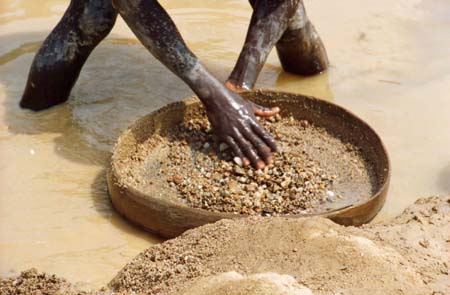
How conflict diamonds are produced and traded
Armed groups or corrupt local authorities seize control of diamond-bearing areas and impose labour on local populations. Civilians, including children, are compelled to work in dangerous pits and alluvial deposits; many observers describe this as forced or bonded labour. Those who resist may face punishment, including beatings, sexual assault or being murdered. Reports also document rape and other gender-based violence used to terrorise communities and maintain control of miners and transport routes (rape).
History and notable conflicts
Conflict diamonds attracted global attention during late 20th- and early 21st-century wars in parts of Africa. The term is commonly applied to stones linked to civil wars and prolonged insurgencies that took place during the 20th century and the 21st century. Well-known examples include diamonds associated with fighting in Angola, Sierra Leone, Liberia, and neighbouring states such as Ivory Coast, Guinea and Guinea-Bissau. In several of these conflicts, proceeds from diamond sales helped armed groups to obtain arms, prolong violence and undermine governance.
International response and controls
Concerns about conflict diamonds prompted governments, industry and civil society to create systems to reduce their presence in legitimate markets. The most visible mechanism is the Kimberley Process Certification Scheme, an international initiative that seeks to certify the origin of rough diamonds and prevent trade in stones that finance armed conflict. Certification requires participating states to issue government-validated documents for shipments of rough diamonds and to cooperate on customs and inspection. The scheme has helped reduce the share of clearly identifiable conflict diamonds but has also faced criticism for limited coverage of human rights abuses and implementation gaps.
Characteristics, impact and distinctions
Conflict diamonds are not a distinct geological type; the distinction is political and legal. They are ordinary gem-quality and industrial diamonds whose value in trade becomes morally and legally problematic because of the circumstances under which they were extracted and sold. The human impact of conflict diamond economies includes loss of life, displacement of communities, destruction of local economies, environmental damage from unregulated mining and long-term trauma to survivors. Distinguishing illicit stones from legitimate ones requires chain-of-custody documentation, government oversight and industry due diligence.
Current issues and importance
While the explicit link between diamonds and large-scale wars has declined since the 2000s in many regions, challenges remain. Illicit mining, smuggling across porous borders, and gaps in certification systems continue to allow some conflict or illicitly traded diamonds to enter global supply chains. Consumers, retailers and regulators increasingly emphasise transparency, independent auditing and broader human rights standards alongside origin certification to address these remaining risks.
- Key problems: forced labour, sexual violence, financing of arms.
- Common responses: certification, traceability, corporate due diligence.
- Notable actors in reform: governments, industry groups, NGOs and affected communities.
For further general reading and context, see international reports and industry guidance that outline the history, mechanisms and reforms connected to conflict diamonds (diamonds, mining, government, civilians, rape, murdered, 20th century, 21st century, civil wars, Angola, Ivory Coast, Sierra Leone, Liberia, Guinea, Guinea-Bissau, Kimberley Process Certification Scheme).
Author
AlegsaOnline.com Blood diamond (conflict diamond) Leandro Alegsa
URL: https://en.alegsaonline.com/art/12245
Sources
- un.org : "Conflict diamonds"
- docs.google.com : "Google Docs - create and edit documents online, for free"
- abcnews.go.com : "Naomi Campbell's Blood Diamond"
- kimberleyprocess.com : "The Kimberley Process (KP) | KimberleyProcess"