
Guinea-Bissau
Guinea-Bissau is a small West African coastal state formerly known as Portuguese Guinea; noted for the Bijagós islands, cashew agriculture, diverse cultures and a Portuguese-based Creole lingua franca.
Overview
Guinea-Bissau is a small coastal country in West Africa. It lies on the Atlantic coast and is bordered to the north by Senegal and to the south and east by Guinea. The capital and largest city is Bissau. Portuguese is the official language (Portuguese), but a Portuguese-based Creole (Crioulo) and numerous indigenous languages serve as everyday lingua francas in many areas. Population figures have varied: one mid-2000s estimate put the population at about 1.4 million (2006), though figures have changed since then.
Image gallery
10 Images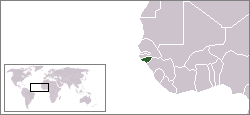




Geography and environment
The country is characterised by a low-lying coastal plain with extensive mangrove swamps, tidal creeks and floodplains. Inland areas include savannah and woodland used for subsistence agriculture and grazing. Offshore, the Bijagós Archipelago supports rich marine and coastal ecosystems and traditional fishing communities; parts of the archipelago are internationally recognised for their ecological importance. Seasonal rainfall and tidal dynamics shape agriculture, transport and settlement patterns along the coast and river estuaries.
History and formation
From the 19th century onwards the territory was administered by Portugal and was commonly known as Portuguese Guinea (19th-century period, colonial history). An independence struggle led by the African Party for the Independence of Guinea and Cape Verde (PAIGC), with leaders such as Amílcar Cabral, pursued political and military campaigns that culminated in a unilateral declaration of independence in the early 1970s and broader recognition after political changes in Portugal in 1974. The country adopted the compound name Guinea-Bissau to distinguish itself from its neighbour, the Republic of Guinea.
Society, language and culture
Guinea-Bissau is ethnically and culturally diverse. Major groups include Balanta, Fula (Fulani), Mandinka and others, each with distinct languages, social systems and traditions. Religious life commonly blends Islam, Christianity and various traditional beliefs. Music, oral storytelling and public festivals are important vehicles for cultural expression. Crioulo often functions as a common tongue across communities while Portuguese is used in formal settings and education.
Economy and development
The economy is largely rural and agricultural. Cashew nuts are the principal cash crop and a major export commodity, while subsistence rice cultivation and artisanal fishing provide food and livelihoods for many households. Limited infrastructure, dependence on a few primary commodities and periodic political instability have constrained economic diversification and public investment. International aid, remittances from abroad and small-scale trade also play important roles in the national economy.
Government, challenges and conservation
Since independence the country has experienced periods of political instability, including military interventions and contested political transitions. Governance and development efforts have focused on improving public services, building infrastructure and strengthening institutions. Conservation priorities include protection of coastal wetlands, mangroves and island biodiversity, particularly in the Bijagós Archipelago, which supports migratory birds, marine life and traditional livelihoods.
Transport, infrastructure and services
Transport outside the capital often depends on riverine and coastal routes, with a more limited road network in rural areas. Ports and small airports connect Bissau to regional and international routes, but many communities remain accessible mainly by boat. Health and education services are developing but face challenges of coverage and resources in rural districts.
- Key sectors: agriculture (notably cashew), fishing and small-scale commerce.
- Notable features: the Bijagós islands, mangrove coasts and cultural diversity.
- Further information and official profiles are available from country and regional resources: country profile, regional context, neighbor: Senegal, neighbor: Guinea, language, capital city, population estimate, colonial history, historical period overview.
Related articles
Author
AlegsaOnline.com Guinea-Bissau Leandro Alegsa
URL: https://en.alegsaonline.com/art/41309
Sources
- state.gov : "Background Note: Guinea-Bissau"
- un.org : "World Population Prospects, Table A.1"
- imf.org : "Guinea-Bissau"
- britannica.com : Retrieved on 8 October 2007.
- commons.wikimedia.org : Guinea-Bissau