
Jack Kemp: American politician, HUD secretary, and former professional quarterback
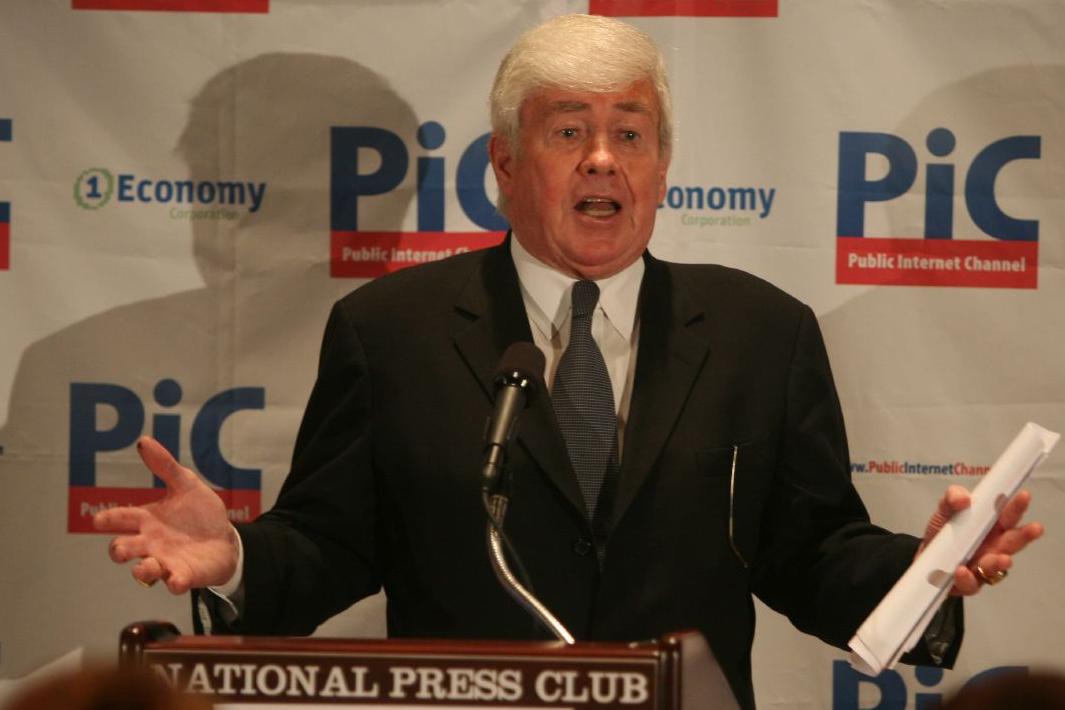
Jack Kemp (1935–2009) was an American professional football quarterback who became a nine-term Republican congressman, a housing secretary under George H. W. Bush, and the 1996 Republican vice-presidential nominee.
Overview
Jack French Kemp combined careers in competitive sports and national politics to become a prominent voice for pro-growth economic policy and urban opportunity programs. Born in 1935, he first gained public recognition as a quarterback who played professionally in the American Football League before entering elective politics. Later he served nine terms in the U.S. House of Representatives and was a cabinet officer and national campaign figure. In many summaries he is described as a politician and a collegiate and professional football player, and he is widely identified with the conservative wing of the Republican Party.
Image gallery
10 Images




Athletic career and transition to public life
Kemp built an early public profile as a starting quarterback in the American Football League, appearing for teams that included the San Diego Chargers and the Buffalo Bills. His athletic career contributed to a public image of leadership, competitiveness and media familiarity that helped when he later sought elected office. The transition from sports to politics is an often noted element of his biography and influenced how he communicated policy ideas to wider audiences.
Congressional service and policy influence
After leaving professional football Kemp won election to the U.S. House of Representatives from a district in western New York and served from 1971 until 1989. As a congressman he became a leading advocate for tax reduction, market-oriented reforms, and policies aimed at expanding opportunity in distressed urban neighborhoods. Kemp was a close adviser to President Ronald Reagan and played a key role in promoting policies later associated with the Reagan era, including support for the Economic Recovery Tax Act of 1981. He argued that lower tax rates and pro-growth measures would expand economic opportunity across income groups.
Approach to urban policy and economic opportunity
Kemp sought to link free-market fiscal ideas with targeted measures intended to help inner-city residents. He promoted concepts such as enterprise zones, public-private partnerships and broader use of housing vouchers to encourage private investment and job creation in economically distressed areas. Supporters credit him with pressing the Republican Party to address urban poverty with market-based tools, while critics raised questions about whether those tools adequately addressed structural inequality.
Cabinet service and later campaigns
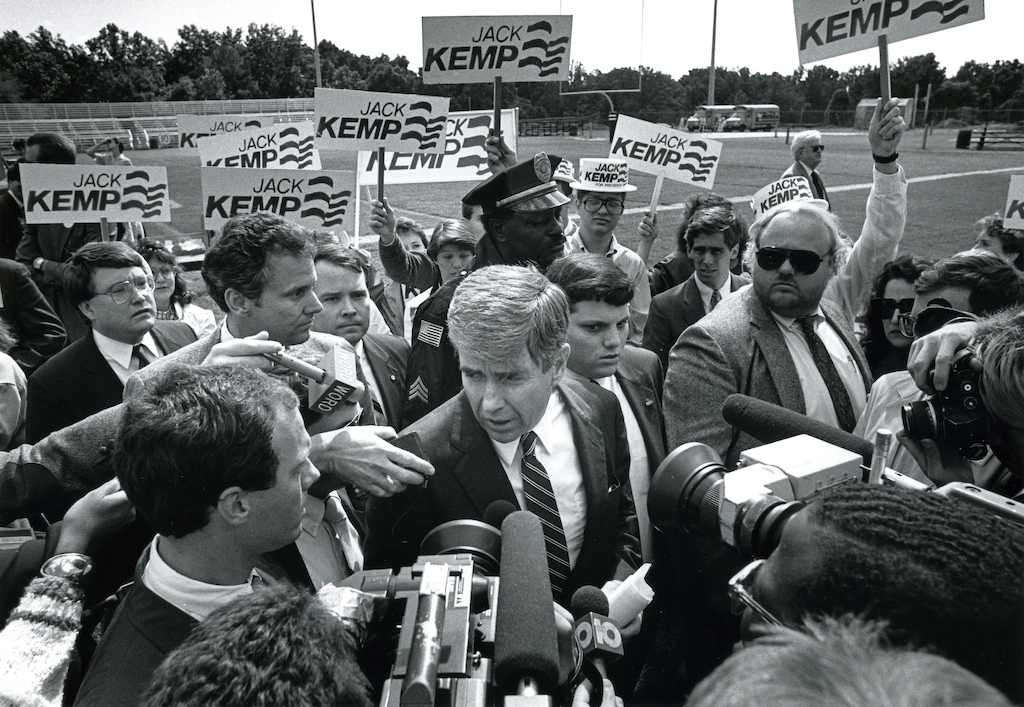
In 1989 Kemp joined the administration of George H. W. Bush and served as U.S. Secretary of Housing and Urban Development from 1989 to 1993, a post often referenced by the title Housing Secretary. In that role he emphasized partnerships between government and private enterprise to foster neighborhood renewal. Years earlier he had competed for the Republican presidential nomination in 1988, and in 1996 he accepted the party's nomination for Vice President as the running mate of Bob Dole, a national campaign that kept him visible in public debate even after leaving elected office.
Public image, ideas and legacy
Kemp is often remembered as a persuasive communicator for supply-side economics and as a champion of policies intended to expand ownership and employment opportunities. He helped popularize the language of pro-growth conservatism while also urging practical programs to assist inner-city residents. Observers credit him with shaping Republican economic messaging during the late 20th century and influencing later discussions about empowerment zones, tax policy and school choice. At the same time, scholars and commentators debate the effectiveness and distributional impact of the programs he favored.
- Key roles: nine-term U.S. Representative (1971–1989); U.S. Secretary of Housing and Urban Development (1989–1993).
- National campaigns: candidate in the 1988 Republican presidential primaries; Republican vice-presidential nominee (1996).
- Political themes: tax cuts, enterprise zones, public-private partnerships, urban opportunity.
Death and posthumous discussion
Kemp died in 2009 after a period of illness; public reports described his condition as cancer of unknown primary origin. He passed away in Bethesda, Maryland, on May 2, 2009, at the age of 73. Commentators reflected on a career that bridged private achievement and public service, noting both his influence on conservative economic thought and the contested record of policy outcomes tied to his proposals. His life and work remain subjects of study for those interested in late-20th-century American politics, economic policy and urban programs.
For more detailed study, consult biographies, congressional records and contemporary analyses of the Reagan and Bush years. Primary materials such as speeches and legislative texts provide direct evidence of Kemp's ideas, and archival collections and academic treatments examine how his proposals fit into broader policy debates. Additional summaries and reference entries can be found through major libraries and public-policy research centers interested in the history of economic reform and urban policy in the United States.
See also: service in the George H. W. Bush administration for context on the administration that appointed him to HUD and the broader policy debates of the period.
Related articles
Author
AlegsaOnline.com Jack Kemp: American politician, HUD secretary, and former professional quarterback Leandro Alegsa
URL: https://en.alegsaonline.com/art/121125
Sources
- huffingtonpost.com : "Jack Kemp dies"