
Bob Dole (1923–2021): U.S. Senator, GOP Leader, and 1996 Presidential Nominee
Comprehensive overview of Robert J. Dole: his life, military service, long congressional career, leadership roles in the Republican Party, presidential campaigns, later activities, and legacy.
Overview
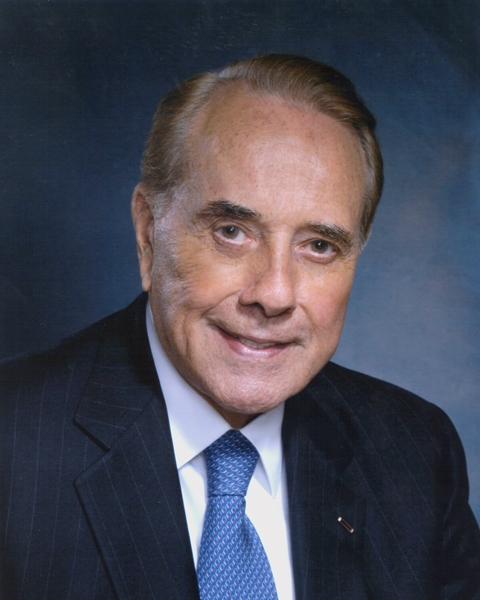
Robert Joseph "Bob" Dole was an American politician and lawyer whose public career spanned more than three decades. He represented Kansas in the United States Senate from 1969 to 1996 and before that served in the House of Representatives. A leading figure in the Republican Party, Dole held senior leadership positions including Senate Republican Leader and was the party's nominee for Vice President in 1976 and for President in 1996. His life combined military service, law, legislative work and an enduring public presence after leaving elective office.
Image gallery
10 Images


Early life and military service
Dole was born and raised in Russell, Kansas, and began his adult life as a Midwestern attorney and community figure. During World War II he served in the United States Army, where injuries suffered in combat affected him for the rest of his life. The wartime period shaped his public persona and informed his later work on veterans' issues. After the war he returned to Kansas, practiced law, and briefly served as a local prosecutor, including time as the Russell County Attorney, before entering national politics.
Congressional career and party leadership
Dole was elected to the House in 1960 and to the Senate in 1968. In Washington he chaired committees and managed complex policy areas; he served as chairman of the Republican National Committee from 1971 to 1973 and later led the Senate Finance Committee. His peers elected him to senior leadership posts, and he served as Senate Republican Leader and on alternating occasions as Majority and Minority Leader between the mid-1980s and his retirement. Dole's legislative style combined party discipline with a willingness to negotiate across the aisle on fiscal and social policy.
Presidential politics and campaigns
Dole was chosen as the running mate by President Gerald Ford in 1976 after Vice President Nelson Rockefeller declined to continue in that role; the ticket ultimately lost to Jimmy Carter in the general election. He made several bids for the presidency: an early campaign in 1980, a more substantial effort in 1988 that yielded to George H. W. Bush, and a successful capture of the Republican nomination in 1996, when he accepted the presidential role on the national ticket but was defeated by incumbent Bill Clinton. During the 1996 campaign Dole resigned his Senate seat to concentrate on the presidential race and thereafter did not seek elected office again.
Later life, advocacy and honors
After leaving the Senate, Dole remained active in public affairs. He appeared in televised commercials and programs, practiced law with a private firm, and engaged in advocacy on matters such as disability rights—advocated publicly for the Convention on the Rights of Persons with Disabilities—and memorialization projects, including involvement with the Victims of Communism Memorial Foundation. In recognition of his long public service he received high honors, including the Congressional Gold Medal. He was married to Elizabeth Dole, herself a prominent public official and former United States Senator from North Carolina.
Notable facts, distinctions and impact
- Long tenure: Dole's years in the Senate (1969–1996) placed him among the longer-serving members from Kansas and the Republican leadership ranks.
- Military veteran: his World War II service in the U.S. Army and subsequent injuries informed his public identity and legislative priorities.
- Party roles: he led the Senate Republicans as Republican Leader and sought the presidency multiple times, including as the GOP nominee in 1996 (general election).
- National campaigns: selected as Gerald Ford's vice-presidential running mate in 1976 (vice presidential nominee) and later an active candidate in the 1980 and 1988 Republican primaries (notably against George H. W. Bush).
Throughout his career Dole worked at the intersection of partisan leadership and pragmatic lawmaking. He was known for a laconic Midwestern demeanor, a focus on budget and entitlement issues, and a persistent presence in national politics even when out of office. His relationships with presidents and fellow lawmakers—ranging from Gerald Ford to Bill Clinton and others—reflected decades of institutional knowledge. Dole's death in 2021 closed a chapter in late 20th-century American politics, but his legislative record, public service honors and role in major political campaigns continue to be studied by scholars and practitioners alike.
Chronology and related names
- Born in Russell, Kansas (Russell), 1923.
- World War II service and recovery (World War II).
- U.S. House (1961–1969) and U.S. Senate (1969–1996) careers (House, Senate).
- 1976 vice-presidential nominee for the Ford ticket (Gerald Ford, running mate).
- Party leadership including RNC chair and Senate leadership roles (Republican Leader).
- 1996 Republican presidential nominee (presidential nomination) and opponent to Bill Clinton in the general election).
For further reading on specific episodes of Dole's career—his committee work, legislative achievements, and post-Senate activities—consult biographies, congressional records and contemporary news accounts. Additional materials address his family and personal life, including his marriage to Elizabeth Dole (Elizabeth Dole), and the networks of leadership within the modern Republican Party.
Selected links within this article point to placeholder resources: politician, Senate, Republican Party, Republican Leader, House, vice presidential nominee, 1976 election, presidential nomination, 1996 election, Russell, Kansas, U.S. Army, World War II, Russell County, RNC, Gerald Ford, running mate, Nelson Rockefeller, Jimmy Carter, George H. W. Bush, Bill Clinton, Convention on the Rights of Persons with Disabilities, Congressional Gold Medal, Elizabeth Dole, North Carolina.
Questions and answers
Q: What political party was Robert Joseph Dole a member of?
A: Robert Joseph Dole was a member of the Republican Party.
Q: When did he serve as United States Senator from Kansas?
A: Robert Joseph Dole served as United States Senator from Kansas between 1969 and 1996.
Q: What position did he hold in the Senate?
A: Robert Joseph Dole held the position of Republican Leader of the United States Senate from 1985 until 1996.
Q: How long did he serve in the United States House of Representatives?
A: Robert Joseph Dole served in the United States House of Representatives from 1961 to 1969.
Q: Who was his running mate when he ran for Vice President in 1976?
A: In 1976, Gerald Ford chose Robert Joseph Dole as his running mate after Vice President Nelson Rockefeller declined to be Ford's vice president.
Q: Who won the election when he ran for President in 1996?
A: In 1996, Bill Clinton won the election when Robert Joseph Dole ran for President.
Q: What honor did he receive on January 17, 2018?
A: On January 17, 2018, Robert Joseph Dole was honored with the Congressional Gold Medal.
Related articles
Author
AlegsaOnline.com Bob Dole (1923–2021): U.S. Senator, GOP Leader, and 1996 Presidential Nominee Leandro Alegsa
URL: https://en.alegsaonline.com/art/115386
Sources
- npr.org : "Bob Dole To Receive Congressional Gold Medal"
- marshall.house.gov : "House Unanimously Passes Bill to Promote Sen. Dole to Army Colonel"
- stripes.com : "Trump signs bill raising Bob Dole's military rank to colonel"
- wargs.com : "Ancestry of Robert Dole (b. 1923)"
- usd407.org : "Hebron High School 1914 Alumni"
- kshs.org : "Bob Dole"
- congress.gov : "Text - H.R.3332 - 115th Congress (2017-2018): Bob Dole Congressional Gold Medal Act"
- history.house.gov : "DOLE, Robert Joseph | US House of Representatives: History, Art & Archives"
- kslib.info : "Dillard to Dyck, Kansas Legislators Past and Present, State Library of Kansas"
- partners.nytimes.com : "A Political Life: Dole's Kansas Years"
- nytimes.com : "A POLITICAL LIFE: The Kansas Years;On the Kansas Prairie, the Window to Dole"
- politico.com : "Dole resigns from Senate to focus on presidential bid, June 11, 1996"
- agriculture.senate.gov : "Senator Roberts Makes History, Becoming Top Republican on Senate Agriculture Committee | The United States Senate Committee On Agriculture, Nutrition & Forestry"