
Black-headed Grosbeak (Pheucticus melanocephalus)
A North American songbird in the Cardinal family; a medium-sized, migratory seed- and insect-eater notable for the male's black head, warm orange breast and a rich, warbling song.
The black-headed grosbeak is a North American species of bird in the family Cardinalidae. A medium-sized, primarily seed-eating passerine, it typically measures about 18–19 cm in length and weighs roughly 35–49 g. It is widely appreciated by birdwatchers for its colorful plumage and melodious voice.
Image gallery
5 Images



Identification
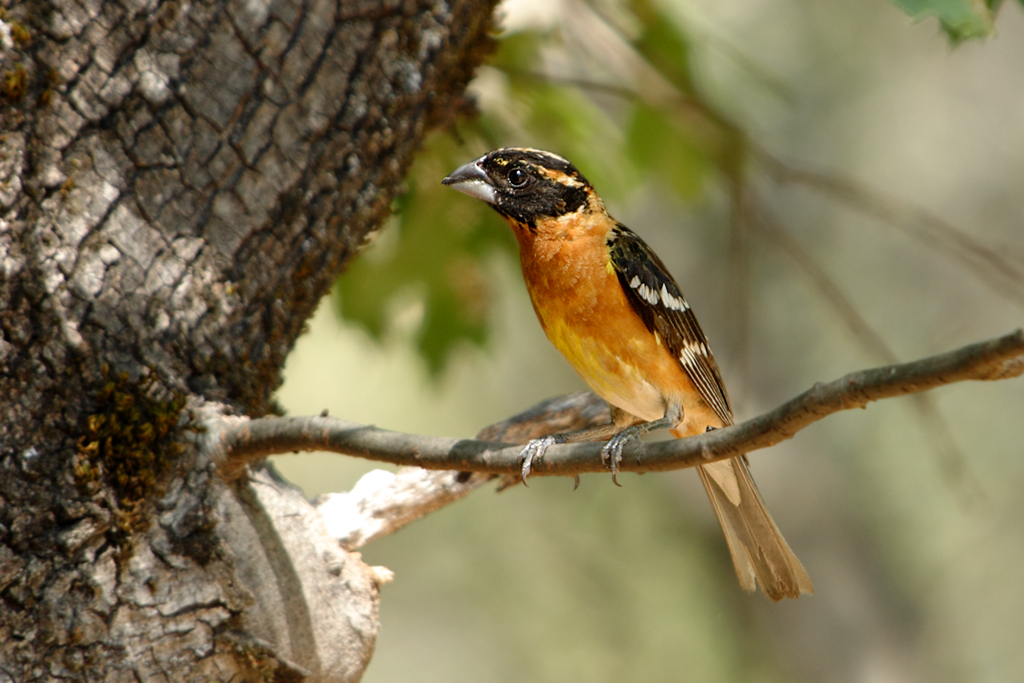
Adult males show a distinctive black head and bill with a warm orange to cinnamon breast and belly, contrasted by black-and-white patterned wings and back. Females and immatures are more streaked and brownish, with buffy underparts and a less contrasting head pattern. Both sexes have stout, conical bills adapted for cracking seeds.
Range, Habitat and Migration
The species is migratory, breeding in nesting areas that extend from southwestern British Columbia through the western United States and into central Mexico. Many birds spend the non-breeding season farther south in Mexico and parts of Central America. There are also reports of populations or occurrences described as introduced in other parts of Central America. Preferred habitats include riparian woodlands, brushy edges, and mixed deciduous forests where trees and shrubs provide cover and food.
Behavior and Diet
Black-headed grosbeaks forage in trees and shrubs for seeds, berries and a variety of insects. They are known to take seeds from seedheads, pry apart fruits, and glean caterpillars and beetles. Their strong bill lets them handle a range of foods, and they can be occasional visitors to backyard feeders and fruiting trees.
Breeding and Vocalizations
During the breeding season they build cup-shaped nests in shrubs or low trees. Clutch sizes are usually several eggs; both parents help incubate and feed nestlings. The male’s song is a rich, warbling series of phrases—pleasant and flute-like—which makes the bird easy to detect by ear in its breeding areas.
Conservation and Notes
Currently not considered threatened, the black-headed grosbeak is a widespread and stable species in much of its range, benefiting from riparian and edge habitats. It plays a role in seed dispersal and insect control. While generally welcomed in gardens and riparian restoration projects, it can occasionally feed on soft fruits in orchards. Field identification may be confused with other grosbeaks or large finches, but the male’s black head and warm orange underparts are diagnostic in its breeding range.
Tags
Related articles
Author
AlegsaOnline.com Black-headed Grosbeak (Pheucticus melanocephalus) Leandro Alegsa
URL: https://en.alegsaonline.com/art/11923