
Barnacle goose (Branta leucopsis)
A compact, black-and-white Arctic-breeding goose, noted for cliff-nesting, long migrations and a medieval myth linking it to barnacles; a member of the black-geese genus Branta.
Overview
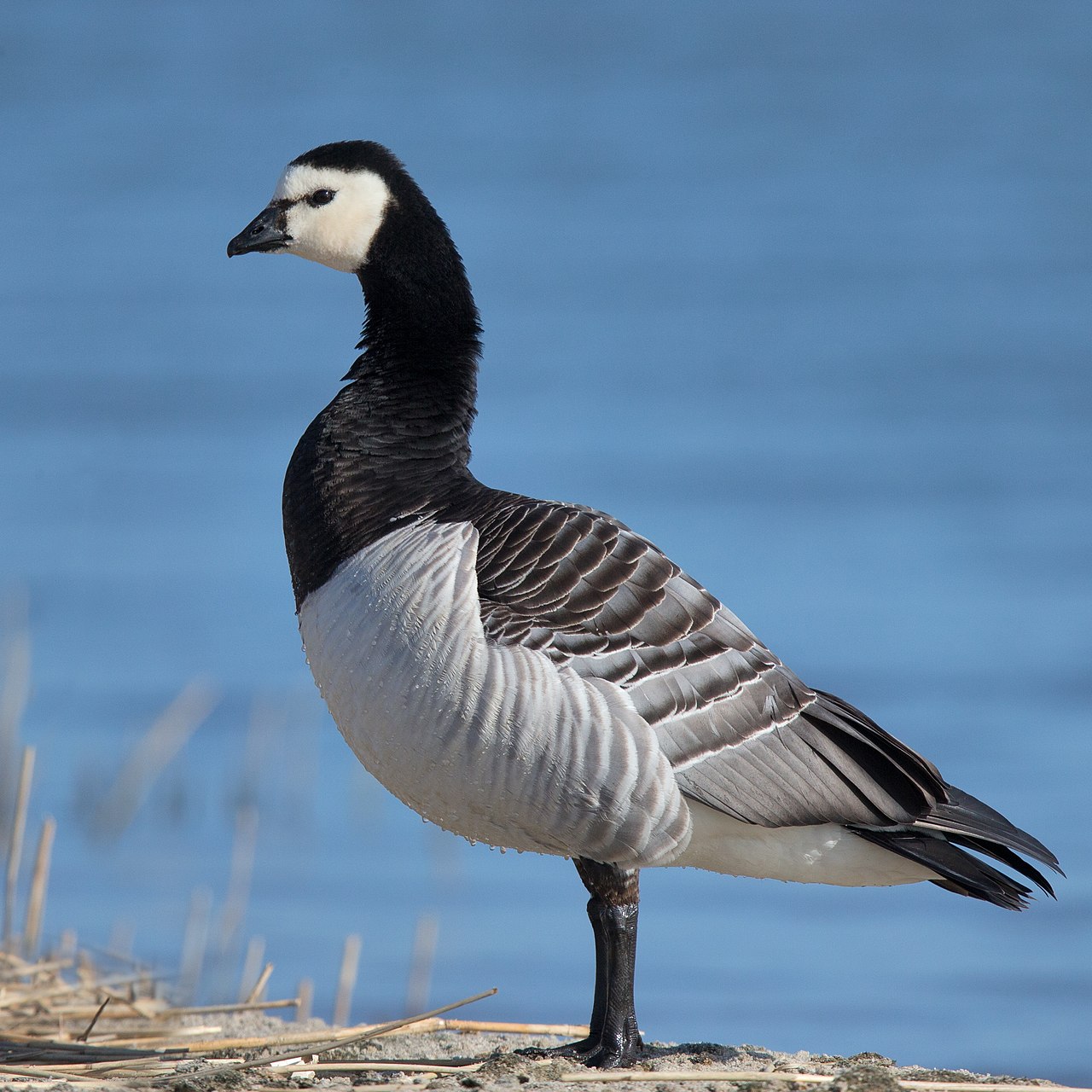
The barnacle goose (Branta leucopsis) is a medium-sized, strikingly patterned waterfowl that breeds in high-Arctic islands and winters on temperate coasts. Its distinctive appearance—black head and neck with a bright white face patch and pale grey-barred flanks—makes it readily recognisable in flight and on the ground. The species is part of the dark-plumaged Branta group, commonly referred to as the black geese, which contrast with the typically greyer Anser geese.
Image gallery
10 Images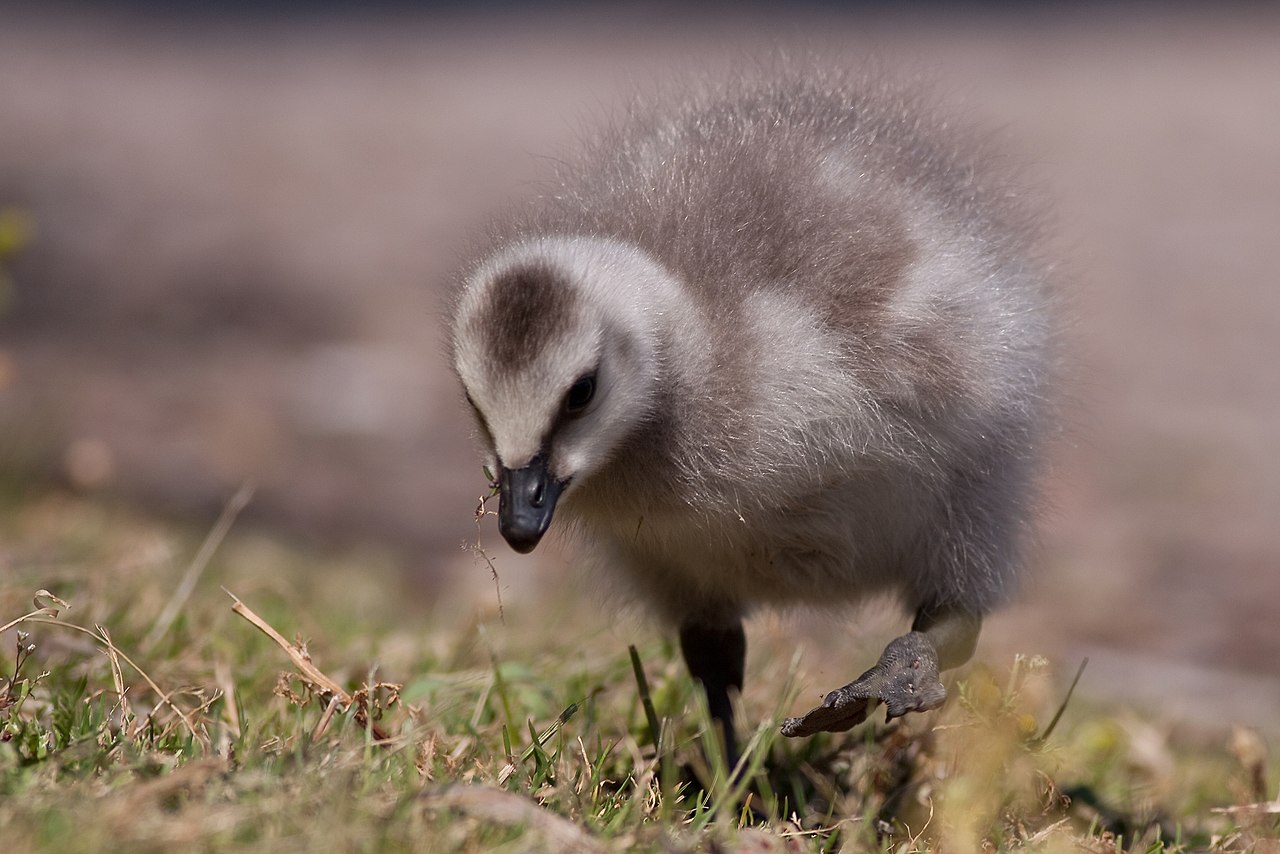




Identification and taxonomy
Adults show a sharply contrasting head pattern, black legs and bill, and compact body proportions. Juveniles are paler and lack the strong facial contrast until after their first moult. The barnacle goose is placed in the genus Branta, a lineage of geese characterised by darker head and neck feathers and often bold face markings. Its scientific name, leucopsis, refers to the pale face.
Range, habitat and migration
Breeding colonies occur on remote Arctic islands such as parts of Svalbard and Greenland and nearby archipelagos. During winter many individuals migrate to coastal marshes, estuaries and agricultural fields in northwestern Europe, including the British Isles, Ireland, the Netherlands and northern Germany. Migration routes are regular and populations follow established stopover sites where they rest and feed.
Breeding and behaviour
Barnacle geese commonly nest on cliffs or rocky ledges above the sea, a strategy that reduces egg and chick predation by land mammals. Females incubate the eggs while males guard nearby. Newly hatched goslings are precocial: they leave cliff nests shortly after hatching and descend to feeding areas, often by jumping to the ground or water and immediately following parents to forage.
Diet, predators and threats
The species feeds mainly on grasses and other graminoids on tundra in summer and on coastal grasslands and agricultural pastures in winter. Predators on breeding grounds can include Arctic foxes and large gulls that take eggs or young. Threats historically included hunting and egg collection; today habitat change, disturbance at key sites and agricultural conflicts can affect local populations.
History, culture and conservation
The barnacle goose inspired a famous medieval myth that linked the bird to barnacles attached to driftwood and shells, an idea born from rare sightings of its breeding colonies and sudden appearances at lower latitudes. That belief once influenced dietary rules in some regions. In recent decades many barnacle-goose populations have recovered or increased owing to legal protection, conservation management and the protection of important breeding and wintering sites, though local management continues to balance conservation with agricultural interests.
- Key traits: black head and neck, white face patch, grey-barred flanks.
- Breeding: cliff nesting with precocial goslings.
- Migration: long-distance seasonal movements between Arctic breeding grounds and temperate wintering areas.
Tags
Related articles
Author
AlegsaOnline.com Barnacle goose (Branta leucopsis) Leandro Alegsa
URL: https://en.alegsaonline.com/art/9026
Sources
- iucnredlist.org : Branta leucopsis
- animaldiversity.ummz.umich.edu : animaldiversity.ummz.umich.edu
- commons.wikimedia.org : Barnacle Goose
- wikidata.org : Q26680
- species.wikimedia.org : Branta leucopsis
- animaldiversity.org : Branta_leucopsis · web.archive.org
- avibase.bsc-eoc.org : 3163ED86A508BB83
- biolib.cz : 8442
- datazone.birdlife.org : 22679943
- cms.int : branta-leucopsis
- ebird.org : bargoo
- eunis.eea.europa.eu : 917
- eu-nomen.eu : 96483
- fauna-eu.org : 904798ab-9c98-4fb2-9107-b7677a391ba4