
Fernand Léger: French painter, sculptor and filmmaker
Fernand Léger (1881–1955) was a French painter, sculptor and filmmaker whose cubist-informed “tubism” evolved into a bold, machine-age figurative style that influenced public art and anticipated elements of Pop Art.
Overview
Joseph Fernand Henri Léger (4 February 1881 – 17 August 1955) was a French artist noted for painting, sculpture and experimental film. Beginning in the circle of early twentieth-century Cubism, he developed a distinctive visual language often called "tubism": a tendency to render shapes as cylindrical, tube-like forms and to emphasise strong contrasts, simplified volumes and bright colour. His work moved from analytical experiments toward a more monumental, readable figuration that celebrated industrial life and modern mass culture.
Image gallery
10 Images

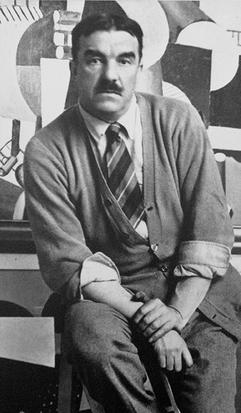


Early life and career
Léger trained as a decorator and studied at the École des Beaux-Arts in Paris before encountering the work of the Cubists. Early paintings show his engagement with fractured planes and multiple viewpoints, but he soon translated these lessons into a uniquely personal approach emphasising roundness and mechanistic rhythm. Works from this period explore ordinary objects, urban scenes and the visual language of machines.
Wartime experience and artistic shift
Service during the First World War and exposure to industrial machinery affected Léger's perception of form and space. He returned to civilian life with a renewed interest in clarity, scale and a populist orientation: art that could speak plainly to a wide audience and be integrated into architecture, decoration and public projects.
Style, technique and themes
Léger's mature paintings use bold outlines, flat planes of colour and a palette often dominated by primary hues plus black and white. Figures and objects can resemble interlocking mechanical parts; repetition and rhythmic arrangement create a sense of movement. He worked across media, translating this visual vocabulary into mosaics, tapestries, murals and sculptural reliefs.
Film, stage and public work
Beyond painting and sculpture, Léger explored film and stage design. He collaborated on and produced experimental films such as Ballet Mécanique, and he designed sets and costumes for theatrical productions. Public commissions and murals allowed him to bring his imagery into communal spaces, reflecting his belief in making modern art accessible.
Teaching, writings and influence
Léger taught and lectured widely, influencing designers, muralists and later generations of painters. His reduction of imagery to bold, graphic forms and his embrace of machine-age subjects made him an important precursor to later movements and practices that engaged popular culture. Critics and historians often link his work to the visual strategies that anticipated aspects of Pop Art.
Further reading and resources
- Overview of Léger’s painting career and exhibitions: painter
- Information on his sculptural practice and public commissions: sculptor
- Context on Cubism and early twentieth-century movements that shaped his development: Cubism
- Discussions linking Léger’s imagery to later trends such as Pop Art: Pop Art
Léger’s body of work remains central to studies of modernism and the interplay between art and industrial society. His vocabulary of simplified, tubular forms and his commitment to public-facing projects secure his place as a key figure who bridged avant-garde experimentation and broader visual culture.
Related articles
Author
AlegsaOnline.com Fernand Léger: French painter, sculptor and filmmaker Leandro Alegsa
URL: https://en.alegsaonline.com/art/118939