
Grant Wood: American painter and leader of Regionalism
Grant Wood (1891–1942) was an American painter best known for the 1930 work American Gothic. He depicted Midwestern life with clear forms and precise detail and helped shape the Regionalist movement.
Overview
Grant DeVolson Wood (February 13, 1891 – February 12, 1942) was an American artist whose work focused on rural Midwestern subjects and polished, realist compositions. He achieved lasting fame with the 1930 painting American Gothic, a spare, tightly composed portrait that became an emblem of American art in the 20th century.
Image gallery
10 Images





Style and subjects
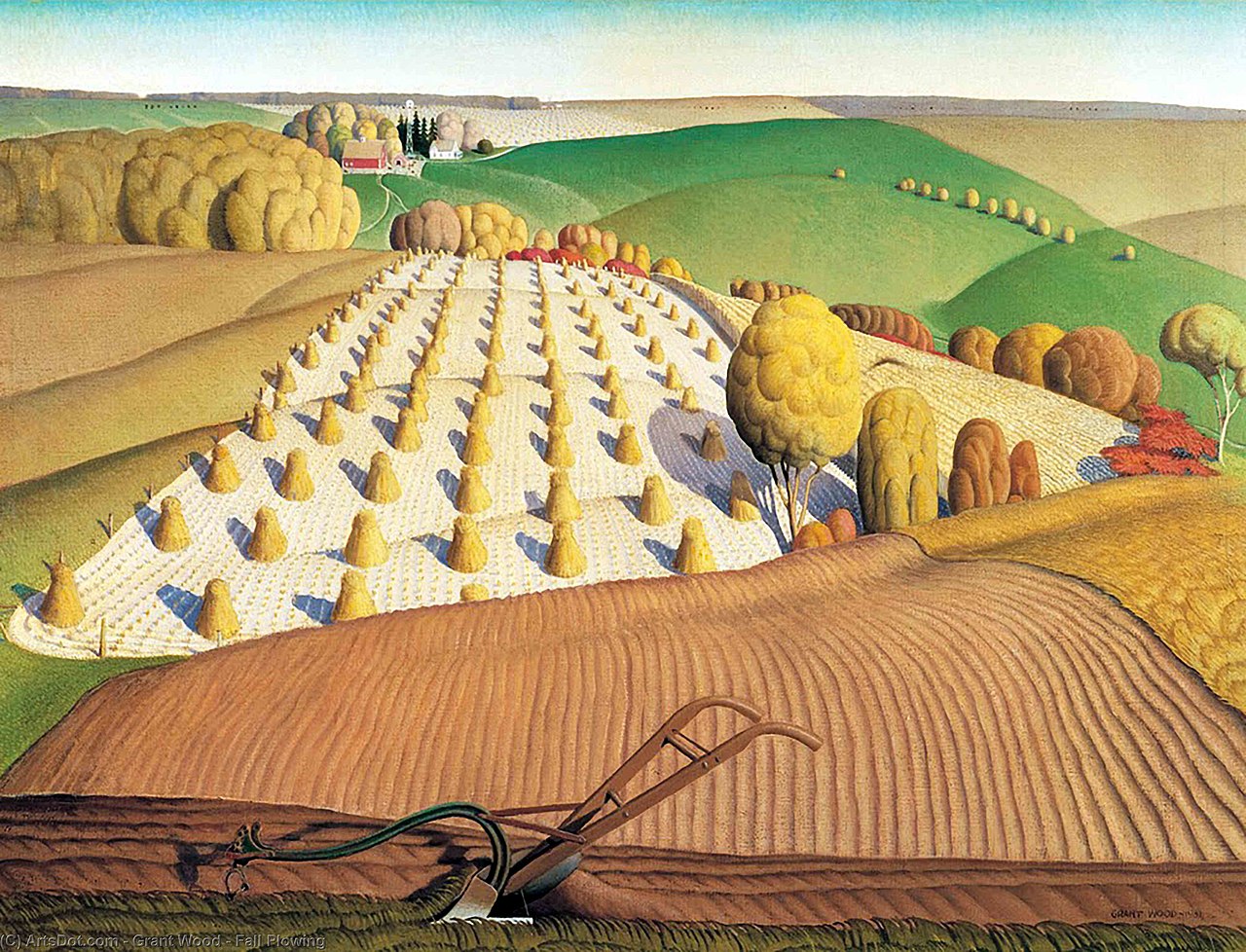
Wood’s paintings are noted for clear, controlled lines, careful modeling of faces and hands, and simplified backgrounds that emphasize figures and architecture. He favored scenes of everyday life—farms, small towns, and portraits—rendered with a mixture of naturalism and stylization. The overall effect is both precise and deliberately restrained, inviting close inspection and interpretation.
Life and development
Raised in the Midwest, Wood trained as an artist in the United States and spent time abroad before returning to his home region. He developed his mature approach during the 1920s and early 1930s, choosing to represent local subjects at a time when many American artists looked to European trends. His career combined studio painting with public commissions and involvement in regional artistic institutions.
Works, movement, and reception
Beyond American Gothic, Wood produced portraits, landscapes, and allegorical scenes that emphasized American themes. He is regularly associated with the Regionalist movement, which sought to portray national life outside major urban centers; other prominent figures in that group included Thomas Hart Benton and John Steuart Curry. Wood’s images were widely reproduced and often parodied, which both increased their fame and sparked debate about interpretation and meaning.
Characteristics and notable facts
- Clear composition and attention to detail, often with architectural elements.
- Focus on Midwestern people and settings rather than metropolitan subjects.
- Work that entered popular culture quickly, becoming an icon of American art.
Legacy
Wood’s influence endures in the way American life and landscape are depicted in art and in popular memory. His paintings continue to be studied for their technique, symbolism, and cultural impact. He died in 1942, one day shy of his 51st birthday, leaving a body of work that remains central to discussions of American art in the early 20th century.
Related articles
Author
AlegsaOnline.com Grant Wood: American painter and leader of Regionalism Leandro Alegsa
URL: https://en.alegsaonline.com/art/120026