
Hieronymus Bosch: life, themes, and legacy of a Netherlandish innovator
Overview of Hieronymus Bosch (c.1450–1516): his life in 's-Hertogenbosch, characteristic imagery of sin and hell, major works, techniques, and long-lasting influence on art and interpretation.
Overview
Hieronymus Bosch (born Jeroen Anthonissen van Aken, c.1450–1516) was a Dutch artist noted for densely populated, often nightmarish compositions. His paintings combine religious teaching with startling allegory. Bosch is frequently described as an early painter of the Northern Renaissance and occupies a singular place between medieval devotional imagery and the visual imagination that later attracted modern artists.

Image gallery
10 Images





Life and historical context
Bosch spent his life in 's-Hertogenbosch, then the chief town of the Duchy of Brabant, a region that overlapped parts of present-day Belgium and the Netherlands. Documentary records are scarce: his family name, civic roles and workshop are known from municipal archives, but detailed personal accounts are lacking. He worked in the religious culture of late medieval Europe, where teachings about sin, penitence and the afterlife shaped much pictorial content.
Themes and iconography
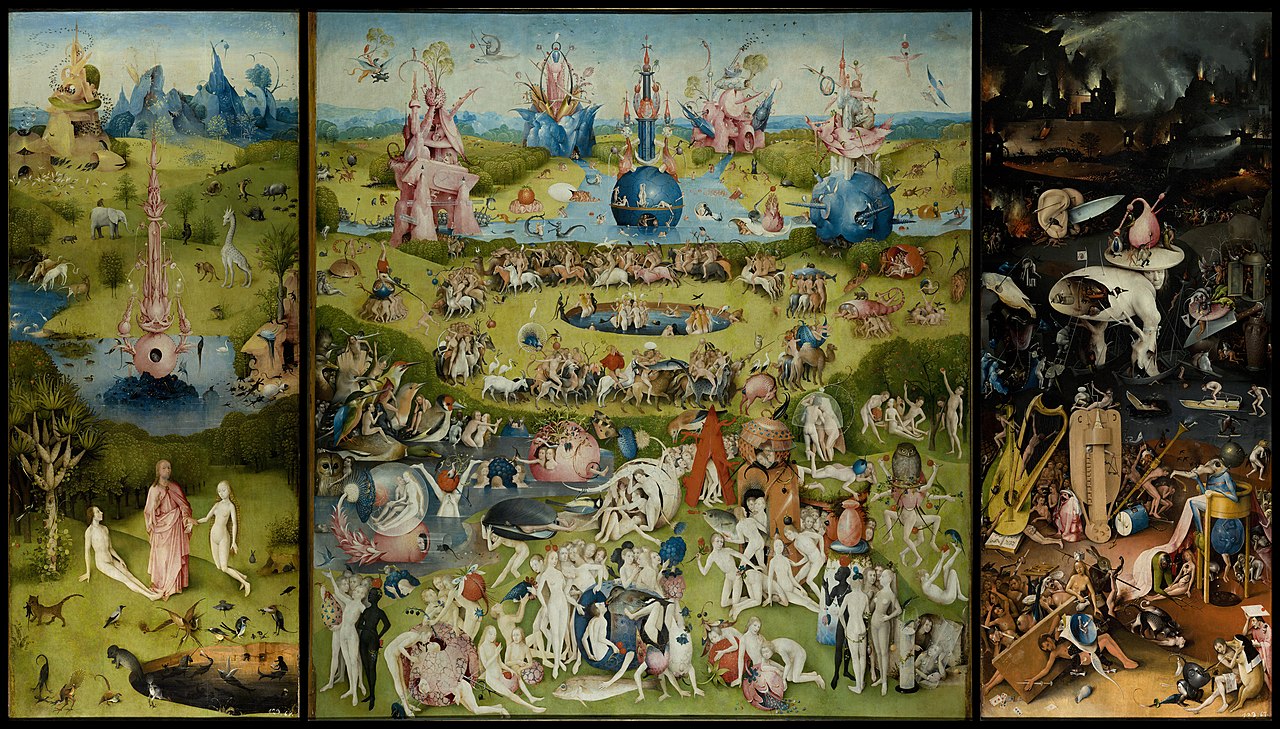
Bosch's imagery repeatedly addresses temptation, sin and the punishment awaiting sinners—often represented in brilliantly imagined scenes of hell. His visual language can seem dreamlike or hallucinatory: hybrid creatures, distorted human figures and mechanistic devices create scenes of confusion and moral warning. Elements that shock modern viewers—overtly sexual or sadistic episodes—were typically intended as moral lessons rather than prurient display.

Style, techniques and symbolic complexity
Technically, Bosch worked primarily in oil on panel and is known for small- and medium-sized compositions, including several multi-paneled altarpieces and triptychs. His work is celebrated for dense, minutely observed detail, and for the way familiar devotional formats are filled with unusual, sometimes obscure symbols. Scholars emphasize his imaginative use of figures and the dense symbolic language and iconography that resist one-to-one reading.
Major works and locations
- The Garden of Earthly Delights — a famous triptych with paradisal, earthly and infernal panels.
- The Haywain and Ship of Fools — allegories of folly and social critique.
- The Temptation of St. Anthony and Last Judgment variants — devotional narratives refracted through Bosch's imagination.
Only around two dozen paintings are now generally accepted as entirely by Bosch; several were collected for the Spanish royal collection by Philip II and are housed in the Prado Museum. Attribution is complicated by later copies, workshop pieces and the artist's imitators.
Interpretations and legacy
Bosch's work inspired and puzzled viewers from his own time to the present. Twentieth-century movements often cited him as a precursor to modern art tendencies; Surrealist artists in particular admired his free association of dreamlike signs and bizarre figures, a link often invoked in discussions of surrealism. His monstrous demons and hybrid beasts have been read as moral allegory, satirical social comment and psychological projection.

Distinctive facts and further reading
Distinctive features of Bosch's oeuvre include careful attention to tiny details, the fusion of moral instruction with imaginative spectacle, and in some cases symbols whose meanings are still debated. His pictures were used to warn, to teach and to provoke reflection about human behavior. For starting points in study, museum catalogues and specialist literature remain valuable; introductory resources and galleries can be found via general art-history portals and institutional sites.

For more context on the artist and his reception, see entries on his biography, catalogue raisonnés and exhibition histories linked from standard art resources. Additional thematic and technical discussions explore how Bosch's work fits within late medieval devotional practice and how later viewers reinterpreted it through evolving artistic movements. See also related references to Bosch's symbolic vocabulary and workshop practice.
Early Netherlandish context • erotic and punitive motifs • demons and hybrids • creative imagination • symbolic figures • iconographic studies • regional history • Low Countries • notions of punishment • dream imagery
Questions and answers
Q: Who was Hieronymus Bosch?
A: Hieronymus Bosch was an early Dutch painter who lived, worked and died in 's-Hertogenbosch, a Dutch town.
Q: Where did Hieronymus Bosch live?
A: Hieronymus Bosch lived in 's-Hertogenbosch, a Dutch town which was then the capital of the Duchy of Brabant. This region included much of modern Belgium and Holland.
Q: What were some common themes in his works?
A: Many of his works depicted temptation, sin and punishment in hell. The paintings often looked like, and certainly did influence, the modern art movement known as surrealism. He also used images of demons, half-human animals and machines to evoke fear and confusion, and to portray the evil of man.
Q: How many paintings are known to be by him today?
A: Today only 25 paintings are known to be by him; Philip II of Spain collected some of the best which are now in the Prado Museum in Madrid.
Q: What is Ecce homo?
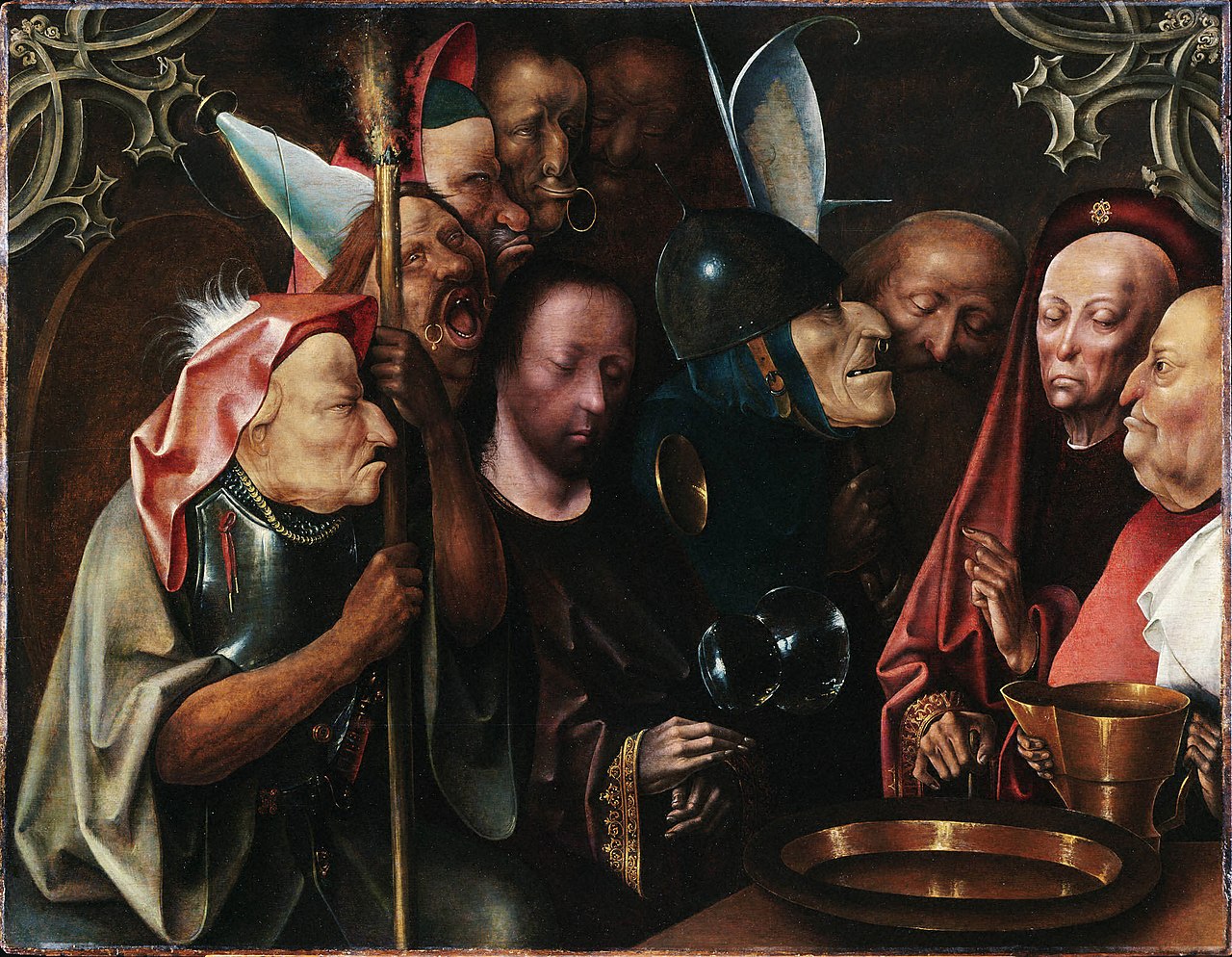
A: Ecce homo is one of Hieronymus Bosch's 25 surviving paintings which depicts Jesus Christ on trial before Pontius Pilate prior to his crucifixion.
Q: What is The Stone Cutting or The Cure for Folly?
A: The Stone Cutting or The Cure for Folly is another painting by Hieronymus Bosch depicting a fool being cured with a stone cutting tool while surrounded by other characters from folklore such as dragons and giants.
Q: What is The Temptation of Saint Anthony about?
A: The Temptation of Saint Anthony is a painting by Hieronymus Bosch depicting St Anthony being tempted by various creatures representing sins such as lust and greed while he resists them through prayerful contemplation.
Related articles
Author
AlegsaOnline.com Hieronymus Bosch: life, themes, and legacy of a Netherlandish innovator Leandro Alegsa
URL: https://en.alegsaonline.com/art/120633