
John Martin (1789–1854), English Romantic painter
John Martin (1789–1854), English Romantic painter noted for monumental, theatrical biblical and historical scenes, dramatic lighting, and widely distributed engravings that shaped Victorian visual taste.
Overview
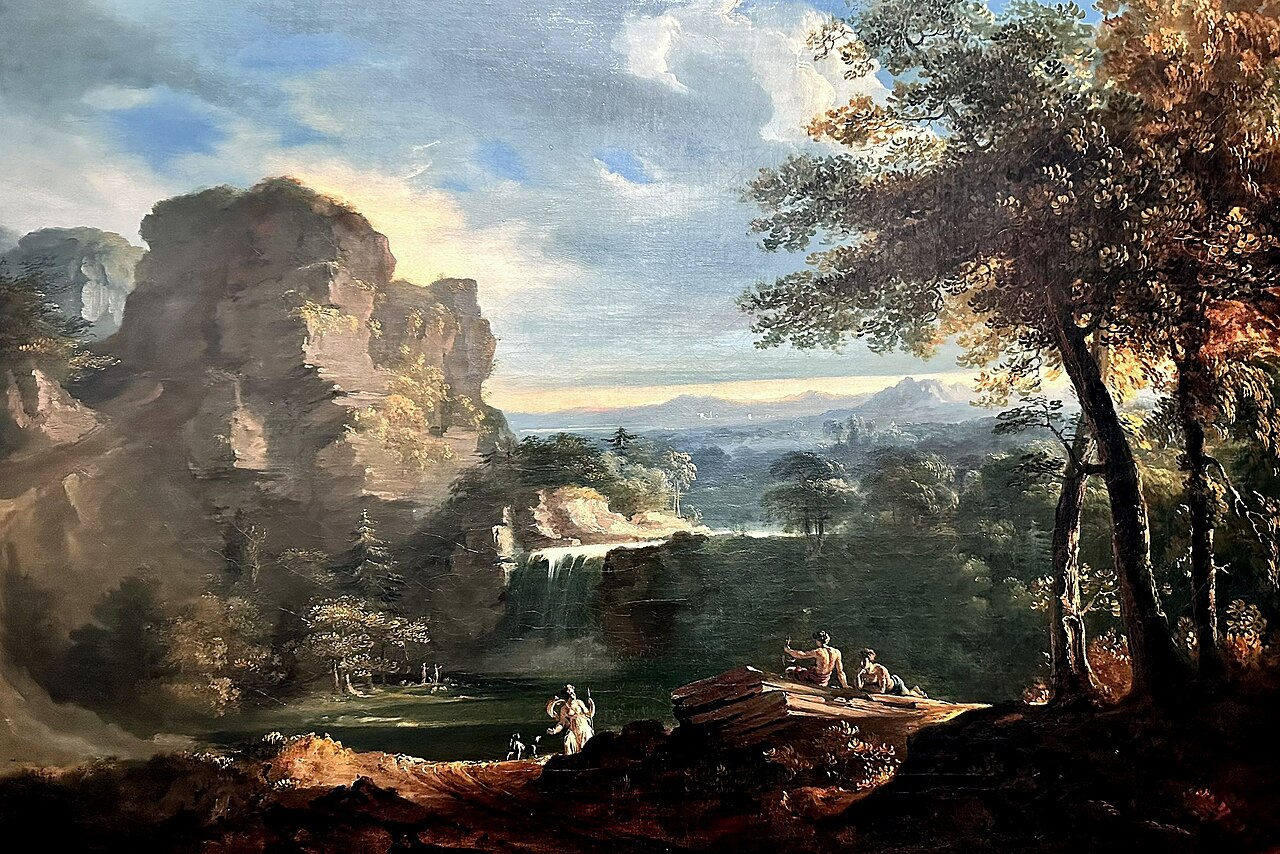
John Martin (1789–1854) was an English painter associated with the Romantic movement, celebrated for monumental canvases that present biblical, historical and catastrophic subjects on a vast scale. His compositions emphasize sweeping panoramas, dramatic contrasts of light and shadow, and finely detailed architectural and geological elements that dwarf tiny human figures to convey awe and the sublime.
Image gallery
10 Images




Early life and training
Martin came from a provincial English background and trained in practical decorative and commercial arts before establishing himself as an easel painter. He was largely self-directed in developing his large-scale visionary style and worked in London to reach a national audience.
Style and technique
Martin's work is characterised by theatrical staging, deep perspective and intense illumination often concentrated at a distant horizon or central supernatural source. He exploited strong chiaroscuro and precise, miniature figures within monumental settings to heighten narrative impact. To make his pictures accessible to a broad public he collaborated closely with engravers, producing mezzotint and steel-plate reproductions that circulated widely and helped define contemporary visual taste.
Major works
- Belshazzar's Feast — an imposing biblical spectacle with monumental interiors and luminous phenomena;
- The Destruction of Pompeii and Herculaneum — a panoramic catastrophe showing volcanic devastation;
- Pandæmonium — a Miltonic vision of vast, fantastic architecture and infernal assembly;
- The Last Judgment — an apocalyptic composition portraying cosmic reckoning.
Career, reception and legacy
Martin exhibited in major London venues and commanded large public audiences. Critics were divided: some praised his imagination and narrative force, others found his effects excessive. His engraved reproductions secured enormous popularity in Britain and abroad. Today his work is recognised for its distinctive contribution to Romanticism, its influence on nineteenth-century spectacle, stage design and print culture, and for anticipating later interests in epic visual narratives. Examples of his paintings and prints are held in public collections and continue to attract scholarly and popular interest.
Related articles
Author
AlegsaOnline.com John Martin (1789–1854), English Romantic painter Leandro Alegsa
URL: https://en.alegsaonline.com/art/122566