
Ernest Orlando Lawrence: Cyclotron Inventor and Leader in Nuclear Physics
Ernest O. Lawrence (1901–1958) invented the cyclotron, won the 1939 Nobel Prize, contributed to wartime isotope separation, and shaped modern large-scale scientific laboratories and accelerator technology.
Ernest Orlando Lawrence (August 8, 1901 – August 27, 1958) was an American experimental physicist best known for inventing the cyclotron, an early and widely influential type of particle accelerator. Born in Canton, South Dakota, he trained in physics and rose to prominence at the University of California, Berkeley where he founded a research center that grew into what is now the Lawrence Berkeley National Laboratory. For the invention and development of the cyclotron and the discoveries made with it he was awarded the Nobel Prize in Physics in 1939. For a concise biographical overview, see biographical overview.
Image gallery
10 Images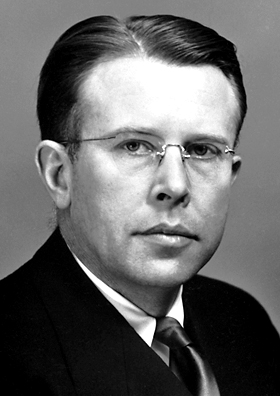




Early life and education
Lawrence grew up in the American Midwest and pursued higher education in physics, later earning an advanced degree that prepared him for a career in experimental work. His early laboratory experiences and interest in electrical and magnetic methods led him to conceive new ways to accelerate charged particles to high energies. General profiles of his education and formative years are available at educational and early career summaries.
The cyclotron and experimental innovation
Developed in the late 1920s and early 1930s, the cyclotron uses a strong magnetic field and an alternating electric potential to accelerate charged particles in a spiral trajectory, allowing progressively higher energies in a relatively small device. This compact acceleration method enabled systematic studies of nuclear reactions, artificial radioactivity, and the production of new isotopes. Technical descriptions and historical accounts of the cyclotron can be consulted at technical histories.
Wartime work and isotope separation
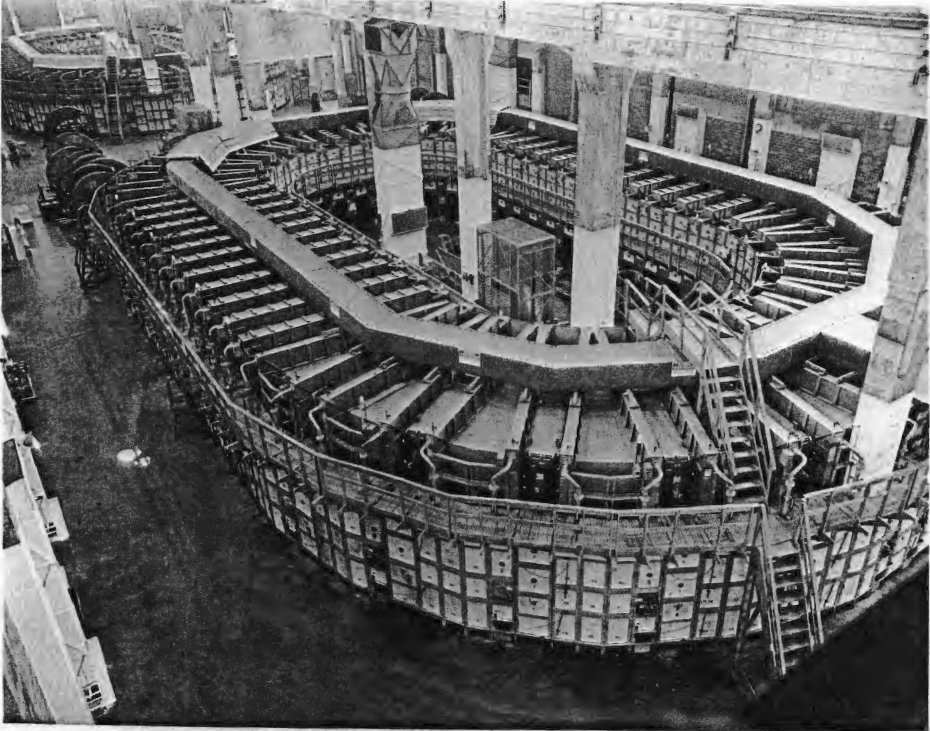
During World War II Lawrence directed efforts that applied electromagnetic separation techniques to the problem of isotope enrichment. The calutron, a mass-separation device derived from cyclotron principles, was used in large-scale programs to separate uranium isotopes for the Manhattan Project. These wartime activities tied Lawrence’s laboratory to national defense priorities and remain the subject of study in histories of science and policy; see Manhattan Project studies for context.
Big Science and institutional legacy
Lawrence was a pivotal figure in the emergence of what historians call "Big Science": large teams, dedicated engineering support, major federal funding, and multi-disciplinary facilities. He helped build laboratory infrastructure and management practices that persisted after the war. Laboratories and programs bearing his name reflect his lasting institutional impact; further institutional material is summarized at laboratory histories and institutional legacy pages.
Scientific contributions and controversies
Beyond the cyclotron, Lawrence’s group advanced measurement techniques for particle masses and isotopes, contributing to mass-spectrometry and nuclear chemistry. His career also raises ethical and historical questions about the relationship between academic research and military objectives. Balanced discussions of his scientific contributions and the debates about wartime responsibility are available in general studies and biographies at critical studies and biographical analyses.
Lawrence died in 1958. His legacy includes the continued use of particle accelerators in research, the institutional models he helped establish, and an enduring discussion about the roles scientists play in public and military affairs. For accessible general reading and popular treatments of his life and work, see popular biographies and summaries.
- Key achievements: invention of the cyclotron; Nobel Prize in Physics (1939); leadership in accelerator development and laboratory organization.
- Legacy: influence on accelerator technology, named national laboratories, and the emergence of large-scale collaborative science.
Related articles
Author
AlegsaOnline.com Ernest Orlando Lawrence: Cyclotron Inventor and Leader in Nuclear Physics Leandro Alegsa
URL: https://en.alegsaonline.com/art/118669