
Ernest Solvay: inventor of the Solvay process and industrial philanthropist
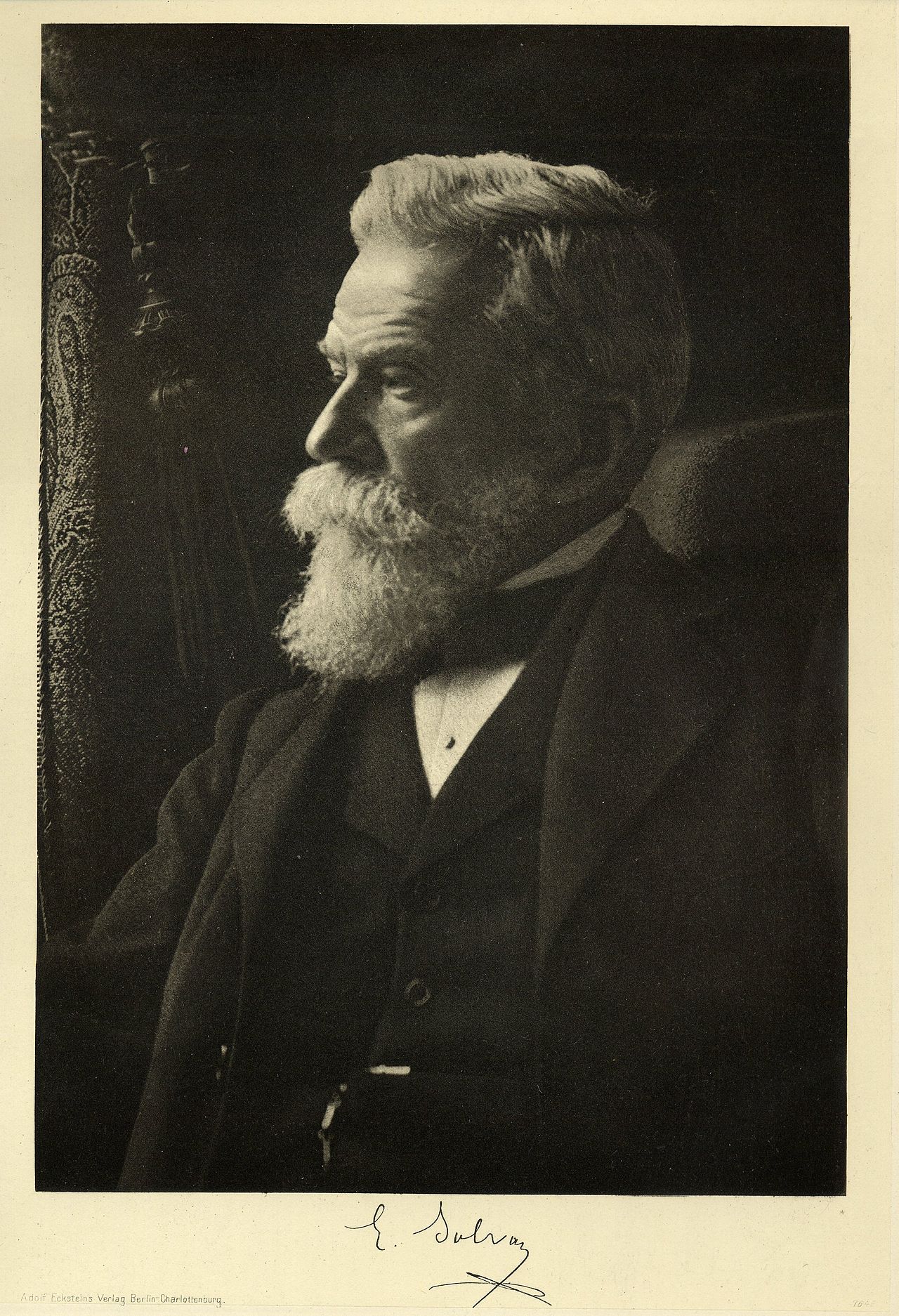
Ernest Solvay (1838–1922) was a Belgian chemist, entrepreneur and philanthropist best known for developing the ammonia‑soda (Solvay) process and founding a major chemical company and scientific institutions.
Overview
Ernest Gaston Joseph Solvay (16 April 1838 – 26 May 1922) was a Belgian chemist, industrialist, politician and philanthropist. He is chiefly remembered for inventing an economical method to manufacture soda ash and for turning that invention into a successful international business and a platform for scientific and educational philanthropy.
Image gallery
3 Images

The Solvay process and its significance
In 1861 Solvay developed the ammonia‑soda method, commonly called the Solvay process, which produces sodium carbonate (soda ash) from salt (brine) and limestone using ammonia as a recycled reagent. Compared with the older Leblanc method, Solvay's process was more efficient, less pollutive and cheaper to run, which enabled soda ash to be produced at larger scale. Soda ash is a basic industrial chemical used in glassmaking, detergents, paper, and many other applications.
Industry and enterprise
Solvay founded the company Solvay & Cie and opened his first factory at Couillet in 1863. The process was rapidly adopted across Europe and North America: plants were established in the United Kingdom, the United States, Germany, Austria and elsewhere. Towns associated with early plants, such as Rosignano Solvay in Italy and Solvay, New York, still bear his name. Many Solvay‑type plants continued to operate into the 20th and 21st centuries, reflecting the process's lasting economic importance.
Public life, education and science
Solvay also engaged in public service: he was elected twice to the Belgian Senate and was later named a Minister of State. He invested heavily in education and research. In 1903 he founded the Solvay Business School, now part of the Free University of Brussels, to promote modern commercial and managerial training. Beginning in 1911 he sponsored a series of international scientific meetings—the Solvay Conferences—which brought together leading physicists and chemists and played a notable role in shaping early 20th‑century science.
Legacy and notable facts
- Solvay transformed a chemical innovation into a multinational enterprise that influenced manufacturing and industrial chemistry.
- His philanthropic endowments supported higher education and fundamental research, particularly in physics and chemistry.
- Places tied to his life and work include factories and communities like Couillet, Rosignano Solvay, and Solvay, New York.
- He died in Ixelles in 1922, leaving a company and institutions that continued to influence industry and science.
Further reading
For an introduction to Solvay's life and the chemistry behind his process, see general histories of industrial chemistry and accounts of 19th‑century Belgian industry. Contemporary company histories and university archives also document the development of Solvay & Cie, the Solvay Business School and the Solvay Conferences. Additional resources are available via national and academic collections on his political career and archives that preserve his correspondence and company records.
Key themes in Solvay's story are the translation of a technical innovation into broad commercial use, the interplay of industry and public life, and long‑term support for scientific collaboration. His example illustrates how 19th‑century inventors could both reshape manufacturing processes and leave institutional legacies in education and research.
Related articles
Author
AlegsaOnline.com Ernest Solvay: inventor of the Solvay process and industrial philanthropist Leandro Alegsa
URL: https://en.alegsaonline.com/art/118673