
Elinor Ostrom: Nobel laureate on the governance of common-pool resources
Elinor Ostrom (1933–2012) was an American political economist who showed how communities can self-organize to manage shared resources. She won the 2009 Nobel Prize and developed the IAD framework and design principles.
Elinor Claire "Lin" Ostrom (August 7, 1933 – June 12, 2012) was an American political economist whose empirical work transformed how scholars and policymakers think about collective action and common-pool resources. Her research challenged the conventional belief that shared goods inevitably suffer a "tragedy of the commons" and demonstrated that many communities devise stable, long-term arrangements to use and conserve fisheries, forests, irrigation systems, pastures, and other resources.
Image gallery
4 Images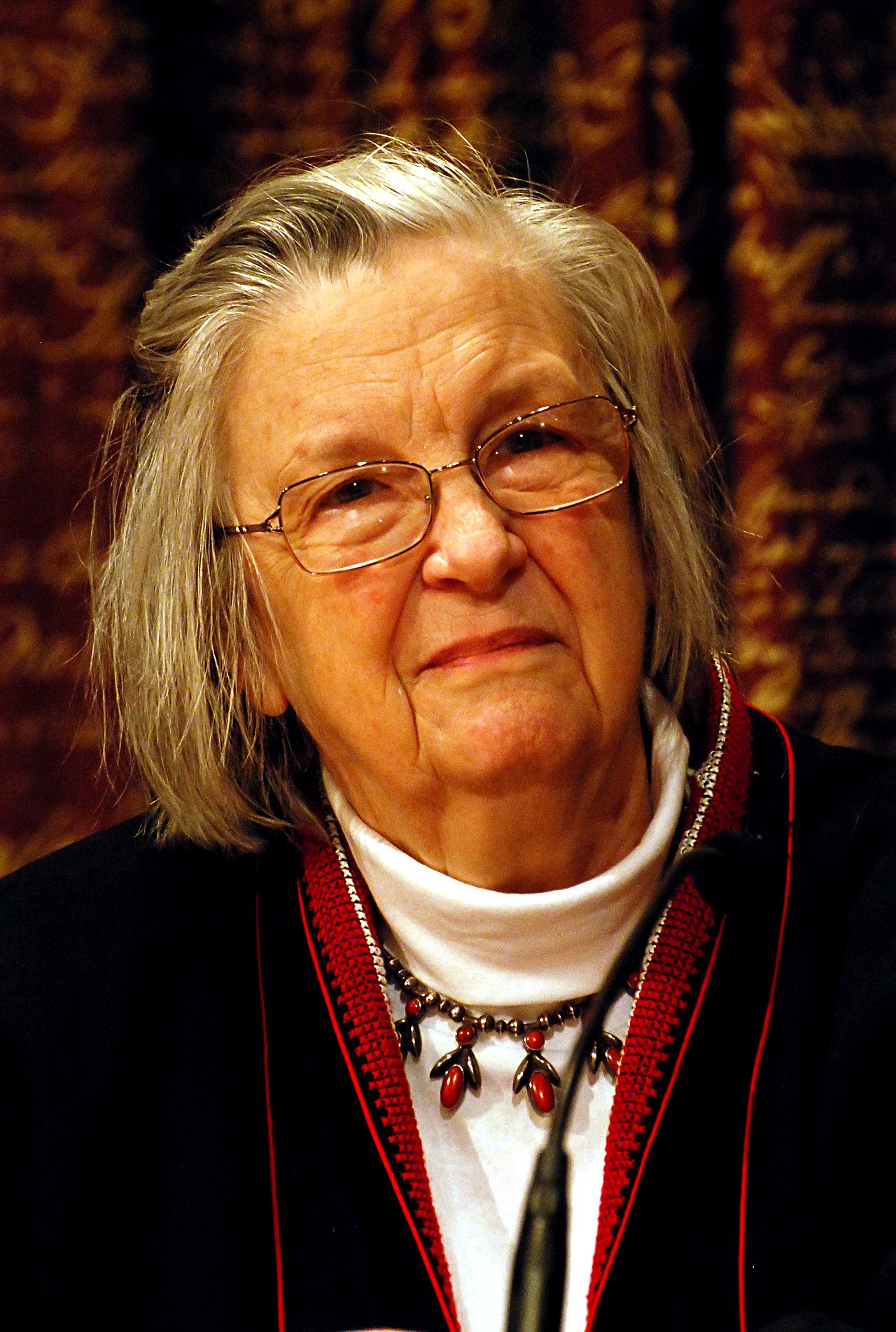


Major contributions
Ostrom combined careful field studies, comparative analysis, and laboratory experiments to develop general insights about institutions — the rules and norms that people create to organize collective life. She is best known for the book Governing the Commons, in which she documented many cases of successful local governance and extracted recurring patterns and institutional designs. Her work emphasized bottom-up, locally tailored solutions and the importance of trust, monitoring, and collective-choice processes.
Institutional Analysis and Development (IAD) and design principles
Ostrom helped formalize a diagnostic toolkit, the Institutional Analysis and Development (IAD) framework, to study how rules, norms, and attributes of resource systems shape outcomes. From her comparative work she distilled widely cited design principles for robust commons institutions. These principles are not universal prescriptions but recurring features observed where self-governance succeeds:
- Clearly defined boundaries for resource and user groups
- Congruence between rules and local conditions
- Collective-choice arrangements allowing users to participate in rulemaking
- Effective monitoring by accountable persons
- Graduated sanctions for rule violators
- Accessible, low-cost conflict-resolution mechanisms
- Recognition of rights to organize by higher-level authorities
- Nested, multilevel governance for larger systems
Life, career, and recognition
Ostrom spent much of her academic career at Indiana University, where she was closely associated with the Workshop in Political Theory and Policy Analysis, and later held positions at Arizona State University. She shared the 2009 Nobel Prize in Economic Sciences with Oliver Williamson, becoming the first woman to receive that prize in economics. In addition to the Nobel, her influence is visible in interdisciplinary centers, policy debates, and movements that promote commons-based solutions to environmental and social problems.
Examples, applications, and significance
Her findings have shaped approaches to natural-resource management, municipal services, and polycentric governance arrangements—systems in which multiple overlapping authorities coexist. Practical applications range from community-managed irrigation and coastal fisheries to urban commons initiatives and collaborative resource stewardship. Ostrom's insistence on empirical investigation of institutions encouraged policymakers to consider a wider range of governance options beyond simple privatization or central control.
Notable facts and further reading
Ostrom was among the Nobel laureates who signed the "Stockholm memorandum" on global sustainability in 2011. She was married to the political scientist Vincent Ostrom and died in Bloomington, Indiana, in 2012 after a diagnosis of pancreatic cancer. For introductions, primary works, and biographical information see the following links:
- Overview of her research
- Nobel Prize 2009 citation
- Profile highlighting her status as the first female laureate in economics
- Summary of her Nobel-winning contribution
- Discussion of the Tragedy of the Commons debate
- Stockholm memorandum on sustainability
- Context on the 2011 Nobel Laureate Symposium
- Indiana University affiliation and the Workshop
- Arizona State University affiliation
- Biographical note: early life
- Information on birthplace
- Notes on her illness and passing
- Obituary and tribute resources
- Additional resources on institutional analysis
Ostrom's legacy endures in scholarship and practice that seek pragmatic, context-sensitive ways to manage shared resources while respecting local knowledge and collective action. Her work remains a cornerstone for anyone studying environmental governance, public economics, political science, and community-based resource management.
Related articles
Author
AlegsaOnline.com Elinor Ostrom: Nobel laureate on the governance of common-pool resources Leandro Alegsa
URL: https://en.alegsaonline.com/art/118290
Sources
- guardian.co.uk : Guardian obituary
- nobel-cause.de : "Stockholm Memorandum,"
- telegraph.co.uk : Telegraph obituary