
Doreen Massey: Geographer of Space, Place and Power
Overview of Doreen Massey, British social scientist and geographer noted for relational ideas of space, feminist and Marxist geography, her influence in urban, cultural and global studies.
Doreen Massey (1944–2016) was a British social scientist and geographer whose work reshaped how scholars and practitioners think about space and place. Trained in geography, she combined theoretical rigor with political commitment, linking Marxist, feminist and cultural perspectives to produce a dynamic, relational account of place. For a concise academic overview see her profile.
Image gallery
1 Image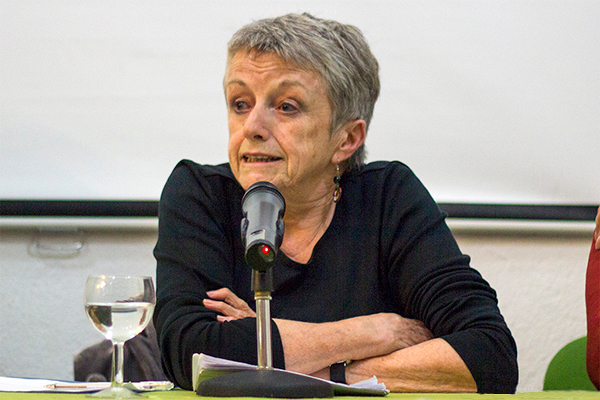
Key concepts
Massey rejected the idea of place as a fixed container and instead argued that places are processes: ongoing products of social relations stretched across space. Her influential themes include:
- Relational space — space defined by connections, flows and relations rather than boundaries.
- Place as process — places are outcomes of interactions, not static backdrops.
- Power-geometry — the unequal ways people and places are positioned within global networks of power and movement.
Career and development
Massey combined empirical attention to places with broad theoretical arguments. She held a long association with the Open University, where she became Emeritus Professor of Geography; institutional information is available via Open University resources. Across her career she engaged with debates in urban studies, regional development and feminist scholarship, bringing attention to how economic change and political decisions produce differentiated geographies.
Uses and influence
Her ideas informed research and practice in urban planning, economic geography, cultural studies and policy analysis. By emphasizing interconnectedness, Massey offered tools for understanding globalization, local identity and spatial inequality. Students and researchers routinely draw on her arguments when addressing migration, regional decline, or attempts to democratize planning processes; selected topics are discussed at related resources.
Notable facts and legacy
Massey was widely honoured during her life for both scholarship and public engagement and is remembered for accessible writing that bridged theory and applied concerns. She helped shift geography toward an appreciation of space as active and politically charged, a legacy visible across contemporary social science. Further materials, including collected writings and obituaries, can be found via institutional or memorial pages such as archival guides and published remembrances like the one at obituary notices.
Massey died in 2016 after an illness; her work continues to be taught and cited across disciplines that study how places are made, contested and lived.
Related articles
Author
AlegsaOnline.com Doreen Massey: Geographer of Space, Place and Power Leandro Alegsa
URL: https://en.alegsaonline.com/art/117886
Sources
- open.ac.uk : "Prof Doreen Massey – Profile"