
Dorothee Wilms — German politician and federal minister
Dorothee Wilms (born 11 October 1929) is a German CDU politician who served as Federal Minister for Education and Science (1982–1987) and Federal Minister for Intra‑German Relations (1987–1991).
Overview
Dorothee Wilms (born 11 October 1929 in Grevenbroich, Germany) is a German politician associated with the Christian Democratic Union (CDU). She held senior cabinet posts in the federal government during the 1980s and the early 1990s, a period marked by Cold War tensions and the eventual reunification of Germany.
Image gallery
1 Image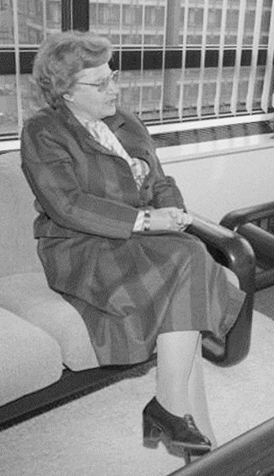
Political career and key posts
Wilms served in two principal ministerial roles in the federal cabinet led by Chancellor Helmut Kohl. Her most prominent appointments were as Federal Minister for Education and Science from 1982 to 1987 and as Federal Minister for Inner‑German Relations from 1987 until 1991. These positions placed her at the intersection of domestic policy on education and the sensitive relationship between West Germany and the German Democratic Republic.
Responsibilities and priorities
As Federal Minister for Education and Science, Wilms was responsible for federal-level policy on higher education, research funding, and coordination with the Länder (state governments) on schooling and vocational training. In her later role leading the ministry for intra‑German affairs, she oversaw programs and contacts aimed at families, cultural exchanges, humanitarian questions, and practical cooperation between the two German states prior to reunification.
Context and historical significance
The offices Wilms held were shaped by the Cold War division of Germany. The Federal Ministry for Inner‑German Relations existed to manage cross‑border matters and maintain channels of contact with East Germany; it was dissolved after reunification in 1991 when its tasks were subsumed into other ministries. Wilms's tenure thus spanned both the late Cold War and the immediate aftermath of reunification, a transformative era for German domestic and foreign affairs.
Notable facts and legacy
- Born in 1929, Wilms's political career reflects post‑war developments in West German governance and policy-making.
- Her ministerial work bridged education policy and the practical management of relations between the two German states.
- The ministry she led for intra‑German affairs is often referenced in studies of West–East German contacts and the administrative preparations that accompanied reunification.
For more on the German institutions involved in managing relations between East and West Germany, see the entry for the Federal Ministry for Inner‑German Relations: Ministry for Inner‑German Relations.
Wilms remains a figure of interest for those studying West German politics of the 1980s, educational policy of that period, and the administrative history surrounding German reunification.
Related articles
Author
AlegsaOnline.com Dorothee Wilms — German politician and federal minister Leandro Alegsa
URL: https://en.alegsaonline.com/art/117891