
Cultural geography: the study of human cultures, places, and spatial diffusion
Cultural geography examines how beliefs, practices and material expressions shape and are shaped by places. It covers cultural landscapes, diffusion, identity, methods, history, and practical applications.
Overview
Cultural geography is the branch of geography that analyzes the spatial dimensions of human cultures. It asks how languages, religions, customs, built forms, foodways, music and other cultural traits are distributed across places and why they vary. Rather than treating culture as fixed, cultural geographers study the interaction between people and environments, the production of meaning in landscapes, and how cultural practices travel, adapt or resist change.
Image gallery
4 Images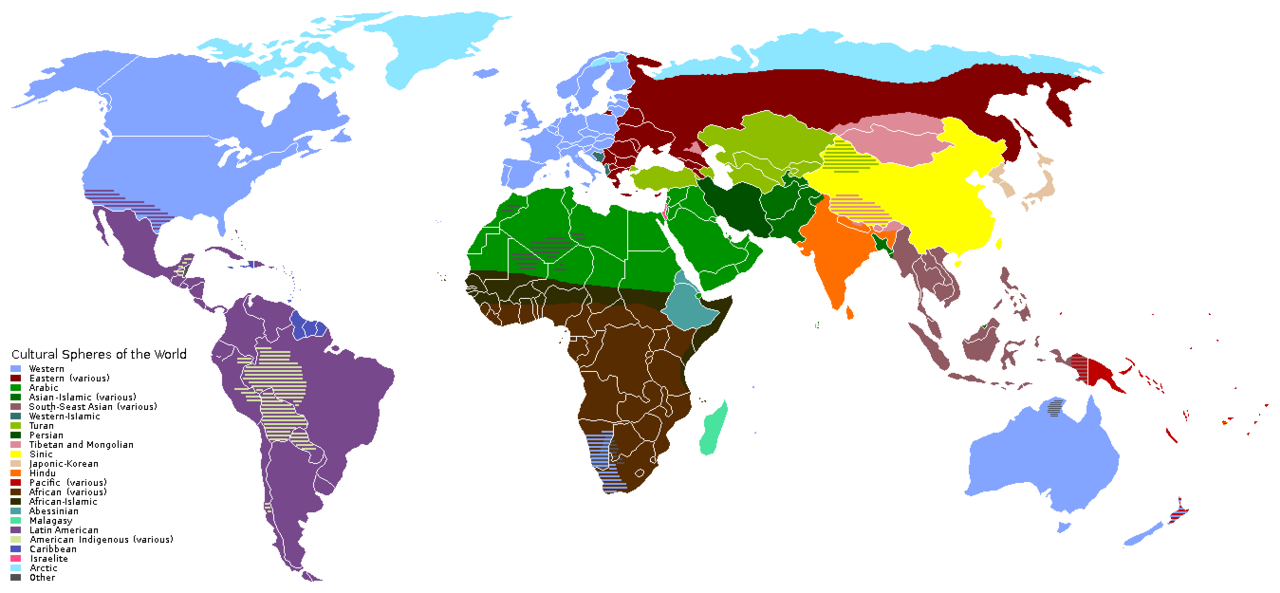


Key themes and components
Several recurring topics define the field:
- Cultural landscape: how human activities leave visible marks on physical space, from urban architecture to agricultural patterns.
- Identity and place: the links between social identities (ethnicity, religion, class) and particular locations.
- Diffusion: mechanisms by which ideas, goods and practices spread — for example through migration, trade, media or conquest.
- Material culture: objects, clothing, and food as expressions of cultural meaning.
History and methods
The discipline grew from regional and human geography traditions and expanded during the twentieth century as scholars incorporated qualitative fieldwork, historical analysis, and spatial theory. Methods range from ethnographic observation and interviews to mapping, archival research and visual analysis of landscapes. Contemporary work often combines field-level studies with critical theory to examine power, representation and inequalities.
Applications and examples
Cultural geographic research informs urban planning, heritage preservation, conflict analysis and tourism management. It helps planners understand neighborhood identities, supports conservation of cultural sites, and explains how transnational communities maintain ties across borders. For example, the broadly defined Arab world includes diverse countries whose cultural connections span continents: Morocco in the northwest of Africa, the continent itself often treated as a regional context in studies (Africa), Syria in the eastern Mediterranean, and Yemen on the southern Arabian Peninsula with proximity to Ethiopia across the Red Sea. Such examples illustrate how language, religion and trade can create cultural regions that overlap political boundaries.
Distinctions and debates
Cultural geography distinguishes itself from cultural anthropology by focusing on spatial patterns and landscapes rather than exclusively on social practices. Ongoing debates address essentialism (treating cultures as homogeneous), the role of globalization in homogenizing versus diversifying places, and how power and colonial histories shape whose cultures are visible in the landscape. These debates push the field toward more reflexive, intersectional and comparative approaches.
Why it matters
By connecting human meaning to locations, cultural geography provides tools for understanding migration, identity politics, heritage conflicts and the cultural dimensions of environmental change. Its insights are used by scholars, policymakers and community groups to negotiate cultural rights, plan more inclusive spaces, and preserve diverse expressions of human life in an increasingly interconnected world.
Related articles
Author
AlegsaOnline.com Cultural geography: the study of human cultures, places, and spatial diffusion Leandro Alegsa
URL: https://en.alegsaonline.com/art/24615