
The Open University (United Kingdom)
The Open University is a UK public distance-learning and research university founded in 1969, notable for open entry, flexible study methods and a large international student body.
The Open University is a British institution that pioneered large-scale distance learning and sustained scholarly research within an open admissions framework. Established by Royal Charter, it operates as a public university and combines a social mission—to widen access to higher education—with a mixture of national funding and fee income. Its model emphasizes flexible study patterns, a range of academic and vocational qualifications, and the ability for students to learn without the requirement of prior formal credentials.
Image gallery
10 Images





Structure, funding and access
The institution is financed in part by the British government and receives elements of state funding, supplemented by tuition fees, contracts and other income. One of its defining policies is open entry for most undergraduate programmes: applicants are ordinarily not required to hold prior academic qualifications to begin study. Courses are designed so that many students can study off-campus, and a substantial proportion of postgraduate provision can likewise be taken remotely. The university awards a range of credentials including undergraduate and postgraduate degrees, as well as shorter professional qualifications such as diplomas and certificates.
Teaching, delivery and student support
Teaching at the Open University blends bespoke learning materials, online platforms, tutorial support and, historically, broadcast media. Course design emphasizes self-directed study supported by tutors and online communities. Assessment typically combines written assignments, electronic submissions, and examinations held at regional centres. While many learners study entirely remotely, the university maintains a dedicated campus and face-to-face resources for research students and staff, plus regional facilities for tutorials and invigilation.
Campus, staff and research
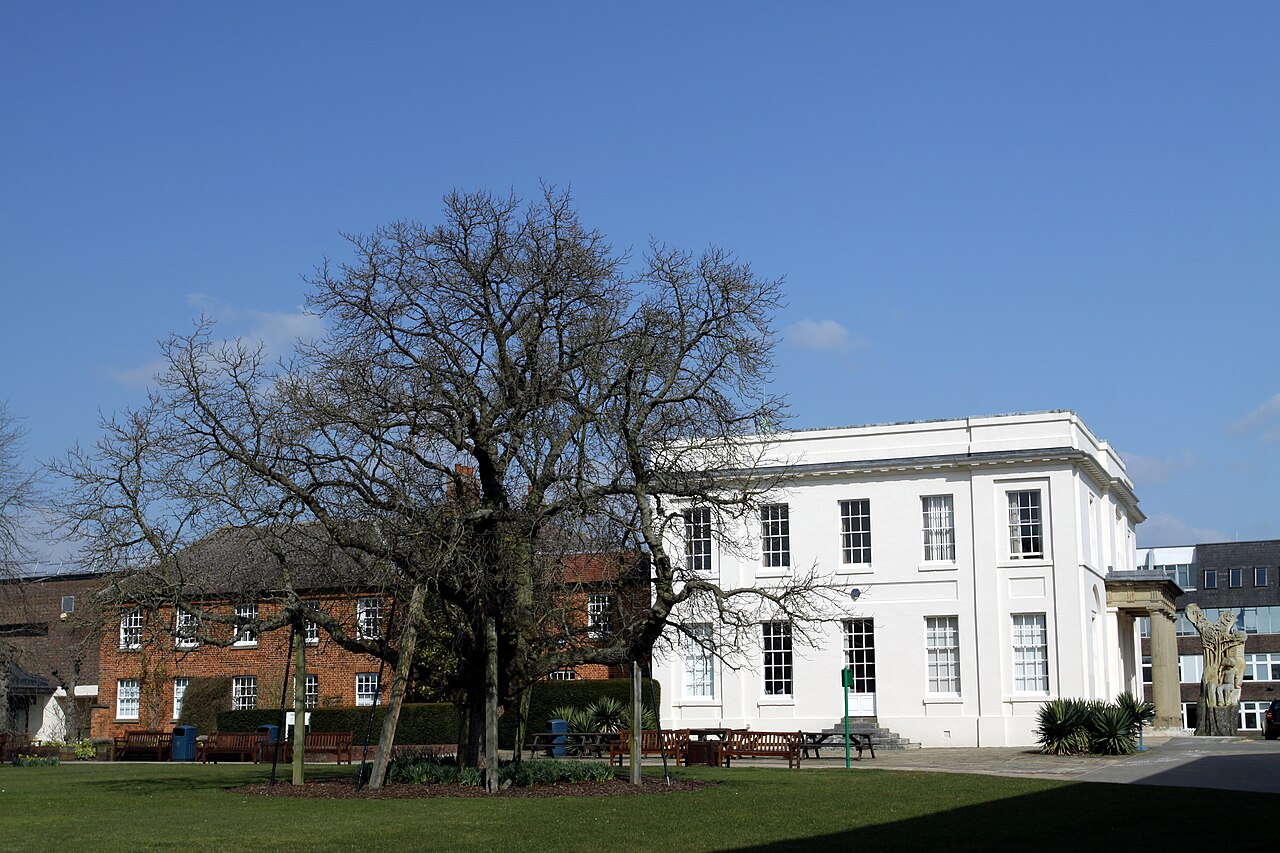
The main administrative base is at Walton Hall, Milton Keynes, located within Buckinghamshire. The campus spans a significant grounds area, often described as a 48-hectare campus, where full-time postgraduate researchers have access to libraries, laboratories and seminar space. The university employs academic and research staff across multiple faculties alongside a large administrative and student-support workforce. Research at the Open University covers many disciplines and contributes to public policy, science, arts and technology, with doctoral students registered both on campus and remotely.
History and development
The Open University was created in the late 1960s with the aim of extending higher education beyond traditional campus-based routes. The first cohort of students enrolled in the early 1970s. Its formative years saw the development of purpose-built course materials and partnerships with public broadcasters and other institutions to reach learners at scale. Over subsequent decades the OU expanded its portfolio to include vocational programmes, postgraduate research degrees and greater international engagement, adapting new technologies for teaching while maintaining its founding principle of access for adults and non-traditional students.
Students, scale and global reach
The university is one of the largest by enrollment in the United Kingdom and internationally. At various points it has registered well over two hundred thousand students, including sizable numbers of younger learners and a notable overseas student community. Across its history, more than a million people have taken OU courses. Students study a mixture of short courses, undergraduate and graduate programmes, with flexible pacing that accommodates part-time study alongside employment and family responsibilities.
Recognition, rankings and accreditation
The Open University has featured in national student satisfaction surveys and subject-level assessments, receiving strong marks in a range of arts, sciences and social science fields. It has been included in global ranking exercises such as the Academic Ranking of World Universities and holds institutional recognition beyond the UK: it is among a small number of British universities accredited in the United States by the Middle States Commission on Higher Education. These endorsements reflect the institution's combination of quality assurance, documented learning outcomes and international partnerships.
Distinctive features and considerations
- Open access: entry policies broaden participation by removing many conventional academic barriers.
- Flexibility: modular programmes and part-time options suit learners with work or caring commitments.
- Scale and support: large student cohorts are supported through distributed tutor networks and digital platforms.
- Research and practice: the institution balances applied research with teaching-led scholarship.
Critics occasionally point to the different experience between remote and campus-based study and the challenges of integrating practical laboratory or studio work into a distance framework. The university has continued to innovate, however, using blended delivery, regional study centres and residential schools to address such limitations. For those seeking a pathway into higher education outside the conventional A-level or university-entrance system, the Open University remains a prominent and widely used option.
Further information is available from institutional pages and prospectuses that outline course lists, entry guidance and support services for prospective students. The OU's model has influenced the development of online and open-access higher education internationally and continues to be cited as a reference point for flexible learning policy and practice.
distance learning | research | university | British | state funding | undergraduate | off-campus | postgraduate | 48-hectare campus | Walton Hall, Milton Keynes | Buckinghamshire | degrees | diplomas | Academic Ranking of World Universities | Middle States Commission on Higher Education
Questions and answers
Q: What is the Open University?
A: The Open University (OU) is a distance learning and research university founded by Royal Charter in the United Kingdom. It has an open entry policy, meaning students' previous academic achievements are not taken into account for entry to most undergraduate courses. Most OU undergraduate students are based in the UK and study off-campus, but many of its courses can be studied anywhere in the world.
Q: Where is the Open University located?
A: The university administration is based at Walton Hall, Milton Keynes in Buckinghamshire, but it also has regional centres in each of its thirteen regions around the United Kingdom and offices and regional examination centres in most other European countries.
Q: How many students does the Open University have?
A: With more than 250,000 students enrolled, including around 32,000 aged under 25 and more than 50,000 overseas students, it is one of the largest universities in Europe by student number. Since it was founded, more than 1.5 million students have studied its courses.
Q: What kind of degrees does the Open University offer?
A: The OU awards undergraduate and postgraduate degrees as well as non-degree qualifications such as diplomas and certificates or continuing education units.
Q: Is there a campus for full-time postgraduate research students?
A: Yes - there are a number of full-time postgraduate research students based on the 48 hectare university campus where they use OU facilities for research as well as over 1000 members of academic and research staff and 2500 administrative staff.
Q: How satisfied are Open University's Students?
A: The OU was rated top university in England and Wales for student satisfaction in 2005, 2006 second in 2007 top again 2012 according to national student satisfaction surveys conducted by UK government agencies. In 2008 it was ranked 43rd (second quartile) out of 132 universities/colleges according to Times Higher Education Table of Excellence while being highly rated Design Art History English Earth Environmental Sciences Computer Science Development Studies Social Policy Social Work Sociology overall nationally top forty globally top five hundred according to Academic Ranking World Universities 2011 247 citations academics .
Related articles
Author
AlegsaOnline.com The Open University (United Kingdom) Leandro Alegsa
URL: https://en.alegsaonline.com/art/72773
Sources
- www8.open.ac.uk : "Chancellor of The Open University" · web.archive.org
- hesa.ac.uk : "Table 1 All students by HE institution, level of study, mode of study and domicile 2012/13"
- open.ac.uk : The Open University – Estates and Building Facilities
- open.ac.uk : Research at The Open University
- www3.open.ac.uk : "Study at the OU: What you can study if you're resident outside the UK"
- www8.open.ac.uk : The Open University – Milton Keynes Campus
- www3.open.ac.uk : The Open University – life on campus
- open.ac.uk : "Brief history of the OU"
- www8.open.ac.uk : Meet the students | 18 to 24
- hesa.ac.uk : Students in Higher Education Institutions: Table 1 – All students by HE institution, level of study, mode of study and domicile 2009/10
- news.bbc.co.uk : "Students rate university courses"
- news.bbc.co.uk : "Student satisfaction survey results"
- www3.open.ac.uk : The Open University highly rated for student satisfaction
- hefce.ac.uk : "National Student Survey"