
Democritus — Ancient Greek Philosopher and Founder of Atomism
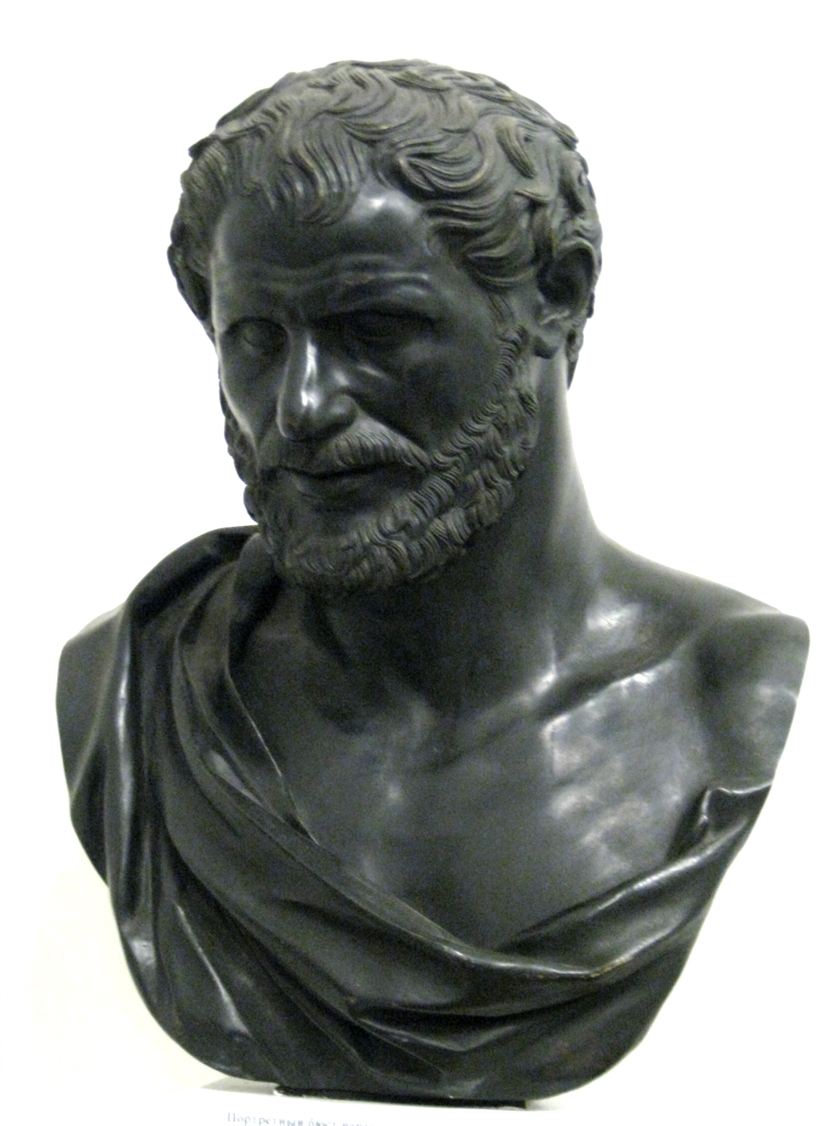
Democritus (c.460–c.370 BC) of Abdera advanced early atomism: a naturalistic view that matter consists of eternal, indivisible atoms moving in empty space, influencing later scientific thought.
Democritus, often identified by his Ancient Greek name (Δημόκριτος), was an influential pre-Socratic thinker from Abdera in Thrace. Traditionally dated to about 460–370 BC, he is remembered as a prolific writer, a wealthy citizen who traveled widely, and a student in the philosophical lineage associated with Leucippus. He is normally classified as an ancient Greek philosopher whose surviving reputation rests mainly on fragments and reports by later authors.
Democritus is best known for formulating an early version of atomism: the claim that the physical world is composed of tiny, indivisible bodies (atoms) moving through empty space. In his view there are two fundamental realities: indivisible particles and the void in which they move. Atoms differ in shape, size, and arrangement; their combinations and separations account for the variety of material properties and observed changes. Democritus argued that atoms are eternal, ungenerated and indestructible, and that sensory qualities arise from the patterns and motions of atoms rather than from intrinsic properties of matter.
Image gallery
7 Images




Core ideas and features
- Atoms and void: matter consists of atoms moving in empty space, a radical alternative to purely continuous models.
- Qualitative explanation: color, taste, and texture depend on atomic shape and motion rather than on metaphysical forms.
- Multiplicity and infinity: atoms are numerous and, in some accounts, infinite in number and variety.
- Epistemology: Democritus drew a distinction between reliable, rational knowledge and belief arising from the senses; intellect apprehends the true nature of things.
Biographical claims about Democritus include reports that he studied mathematics and geometry, and that he traveled to learning centers such as Egypt, Babylon and even India, though such accounts are often anecdotal and their historicity is uncertain. He is credited with numerous works on subjects ranging from ethics and geometry to natural philosophy, but almost all of his writings are lost and survive only in quotations and summaries by later thinkers.
Democritus’ atomism influenced later schools, most directly Epicureanism and the Roman poem On the Nature of Things by Lucretius. During antiquity his ideas were often overshadowed by Platonic and Aristotelian doctrines, and his works circulated in fragmentary form. Knowledge of his theories comes chiefly through later sources such as Aristotle, Theophrastus and biographical compilers who preserved snippets of his thought.
Legacy, distinctions and notable points
- Modern significance: Democritus is celebrated as a precursor to modern atomic theory, though his atoms lacked experimental grounding and differ from contemporary subatomic understanding.
- Philosophical stance: his explanations are strictly naturalistic and avoid teleology; phenomena are outcomes of atomic interactions rather than purposes.
- Reputation and personality: ancient anecdotes portray him as cheerful and devoted to study; later tradition sometimes calls him the “laughing philosopher.”
Democritus’ ideas about the cosmos and matter inspired debate for centuries and continue to be discussed for their philosophical boldness. For further orientation and general background on related topics, see brief guides on his life and doctrines (atomism), his home city (Abdera) and his intellectual context (Greek sources, philosophical summaries).
Related articles
Author
AlegsaOnline.com Democritus — Ancient Greek Philosopher and Founder of Atomism Leandro Alegsa
URL: https://en.alegsaonline.com/art/117491