
Francis Hutcheson — Irish philosopher and founder of the Scottish Enlightenment
Irish-born philosopher Francis Hutcheson (1694–1746) proposed a moral-sense theory, advanced ideas on beauty and benevolence, and helped shape the Scottish Enlightenment and early moral philosophy.
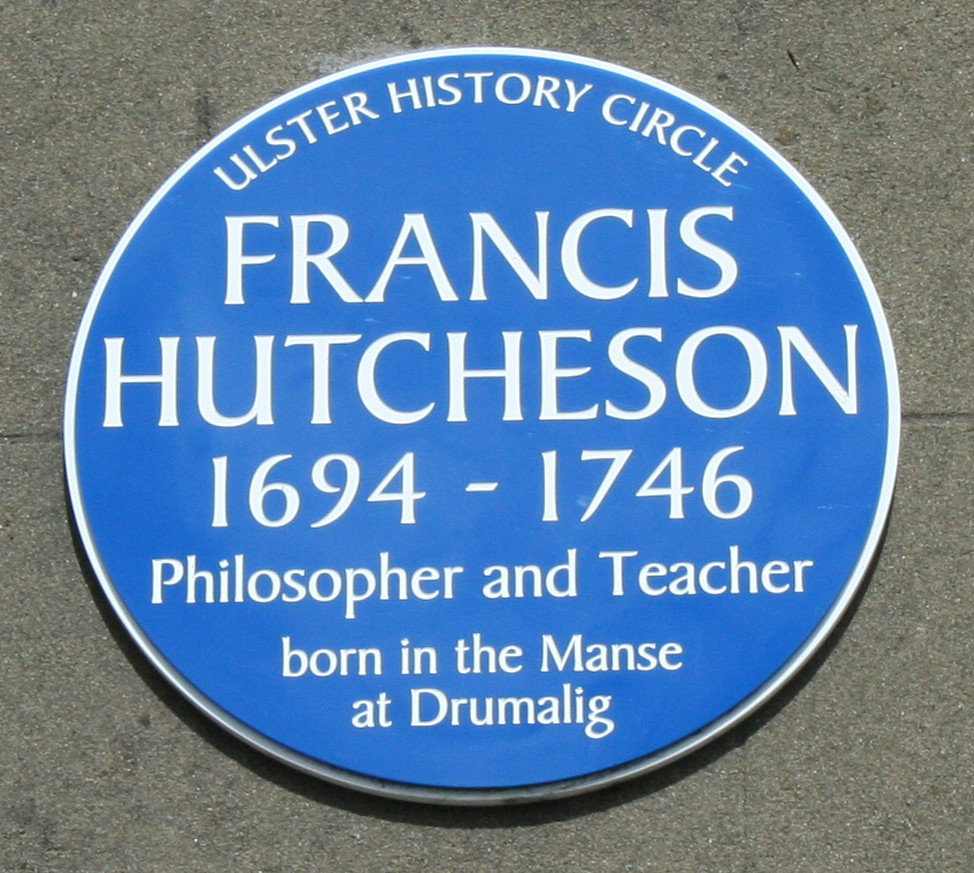
Francis Hutcheson (8 August 1694 – 8 August 1746) was an Irish-born philosopher whose writings and teaching helped shape what became known as the Scottish Enlightenment. He is best remembered for defending the idea that humans possess an innate moral sense that allows people to perceive virtue and vice directly, without turning them into purely rational calculations.
Image gallery
3 Images

Life and career
Hutcheson trained in the classical and scholastic traditions but moved toward a more modern, empirical approach to moral questions. He spent a significant part of his professional life as a professor of moral philosophy at the University of Glasgow, where his lectures attracted attention for their accessible style and practical emphasis. His public role and writings gave younger thinkers a framework for discussing ethics, aesthetics, and politics in ways that emphasized human sympathy and social improvement.
Philosophical contributions
Hutcheson's central claim was that a natural "moral sense" grants immediate feelings of approval or disapproval when we contemplate actions or characters. He argued that benevolence and public-spirited affections are moral virtues perceived by this sense. While not a utilitarian in the later Benthamite form, Hutcheson advocated the idea that actions promoting general happiness are morally praiseworthy, making him an important precursor to consequentialist thinking.
Aesthetics and method
In aesthetics he proposed that judgments of beauty rest on a quick, agreeable perception of order and proportion rather than purely intellectual rules. Hutcheson's method combined careful observation of human sentiments with moral argument, aiming to explain how feeling and reason interact in practical life.
Works, influence and legacy
Among his principal works are inquiries into the origin of ideas of beauty and virtue and a systematic presentation of moral philosophy. His ideas influenced contemporaries and successors, including prominent Scottish thinkers who developed ethical theory, economics, and social philosophy. Hutcheson's stress on sympathy, public good, and moral feeling left a lasting imprint on debates about virtue, reform, and the nature of moral judgment.
Key ideas at a glance
- Innate moral sense: immediate perception of right and wrong.
- Benevolence as a primary moral motive and public good as a moral guide.
- Beauty judged by immediate feeling of harmony and proportion.
- Precursor to later utilitarian and sentimentalist strains in moral theory.
For further reading on Hutcheson's life and writings see additional sources.
Related articles
Author
AlegsaOnline.com Francis Hutcheson — Irish philosopher and founder of the Scottish Enlightenment Leandro Alegsa
URL: https://en.alegsaonline.com/art/119080