
Edmund Husserl: Founder of Phenomenology
A concise account of Edmund Husserl's life, philosophical method, major ideas, academic background and lasting influence as the founder of phenomenology.
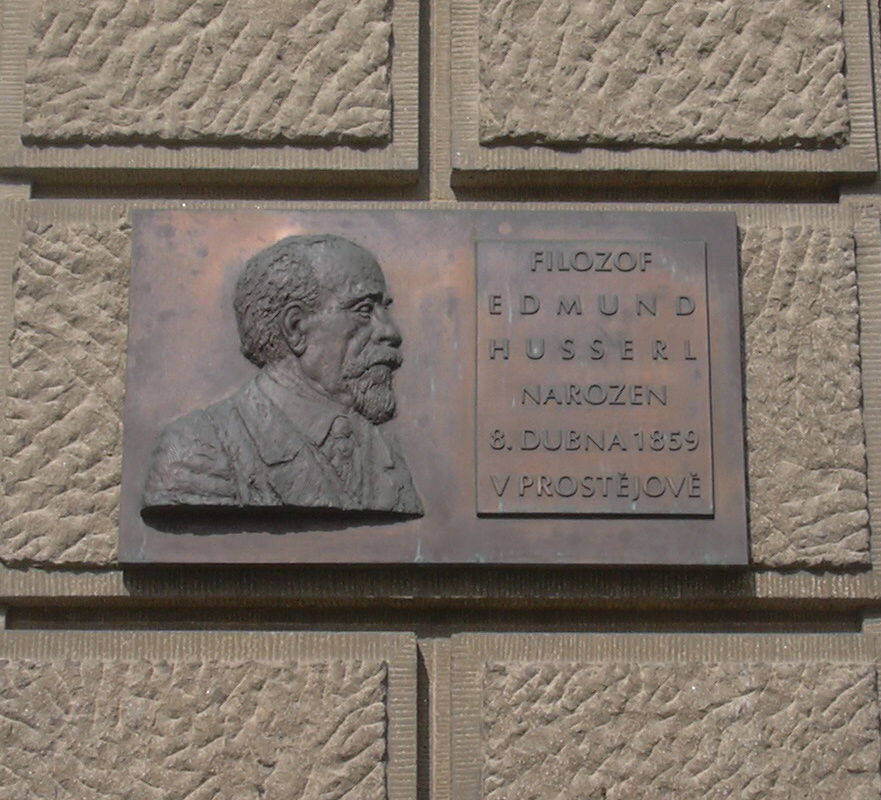
Edmund Gustav Albrecht Husserl (8 April 1859 – 26 April 1938) was a central figure in modern philosophy, best known as the founder of phenomenology. Born in Prostějov in Moravia (Prostějov) within the Austrian Empire, Husserl trained both as a mathematician and as a philosopher. He advanced a program that sought to return philosophical inquiry to the careful description of conscious experience, arguing that rigorous analysis of experience is the appropriate foundation for knowledge.
Image gallery
5 Images


Philosophical method and core ideas
Husserl developed phenomenology as a method for examining the structures of consciousness and the ways in which objects are given to us in experience. He emphasized the intentionality of mental states—the idea that consciousness is always about or directed toward something—and proposed methodological moves such as the epoché or phenomenological reduction, which ask the researcher to suspend assumptions about the external world to attend to the lived phenomena themselves. For Husserl, close description of experience can reveal invariant features of meaning and being, thereby grounding claims about knowledge without relying on unexamined empiricist or positivist presuppositions.
Education and early influences
Husserl's intellectual formation combined advanced mathematical training with philosophical mentorship. He studied mathematics under mathematicians such as Karl Weierstraß and completed his doctoral work under Leo Königsberger. His turn to philosophy was shaped by study with Franz Brentano and Carl Stumpf, both of whom emphasized descriptive psychology and the intentional character of mental acts—ingredients that Husserl transformed into a systematic philosophical method.
Academic career
After his initial work, Husserl taught as a Privatdozent at Halle beginning in 1887 and later held professorial positions at several German universities. His role as a professor helped him build a school of students and readers who carried phenomenology into diverse fields. Though Husserl remained deeply concerned with conceptual clarity and logical rigor, his influence reached beyond philosophy to psychology, literary theory, and the emerging social sciences.
Key themes and terminology
- Intentionality: the claim that consciousness is always about something.
- Epoché / reduction: methodological suspension of natural attitudes to examine phenomena.
- Essences (Wesensschau): descriptive insight into invariant structures of experience.
- Transcendental turn: Husserl's later move toward describing conditions that make experience and meaning possible.
These concepts allowed Husserl to recast problems in epistemology, the philosophy of mind, and the foundations of mathematics from a first-person descriptive standpoint rather than a purely third-person explanatory model.
Legacy and significance
Husserl's phenomenology became a major current in twentieth-century thought, influencing philosophers such as Martin Heidegger, Maurice Merleau-Ponty and Jean-Paul Sartre, and shaping fields as varied as cognitive science and qualitative research. Although subsequent thinkers contested and elaborated his project, Husserl's insistence on careful description of experience and on the systematic analysis of meaning remains a lasting contribution to philosophy. For further reading and primary sources, consult specialized introductions and collected works available through academic resources and libraries (biographical sources, historical overviews, and archival collections referenced by scholarly editions).
Husserl's work continues to be studied for its methodological precision and its ambition to found philosophical inquiry on the structures of lived experience rather than on unexamined scientific or metaphysical assumptions.
Questions and answers
Q: Who was Edmund Gustav Albrecht Husserl?
A: Edmund Gustav Albrecht Husserl was an Austrian-German philosopher and mathematician who is deemed the founder of phenomenology.
Q: When was Edmund Gustav Albrecht Husserl born and where did he die?
A: Edmund Gustav Albrecht Husserl was born on April 8, 1859, in Prostějov, Moravia, Austrian Empire, and he died on April 26, 1938, in Freiburg, Germany.
Q: What is Edmund Gustav Albrecht Husserl's contribution to philosophy?
A: Edmund Gustav Albrecht Husserl broke with the positivist orientation of the science and philosophy of his time, believing that experience is the source of all knowledge. He is deemed the founder of phenomenology.
Q: Who did Edmund Gustav Albrecht Husserl study mathematics under?
A: Edmund Gustav Albrecht Husserl studied mathematics under Karl Weierstraß and completed a Ph.D. under Leo Königsberger.
Q: Who did Edmund Gustav Albrecht Husserl study philosophy under?
A: Edmund Gustav Albrecht Husserl studied philosophy under Franz Brentano and Carl Stumpf.
Q: When did Edmund Gustav Albrecht Husserl start teaching philosophy?
A: Edmund Gustav Albrecht Husserl started teaching philosophy as a Privatdozent at Halle from 1887.
Q: What were Edmund Gustav Albrecht Husserl's academic positions?
A: Edmund Gustav Albrecht Husserl taught philosophy as a Privatdozent at Halle from 1887 and as a professor.
Related articles
Author
AlegsaOnline.com Edmund Husserl: Founder of Phenomenology Leandro Alegsa
URL: https://en.alegsaonline.com/art/118101