
Birefringence (double refraction): causes, properties, and applications
Birefringence is the optical property of anisotropic materials that splits light into two polarized rays with different speeds, causing double images and polarization effects used across optics, microscopy, and engineering.
Overview
Birefringence, also called double refraction, is an optical phenomenon in which a beam of light entering an anisotropic material is separated into two rays that travel at different speeds and generally follow different directions. Unlike a prism, which disperses by wavelength, birefringence separates components of the same color according to their polarization and the crystal's directional refractive indices. The result can be a visible "double image" when viewing objects through a suitably birefringent slab.
Image gallery
10 Images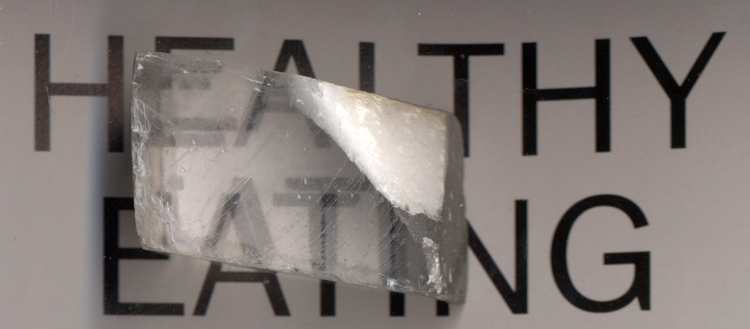






Physical basis and characteristics
In birefringent media the refractive index depends on the direction of propagation and the polarization of the wave. Crystals may be uniaxial (one optic axis) or biaxial (two optic axes). The two emergent waves are commonly called the ordinary and extraordinary rays, which experience different refractive indices (n_o and n_e). The difference Δn = n_e − n_o is the material's birefringence and determines how much phase delay accumulates between polarization components as they travel. Engineered devices such as quarter-wave and half-wave plates exploit controlled birefringence to convert or rotate polarization states.
History and notable materials
Observation of double refraction dates back to the 17th century with Iceland spar (calcite) producing clear double images; the phenomenon was described by early natural philosophers and later analyzed with wave and polarization theory. Common naturally birefringent materials include calcite and mica, while synthetic examples include crystals and ceramics. Hexagonal boron nitride appears in some lists of anisotropic solids; examples of crystal forms relevant to birefringence are often described simply as crystals or specific compounds such as boron nitride.
Applications and examples
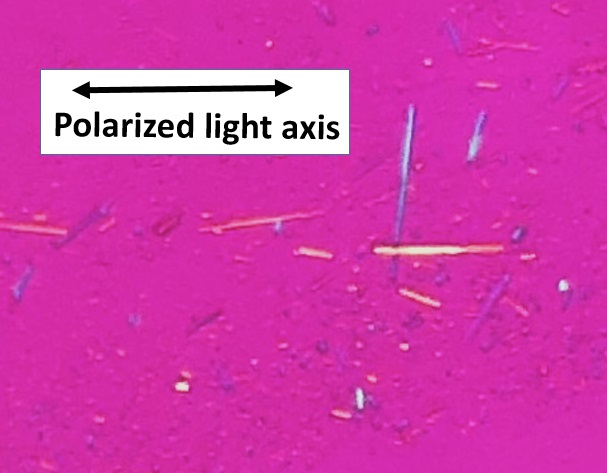
- Polarized-light microscopy — birefringence reveals internal structure and strain in minerals, polymers and biological tissues.
- Optical components — wave plates and polarizers use controlled retardation for lasers and imaging systems.
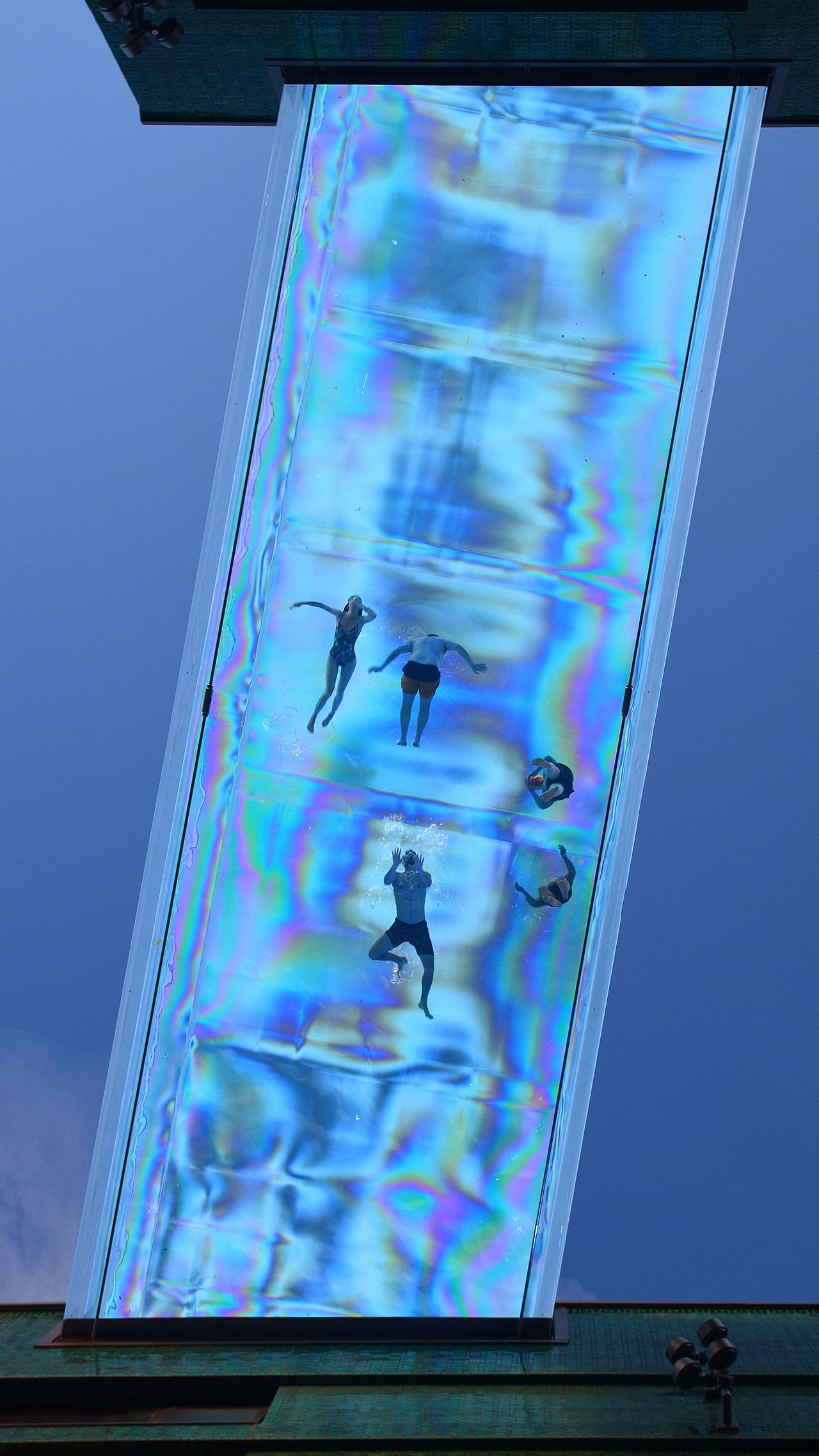
- Stress analysis (photoelasticity) — stressed transparent objects become birefringent, producing fringe patterns for engineering diagnostics.
- Display technology — liquid crystal devices rely on electrically controlled birefringence to modulate polarization and intensity.
For comparison, a prism separates wavelengths by dispersion, while a birefringent plate separates polarization components without creating a visible color spectrum.
Measurement, distinctions and practical notes
Birefringence is commonly measured by placing a sample between crossed polarizers and observing transmitted intensity and interference colors; quantitative instruments measure retardation in nanometers or optical path difference. Some materials show stress-induced or transient birefringence rather than innate anisotropy. Understanding whether a material is optically isotropic or anisotropic, and whether it is uniaxial or biaxial, is essential when designing optical systems or interpreting polarized-light images.
Further reading and technical references are available for those who wish to explore mathematical descriptions of anisotropic refractive indices, phase retardation, and applications in photonics and materials science. See specialized optics texts and instrumentation guides for experimental methods and practical considerations.
Related articles
Author
AlegsaOnline.com Birefringence (double refraction): causes, properties, and applications Leandro Alegsa
URL: https://en.alegsaonline.com/art/11720