
Charles Scott Sherrington — English neurophysiologist and Nobel laureate
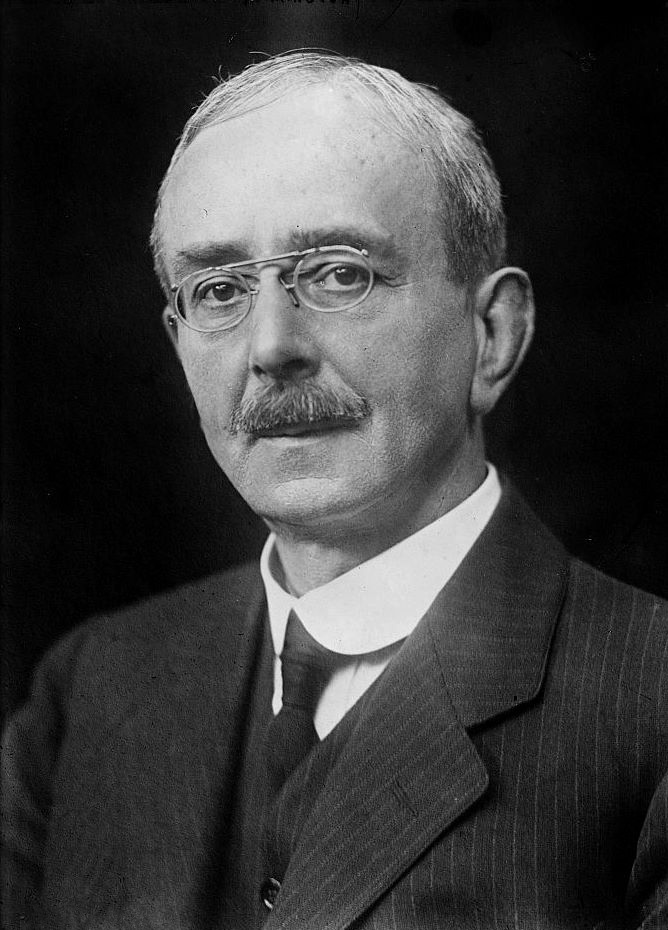
Charles S. Sherrington (1857–1952) was an English physician and neurophysiologist known for foundational work on reflexes, synapses and the integrative action of the nervous system; Nobel Prize 1932.
Charles Scott Sherrington (27 November 1857 – 4 March 1952) was an English physician and experimental neurophysiologist whose laboratory research transformed understanding of how the nervous system controls movement and sensation. He combined anatomical observation with physiological experiments to describe how nerve cells act together to produce coordinated behaviour.
Image gallery
7 Images



Major contributions
Sherrington is best known for clarifying the organisation of reflex circuits in the spinal cord and for emphasising the integrative nature of neural activity. He introduced and popularised concepts that became central to neuroscience, including the idea of the synapse as the functional contact between nerve cells. His work laid the conceptual groundwork that, together with later electrophysiological recordings, established how neurons communicate and combine inputs.
Methods and key ideas
Working with animal preparations, Sherrington demonstrated principles such as reciprocal innervation (how antagonistic muscles are coordinated), central inhibition, and the stretch reflex. He stressed that nervous function results from the interaction of excitatory and inhibitory influences and coined the phrase "integrative action" to express how simple reflexes sum into complex behaviour.
Career and recognition
Sherrington held prominent academic posts, including chairs in physiology, and published influential works, most notably The Integrative Action of the Nervous System (1906). In 1932 he shared the Nobel Prize in Physiology or Medicine with Edgar Adrian for discoveries concerning the functions of neurons — Sherrington for the physiological principles and Adrian for the electrical recordings that confirmed them.
Legacy and significance
Sherrington's ideas remain fundamental in neurology, neurophysiology and rehabilitation medicine. His emphasis on synaptic interaction, inhibition, and the coordinated control of movement influenced later work on motor control, sensory processing and neural networks. Modern neuroscience still refers to Sherringtonian concepts when explaining reflexes, proprioception and the organisation of motor systems.
Notable concepts
- Synapse — the functional junction between nerve cells.
- Integrative action — the summation of excitatory and inhibitory inputs.
- Reciprocal innervation — coordination of opposing muscle groups.
Related articles
Author
AlegsaOnline.com Charles Scott Sherrington — English neurophysiologist and Nobel laureate Leandro Alegsa
URL: https://en.alegsaonline.com/art/116236
Sources
- nobelprize.org : "Biography of Charles Sherrington"