
Charles the Bald: King of the West Franks and Emperor (823–877)
Carolingian ruler Charles the Bald (823–877) governed the West Frankish kingdom in the mid-9th century, faced Viking raids and aristocratic challenge, pursued reform efforts and was crowned emperor in 875.
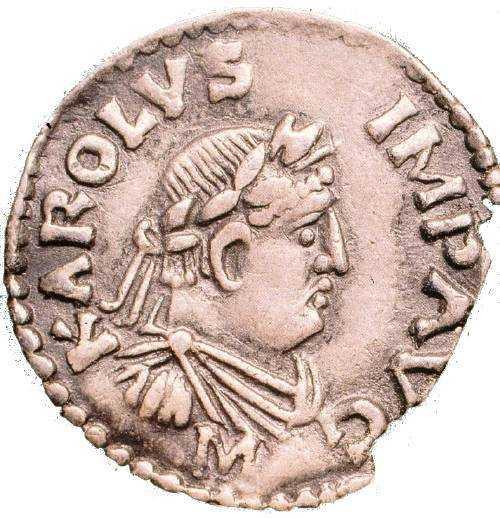
Charles the Bald (13 June 823 – 6 October 877) was a leading figure of the later Carolingian era. A son of Emperor Louis the Pious and Judith of Bavaria, he became ruler of the western portion of the Frankish realm in the 840s and continued to rule there until his death. He was later crowned Holy Roman Emperor for a brief period in the mid-870s. His reign is remembered for internal dynastic conflict, the pressures of Viking incursions, and efforts to strengthen royal authority.
Image gallery
10 Images





Background and accession
Born into the imperial family that descended from Charlemagne, Charles grew up amid succession disputes that followed his father's death. The Carolingian empire was partitioned among Louis the Pious’s sons, and by the Treaty of Verdun (843) Charles’s authority as ruler of the western kingdom was formally recognized. He is commonly identified in later sources as Charles II of France and as king of the West Franks; these titles reflect the evolving political geography that would become medieval France. West Frankish kingdom
Rule, conflicts and policies
Charles’s government combined military responses, legal measures and ecclesiastical alliances. He confronted persistent Viking raids that devastated riverine and coastal regions, and he issued defensive measures such as the Edict of Pistres (864), which promoted fortified bridges and cavalry to slow raiding parties. Internally, he faced rebellions from powerful nobles and periodic rivalry with his brothers and nephews for territory and influence.
Relations with the church and imperial coronation
Like many Carolingian kings, Charles worked closely with leading churchmen. He relied on advisers and prelates—most notably Archbishop Hincmar of Reims—to administer justice and to legitimize royal policy. In 875 he traveled to Italy and received the imperial crown from the pope, a culmination of his ambitions to assert a universal Carolingian authority; he held the imperial title until his death. Holy Roman Emperor
Cultural patronage and administration
Charles’s court continued aspects of the Carolingian Renaissance: monasteries and episcopal centers under his patronage remained important channels for learning, manuscript production and administration. He also reformed aspects of the royal household and fiscal arrangements to maintain the realm’s defenses and to reward loyal followers. These efforts, however, were only partially successful in restoring centralized control over increasingly autonomous regional magnates.
Legacy and notable facts
Charles died in 877 and was succeeded in the West Frankish kingdom by his son, Louis the Stammerer. Modern historians view his reign as emblematic of the transitional phase in which the Carolingian imperial model fragmented into regional kingdoms. His nickname, "the Bald" (le Chauve), appears in later chronicling and has prompted debate: some see it as literal, others as ironic or as a simple family byname.
- Key events: birth 823; accession in the 840s and confirmation at the Treaty of Verdun (843); Edict of Pistres (864); imperial coronation 875; death 877.
- Sources and further reading: biographical summaries and studies on the Carolingian age can clarify his political measures and cultural patronage. Charles II (biography)
Charles the Bald remains a central figure for understanding the decline of centralized Carolingian authority and the formation of successor kingdoms that shaped medieval Europe. His reign illustrates the twin pressures of external invasion and internal aristocratic fragmentation that defined the ninth century.
Related articles
Author
AlegsaOnline.com Charles the Bald: King of the West Franks and Emperor (823–877) Leandro Alegsa
URL: https://en.alegsaonline.com/art/116243