
Charles Hard Townes — Physicist and Pioneer of the Maser and Laser
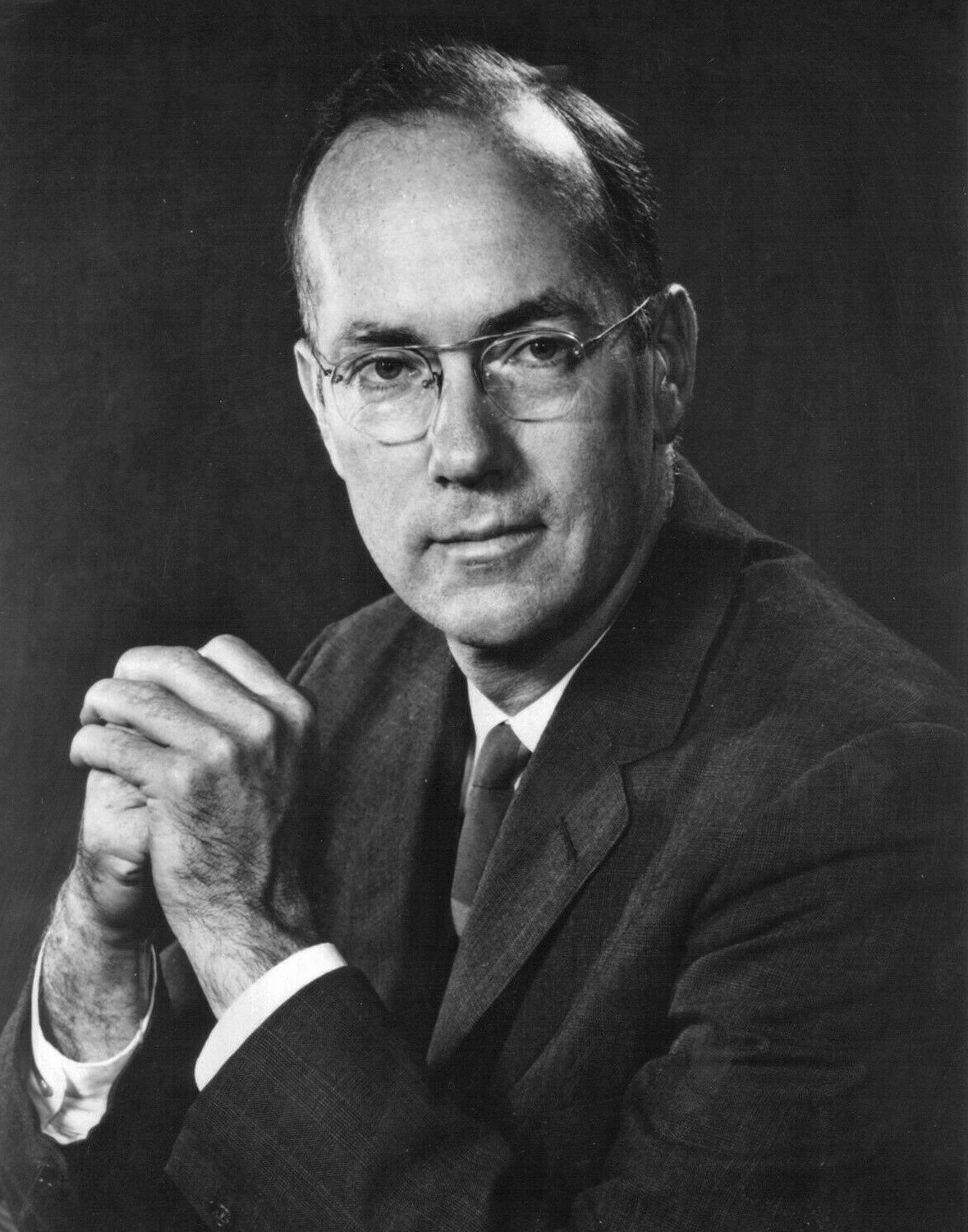
American physicist Charles H. Townes (1915–2015) developed the maser, shared the 1964 Nobel Prize in Physics, and advanced quantum electronics, earning the National Medal of Science.
Overview
Charles Hard Townes (July 28, 1915 – January 27, 2015) was an American physicist and educator known for originating the maser and helping to establish the field of quantum electronics. He shared the Nobel Prize in Physics in 1964 for fundamental work that made microwave and optical amplification by stimulated emission practical. Townes combined theoretical insight with experimental skill and later engaged in science policy and education.
Image gallery
5 Images


Key contributions and concepts
Townes introduced the concept of stimulated emission as a basis for an amplifier of electromagnetic waves at microwave frequencies. This device, called the maser, uses a population inversion and a resonant cavity to produce coherent microwave radiation. The maser preceded and directly influenced the development of the laser, which operates on the same physical principle at optical frequencies. Townes held important patents related to maser design and to practical techniques in quantum electronics.
How the maser and laser differ
The distinction between the two devices is primarily their operating frequency: masers amplify microwaves while lasers amplify visible or infrared light. Both rely on stimulated emission, a controlled population inversion, and resonant structures, but they differ in engineering details such as the active medium, cavity design and typical applications. Townes's work clarified these underlying mechanisms and showed how they could be harnessed across the electromagnetic spectrum.
Career, honors and public service
Born in Greenville, South Carolina, Townes pursued a long academic career in which he taught, led laboratory research and advised scientific organizations. He was widely recognized for both scientific achievement and public engagement. In addition to the Nobel Prize, he received the National Medal of Science in 1982, which was presented by President Ronald Reagan. Townes was a member of major scientific societies and served as a mentor to generations of students and researchers, combining technical leadership with an interest in ethical and policy dimensions of science (educator).
Legacy and impact
Technologies that trace back to Townes's discoveries have become ubiquitous: communications, radar, remote sensing, spectroscopy, medicine and manufacturing all rely on coherent sources of microwave and optical radiation. His work laid the foundation for modern photonics and quantum electronics and helped spawn entire industries. Townes continued scholarly work and public commentary well into his later years and died at age 99 in Oakland, California. His life and contributions remain central to histories of 20th-century physics and engineering (physicist).
Notable facts
- Townes conceived and demonstrated the first working maser and pursued related patents and applications.
- His Nobel Prize was shared with Nikolay Basov and Alexander Prokhorov for parallel advances in quantum electronics.
- Beyond research, Townes engaged in teaching, administration and advisory roles, shaping science policy and education (maser).
- For further institutional or archival information, see relevant biographies and collections (laser, Nobel, National Medal).
Related articles
Author
AlegsaOnline.com Charles Hard Townes — Physicist and Pioneer of the Maser and Laser Leandro Alegsa
URL: https://en.alegsaonline.com/art/116201
Sources
- nobelprize.org : "Charles H. Townes - Biographical"
- nytimes.com : "Charles H. Townes Dies at 99; He Envisioned the Laser, Bringing It Into Daily Life"