
Caedwalla of Wessex
Caedwalla (c.659–689) was a late 7th-century King of Wessex whose short, expansionist reign (c.685–688) extended West Saxon influence in southern England; he later abdicated and made a pilgrimage to Rome to be baptized.
Overview
Caedwalla (also spelled Cædwalla) was a late 7th-century West Saxon ruler whose energetic, if brief, reign helped reshape the balance of power in southern England. Traditionally dated to about 685–688, his campaigns extended West Saxon influence beyond its core territories and brought Wessex into closer rivalry with other major kingdoms such as Northumbria and Mercia. His name derives from the British (Celtic) name Cadwallon, a reminder of the cultural continuity and interaction in post-Roman Britain.
Image gallery
2 Images
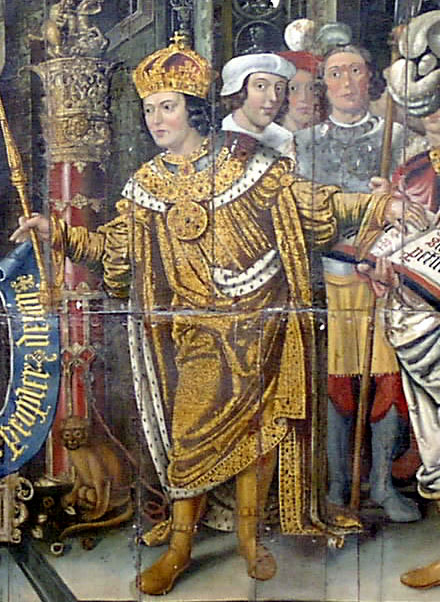
Origins and accession
Surviving narratives present Caedwalla as a member of the West Saxon royal kindred who came to power after a period of exile or marginal status. Sources are limited and sometimes inconsistent, but they agree that he emerged as a vigorous claimant who seized the kingship at a moment of regional instability. His accession allowed Wessex to act more forcefully in neighbouring affairs and to project authority outside its traditional borders. Contemporary accounts often stress his personal leadership in military operations and his willingness to remove rival rulers.
Military campaigns
Caedwalla pursued a programme of aggressive expansion. He campaigned to the south and east of Wessex, bringing territories such as parts of Sussex and the Isle of Wight under West Saxon control, and he intervened in the kingdom of Kent to secure friendly rule. His actions were recorded as both militarily effective and severe in their suppression of opposition.
- He is credited with a campaign that subdued the Isle of Wight and led to the displacement of its ruling line and the return of missionary activity.
- In Kent he placed a relative or ally on the throne; that appointee was later killed in a popular uprising, illustrating the fragility of imposed authority.
- These operations strengthened Wessex's regional position and altered local patronage networks.
Religion and pilgrimage
Although Caedwalla began his career as a pagan warrior, he maintained close relations with the church and supported clerical expansion into newly acquired districts. Late in life he renounced kingship and departed for Rome to receive baptism, an act noted by contemporaries as both pious and exceptional for a conquering king. His conversion and pilgrimage were recorded by ecclesiastical writers and contributed to his subsequent reputation in church histories. Readers seeking ecclesiastical perspectives may consult summaries of missionary work and the role of bishops in the late 7th century (Christianity in the period).
Abdication and death
Caedwalla formally abdicated in 688 and sailed to Rome the following year. There he received baptism and died shortly afterwards. His departure left a gap in West Saxon leadership and did not immediately establish a lasting dynastic line in his direct descendants. The abrupt end of his rule contrasts with longer, more stabilizing reigns among contemporary rulers.
Legacy
Historians consider Caedwalla an important agent in the consolidation of Anglo-Saxon polities: his campaigns expanded West Saxon territory and influence, and his interaction with the church foreshadowed later patterns of royal patronage. He is often cited as a link in the process by which Wessex grew from a regional power into one of the leading kingdoms of southern England. For general studies of the period and regional context see summaries of Wessex history and analyses of West Saxon expansion; ecclesiastical narratives also provide contemporary commentaries on his conversion and Rome pilgrimage. Further reading and source collections can be found in surveys of the late 7th-century English heptarchy and in compilations of early chronicles and hagiographical accounts (sources and studies).
Questions and answers
Q: Who was Caedwalla of Wessex?
A: Caedwalla was the King of Wessex from c.685 until his abdication in 688.
Q: What was Caedwalla's name derived from?
A: Caedwalla's name was derived from the British name Cadwallon.
Q: What was Caedwalla's role in the rise of Wessex?
A: Through his efforts, Wessex rose to become the third kingdom, after Northumbria and Mercia, in what would become the seven Anglo-Saxon kingdoms of the heptarchy.
Q: Was Caedwalla a powerful king?
A: Yes, Caedwalla was a powerful king and war leader.
Q: What was Caedwalla's religion?
A: Caedwalla was a pagan king who fought for and promoted Christianity.
Q: When did Caedwalla abdicate?
A: Caedwalla abdicated in 688.
Q: What was Caedwalla's impact on Christianity?
A: Caedwalla fought for and promoted Christianity as a pagan king.
Related articles
Author
AlegsaOnline.com Caedwalla of Wessex Leandro Alegsa
URL: https://en.alegsaonline.com/art/115828